Category Archives: Telecommunicatons

Loading
loading...

Building Automation & Control Networks

National Institute of Standards and Technology

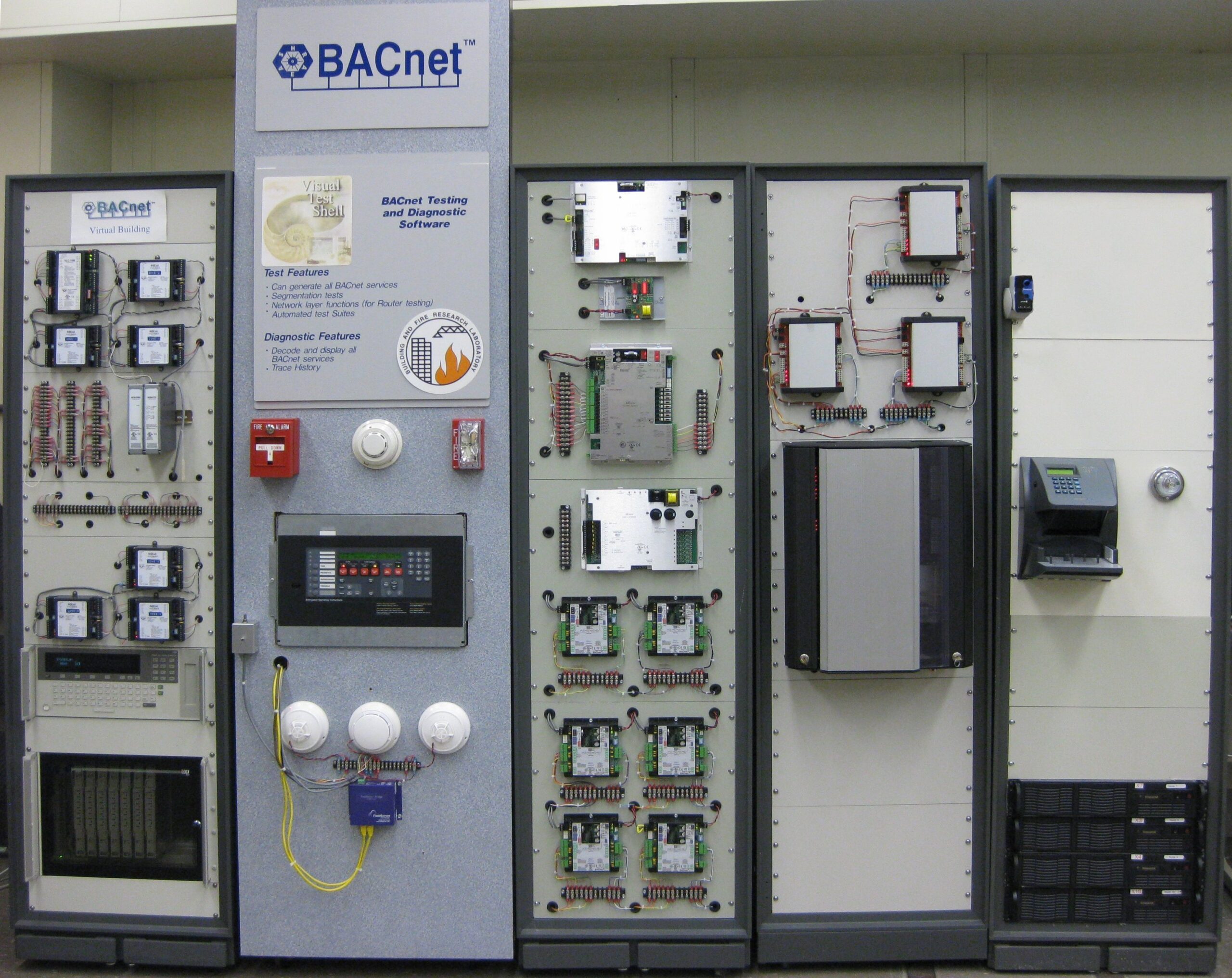
Since 1987 the American Society of Heating and Refrigeration Engineers has lead development of the de facto standard for campus building automation systems 135 BACnet® – A Data Communication Protocol for Building Automation and Control Networks. This title supports the #WiseCampus transformation in two important ways:

  • It defines data communication services and protocols for computer equipment used for monitoring and control of HVAC&R and other building systems
  • It defines an abstract, object-oriented representation of information communicated between such equipment, thereby facilitating the application and use of digital control technology in buildings.

BACNet Committee: ASHRAE SSPC 135

Since the late 1970’s these systems have grown from single building control networks for environment air into multi-building campus-wide systems that conform to the ISO model of layered communication architecture.   Every large research university has long since installed facility management unit that monitors and controls points such as outdoor air intake, wet-bulb temperature, occupancy load, elevator action, time of day, outdoor lighting etc.    The University of Michigan, for example, monitors and controls nearly 1 million control points on its 6 square mile Ann Arbor campus.

The ASHRAE 135 technical committee has released a consultation on addendum cd regarding cipher suite application security profiles.  Several redlines are now open for public consultation and may be found here:

ASHRAE Public Review Drafts Standards

Consultation on several titles is open until March 20th.

This title, and several others in the ASHRAE catalog, are on the standing agenda of our Energy 200 and Energy 400 colloquium.  See our CALENDAR for the next online meeting; open to everyone.

Workspace / ASHRAE

Issue: [17-230]

Category: #SmartCampus, Electrical, Telecommunications, Mechanical, Energy, Facility Asset Management

Colleagues: David Anderson, Larry Spielvogel, Richard Robben


More

Minutes of the First SPC 135P Meeting (June 26, 1987)


Service requirements for distance learning

Hans Christian Ørsted discovers electromagnetism / Københavns Universitet

We follow the uptake in international distance learning enterprises with particular interest in its technical foundation for quality and availability.   International Telecommunication Union Recommendation F.742 provides the service description and the requirements for distance learning services. This Recommendation is intended to support the multimedia framework for distance learning services.  From the project description:

“…Distance learning involves interactive and non-interactive multimedia communications between learners and learning resources located at two or more separate locations. The aims of learners who use distance learning services may be to get some degree certificates based on the degree standards, to get training given by employers, or to learn special knowledge independently. The distance learning services may be teaching-centred learning services that are similar to traditional face-to-face classroom learning, individual instruction, self-pacing learning, multi-role learning/team learning, etc.

In the course of distance learning, information may be required from remote databases containing the learning resources, or from live lectures. The material may be textual, aural, graphical, or video in nature and may be stored in a multimedia format. The information can be delivered in point-to-point configuration, point-to-multipoint or multipoint-to-multipoint configuration.  Participants in the distance learning may be located in classrooms equipped with related facilities, offices, homes or other places, such as on trains, where they are able to access to a distance learning services platform. Learners may learn in real-time with or without interaction with others, following a curriculum schedule or in non-real-time by themselves on demand. The equipment that learners use may be a PC, PDA, mobile phone, or even a TV set with STU. Learners can change their equipment without interruption while they are learning, with the assistance of a DLSP…”

Note that the last revision became effective in 2005; and was re-affirmed in 2008.  Other ITU documents relevant to the education industry can be found on the page linked below:

ITU-T Recommendations

We normally coordinate our engagement with ITU standards with the IEEE Education & Healthcare Facilities Committee which meets four times monthly in European and American time zones.  We discuss any best practice title affecting education communities every day at 11 AM Eastern time.  We also host a periodic teleconference on the status of Cloud best practice literature.  See our CALENDAR for the next online meeting; open to everyone.

Issue: [8-8]

Category: Academics, Electrical, Information and Communication Technology, Telecommunications

Colleagues: Mike Anthony, Jim Harvey, Mike Hiler


LEARN MORE:

Architectural Framework for the Internet of Things

The role of the education industry in the Internet of Things (Iot) zietgeist can be understood in terms of its stakeholder position in each of the three interest categories identified in a document at the foundation of the US standards system; one that bears similarity to due process requirements for technological transformation in other nations*:

  • Producer.  As a provider of basic and applied research in the IoT transformation.  Expert faculty is recruited to respond to the demand for networking knowledge. 
  • General Interest: As an educator that trains the workforce to manage connectivity and data exchange in the IoT transformation.
  • User: As a consumer of the products and systems that depend upon connectivity and data exchange in the embedded technologies of the #SmartCampus.  (The weakest of all stakeholders in the global standards system and where StandardsMichigan places its resources)

The IoT zietgeist is fundamentally an electrotechnology transformation and therefore it is wise to collaborate with the US National Committee to the International Electrotechnical Commission, with educational institutions in other nations who are members of the the International Electrotechnical Commission, the International Organization for Standardization, the International Teleommunications Union; and other ad hoc consortia in the IoT space.

These organizations provide a template for the development of IoT strategy for every member nation, for every industry; including the education industry.   No government regulations in any nation or any industry will be crafted without the foundation they assemble

In prospect IoT still seems a gauzy, abstract conception for the #SmartCampus but in retrospect we already see it in power-over-ethernet lighting systems, for example (CLICK HERE).   We see it in micro-transportation, campus security surveillance systems, massive open online curriculum and the like.  We collaborate most closely with the IEEE Education & Healthcare Facilities Committee (IEEE E&H) to develop opportunities to lower #TotalCostofOwnership as this transformation gathers pace.  As always, we hunt down cost-saving opportunities that appear on building construction bid tabs and per-square-foot operation and maintenance costs.

Click on image

As the world’s largest professional association, the IEEE is a driver for this transformation and its Standards Association has begun administering a new standardization project to manage (i.e.) mitigate obvious IoT architecture divergence titled: P2413 Standard for an Architectural Framework for the Internet of Things.  From the project prospectus:

This standard defines an architectural framework for the Internet of Things (IoT), including descriptions of various IoT domains, definitions of IoT domain abstractions, and identification of commonalities between different IoT domains. The architectural framework for IoT provides a reference model that defines relationships among various IoT verticals (e.g., transportation, healthcare, etc.) and common architecture elements. It also provides a blueprint for data abstraction and the quality “quadruple” trust that includes protection, security, privacy, and safety.” Furthermore, this standard provides a reference architecture that builds upon the reference model. The reference architecture covers the definition of basic architectural building blocks and their ability to be integrated into multi-tiered systems. The reference architecture also addresses how to document and, if strived for, mitigate architecture divergence. This standard leverages existing applicable standards and identifies planned or ongoing projects with a similar or overlapping scope.

IEEE P2413 Architectural Framework for the Internet of Things PAR

This project was launched in 2015 but has been revised by the IEEE Standards Association this month and has been posted for public comment.   It will be referred to the IEEE E&H Committee hosted every other week in Europe and the Americas.   Those teleconferences — one at 15:00 Central European Time and 3:00 PM Eastern time in the Americas, are open to anyone.  CLICK HERE for login credentials.  Of course, we are happy to discuss IoT in general terms any day at 11 AM Eastern time during our standing daily teleconferences.  Use the login credentials at the upper right of our home page.

Issue: [16-118]

Category: Administration & Management, Electrical, Information and Communications Technology, Facility Asset Management, Information, International, Telecommunications, US Department of Energy

Colleagues: Mike Anthony, Jim Harvey, Kane Howard, Chad Jones

* ANSI Essential Requirements: Due process requirements for American National Standards


Internet of Things

The newest Big Thing — a networked world of connected devices, objects and people — is getting long in the tooth.  It is hazardous to even try to write about the Internet of Things without being complicit in internet triumphalism.   We try to be as specific as possible, to avoid sounding like Jules Verne the futurist, even at the risk of getting too technical to be practical for the front line work force in education communities.   We challenge excess cost starting with small things.

Standards Michigan is a past member of ANSI’s US National Committee to the IEC (USNC/IEC) but now collaborates with the IEEE Education & Healthcare Facilities Committee (E&H) and the IEEE Standards Association on coordinated response to commenting opportunities posted by the International Electrotechnical Commission (IEC) on its IoT titles.

IEC Public Comment Home Page

The E&H Committee meets online four times monthly in European and American time zones in which the priorities of the Joint Technical Committee 1 (JTC1) are a standing item on its agenda.  The International Committee for Information Technology Standards  (INCITS) is ANSI’s US Technical Advisory Group Administrator.

Leaders of the US #SmartCampus transformation will have to sort through the competition among them because, at the moment, the blue-sky conception of a #SmartCampus is doing more to drive trade association content and conference revenue than contribute meaningfully to lower costs in education communities.

Université de Genève

We keep pace with standards setting in the IoT transformation with particular interest in the topics listed below:

Cloud

Wireless Sensor Networks

Interoperability (e,g, Z-Wave, Zigbee, Insteon protocols)

Trustworthiness

Pathway Intelligence

Radio spectrum

There are others; all of them with challenges, risks and ethical concerns.

The IEC produces policy templates for national standards bodies and governments.  To workpoint practitioners its products may seem (at first) too “blue-sky” to be practical.   The IEC consensus products are far more “finely sliced” (think prosciutto) than US consensus products such as the National Electrical Code.   You will see this reflected in the Call for Public Comment in our INCITS posts.

We are happy to explain the difference between speculative hype and meaningful technical specifics that show up on future campus construction, operation and maintenance balances sheets to anyone any day at 11 AM Eastern time.  We also sweep through commenting opportunities every month during our Global standards teleconference and four times per month with the IEEE E&H Committee.  See our CALENDAR for the next online meetings; open to everyone.

Issue: [Various]

Category: Electrical, Telecommunication, Informatics, International, #SmartCampus

Colleagues: Mike Anthony, Jim Harvey, Massimo Mittolo, Giuseppe Parise

IEC | USNA/IEC Workspace


LEARN MORE:

IEC Area: 741: Internet of Things (IoT)   

Power

“Tesla: God of Lightning” / CLICK ON IMAGE FOR VIMEO CLIP

We collaborate with the IEEE Education & Healthcare Facilities Committee; a subcommittee of the Industrial Applications Society, which provides a platform for leading practice discovery among electrical engineers who are responsible for electrotechnologies in school districts, colleges, universities and university-affiliated healthcare systems.   

In many cases, with research university power systems with upwards of 100 megawatts of base load supplying campuses and academic medical centers, many campus power systems are larger than investor owned, municipal or cooperatively-owned electrical utilities.   In recent years, many large educational organizations are selling their power systems to private industry to own and operate, for example.

The committee meets every other Tuesday — 14:00 Central European time and 2:00 PM Eastern time in the Americas.  Standards Michigan also hosts its own colloquium on Power at least once per month.  See our CALENDAR for the next online meeting; open to everyone.

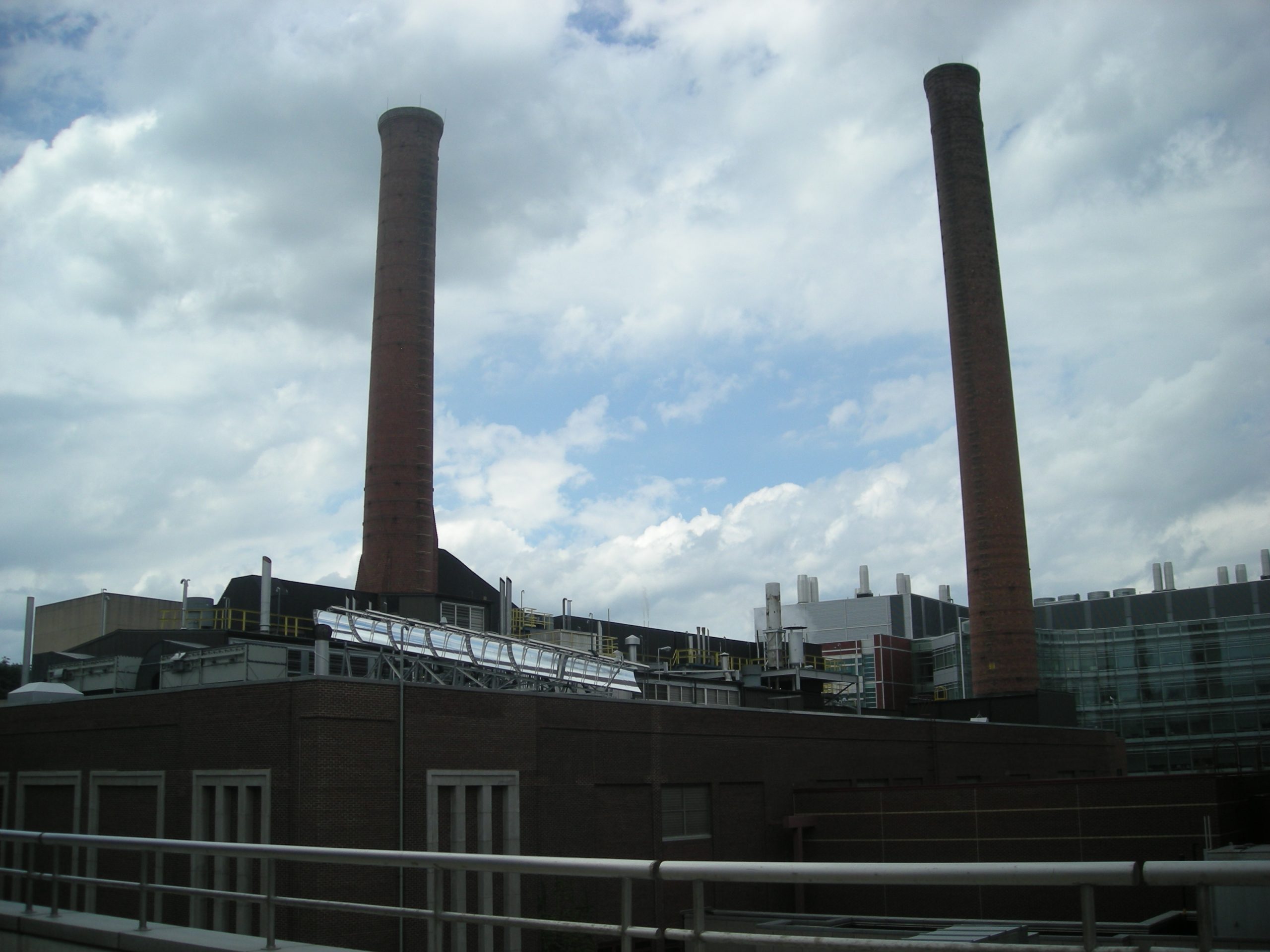
University of Michigan Central Power Plant; the largest of the several heating plants that generate electricity. located at load centers on the Ann Arbor campus.

Gallery: School, College & University Electric Systems

Power 300: Advanced Topics

Information Technology Equipment

This content is accessible to paid subscribers. To view it please enter your password below or send mike@standardsmichigan.com a request for subscription details.

PANDEMIC CHECKLIST

CLICK ON IMAGE


Outside & Inside ICT Environment

The Alliance for Telecommunications Industry Solutions (ATIS) is an ANSI accredited standards development organization that develops technical and operational standards and solutions for the ICT industry.    The home page for its standards development enterprise is linked below:

ATIS Public Groups Page

Two of its consensus products have entered a revision cycle:

ATIS 0600010 Temperature, Humidity, and Altitude Requirements for Information and Communications Technology (ICT) Equipment Utilized in Controlled Environmental Spaces

Scope:  This standard covers the minimum temperature, humidity, and altitude criteria for wireline and wireless telecommunications network equipment to be installed and utilized by service providers in controlled environmental spaces (e.g., Carrier Communication Spaces, Central Offices, MTSOs, Huts, CEVs, and customer premises). It describes test methodologies and test report criteria necessary for proper evaluation by interested parties, and those intending to deploy equipment in such environments (also called Class 1 environments).

This standard defines temperature and humidity ranges in which the equipment must operate, and provides test methodologies to evaluate equipment operation in those environments. The expectation is that equipment will continue to function properly and without degradation of performance when placed in these environments.

This standard covers the minimum temperature, humidity, and altitude criteria for telecommunications network equipment to be installed and utilized by service providers in controlled environmental spaces (e.g., Carrier Communication Spaces, COs, MTSOs, Huts, CEVs, and customer premises). It describes test methodologies and test report criteria necessary for proper evaluation by interested parties, and those intending to deploy equipment in such environments. The expectation is that equipment will continue to function properly and without any unexpected degradation of performance when placed in the temperature and humidity controlled environmental spaces defined in the standard. Equipment is also expected to function properly after exposure to other environmental stresses, such as experienced in high-altitude applications and during storage and transportation.

ATIS 0600010.01 Temperature, Humidity, Altitude, and Salt Fog Requirements for Information and Communications Technology (ICT) Equipment Utilized in Outside Plant Environments

Scope. This standard covers the minimum temperature, humidity, altitude, and salt fog criteria for telecommunications network equipment to be installed and utilized by service providers in Outside Plant (OSP) environments. These environments include those found in OSP cabinets, enclosures, pedestals, etc., as well as those outside of protective enclosures. Test methodologies and test report criteria necessary for proper evaluation by interested parties and those intending to deploy equipment in such environments are also provided.

 This document defines Environmental Classifications based on the temperature, humidity, altitude, and salt fog ranges in which the equipment must operate, and provides test methodologies to evaluate equipment operation in those environments. Based on the intended usage, network equipment could be placed in one or more of the “Environment Classifications”.

 The expectation is that equipment will continue to function properly and without any unexpected degradation of performance when placed in these environments. Regardless of the operational environmental classification, equipment is expected to function properly after exposure to other environmental stresses, such as operational altitude and storage/transportation temperature-humidity. The test criteria defined in this document apply to all equipment.

Public consultation closes January 6th.  In both cases, you may obtain an electronic copy from Drew Greco (dgreco@atis.org).  Send comments to Drew (with optional copy to psa@ansi.org)

We keep all ATIS titles on the standing agenda of our Infotech colloquia.  We collaborate with the IEEE Education & Healthcare Facilities Committee.  See our CALENDAR for the next online meeting.
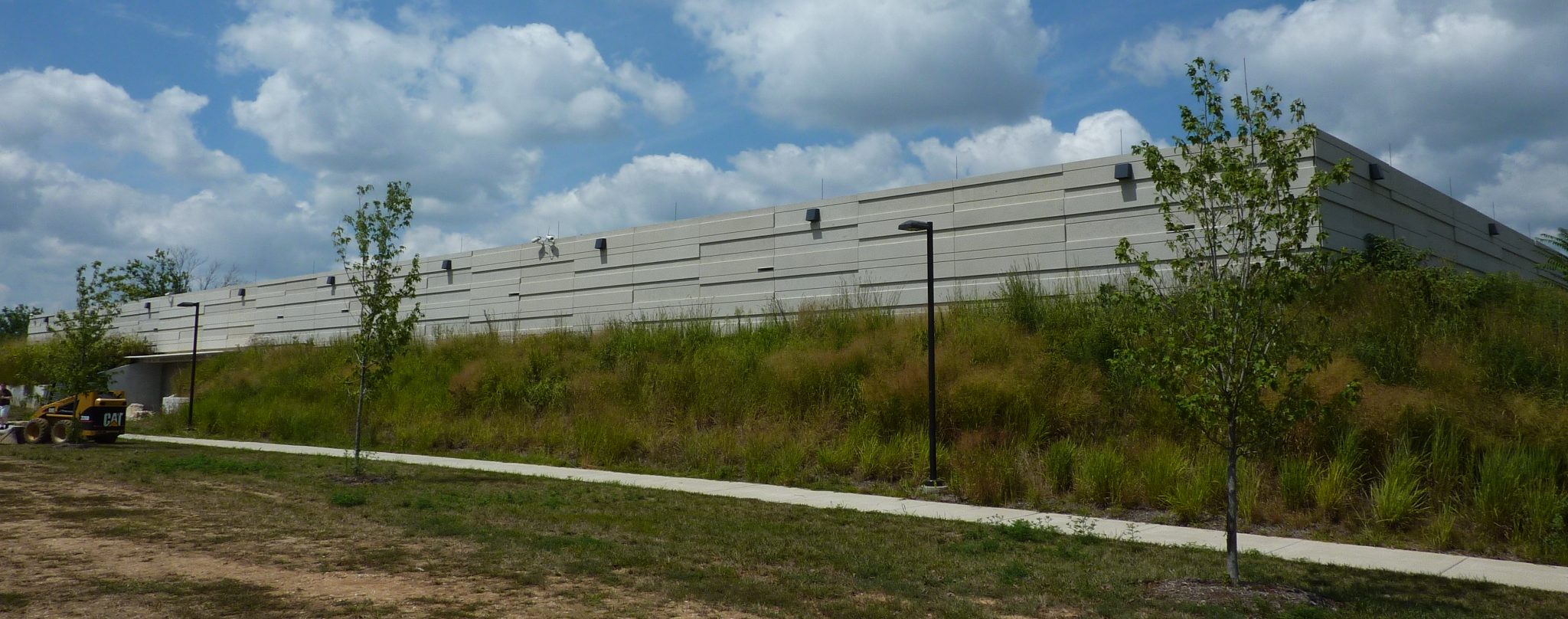
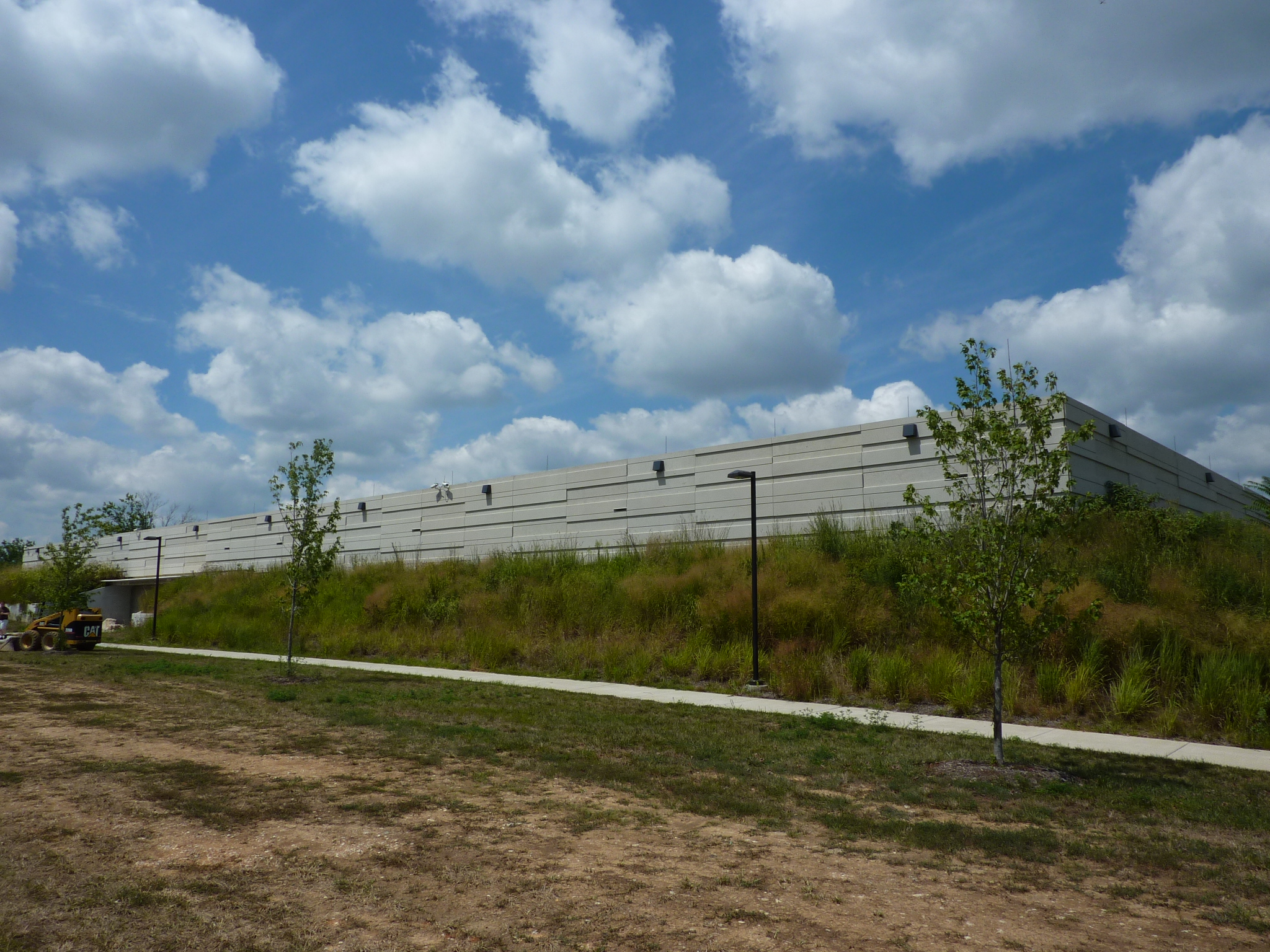
Indiana University Data Center

Issue: [16-138]

Category: Information & Communications Technology, Telecommunications

Colleagues: Mike Anthony, Jim Harvey, Mike Hiler, William McCoy, Keith Waters

Archive / ATIS


LEARN MORE:

An Architectural Risk Analysis for Internet of Things (IoT) Services 

 

Layout mode
Predefined Skins
Custom Colors
Choose your skin color
Patterns Background
Images Background
Standards Michigan
error: Content is protected !!
Skip to content