Category Archives: Telecommunicatons

Loading
loading...

Energy Standard for Data Centers

Consulting-Specifying Engineer (March 4, 2025): Why and how to adopt the IECC for energy-efficient designs


2024 Update to ASHRAE Position Statements

List of Titles, Scopes and Purposes of the ASHRAE Catalog

Public Review Draft Standards

The parent title of this standard is ASHRAE Standard 90.1: Energy Standard for Buildings Except Low-Rise Residential Buildings  and is continually under revision; frequently appearing in electrical engineering design guidelines, construction specifications, commissioning and O&M titles in our industry and others.

ASHRAE 90.4 defines an alternate compliance path, specific to data centers, while the compliance requirements for “non-data center” components are contained in ASHRAE 90.1 .  The 90.4 structure also streamlines the ongoing maintenance process as well ensures that Standards 90.1 and 90.4 stay in their respective lanes to avoid any overlap and redundancies relating to the technical and administrative boundaries.  Updates to ASHRAE 90.1 will still include the alternate compliance path defined in ASHRAE 90.4. Conversely the 2022 Edition of 90.4-2022 refers to ASHRAE 90.1-2022; cross-referencing one another synchronously

Links to noteworthy coverage from expert agencies on the 2022 revisions:

Addendum g modifies Sections 3 and 6 to support the regulation of process heat and process ventilation

HPC Data Center Cooling Design Considerations

ASHRAE standard 90.4 updates emphasize green energy

ASHRAE updated its standard for data centers

How to Design a Data Center Cooling System for ASHRAE 90.4

Designing a Data Center with Computer Software Modeling

This title resides on the standing agenda of our Infotech 400 colloquium; hosted several times per year and as close coupled with the annual meetings of ASHRAE International as possible.  Technical committees generally meet during these meetings make decisions about the ASHRAE catalog.  The next all committee conference will be hosted January 20-24, 2024 in Chicago.  As always we encourage education industry facility managers, energy conservation workgroups and sustainability professionals to participate directly in the ASHRAE consensus standard development process.  It is one of the better facilities out there.

Start at ASHRAE’s public commenting facility:

Online Standards Actions & Public Review Drafts

Energy Standard for *Sites* and Buildings


Update: May 30, 2023

Proposed Addendum g makes changes to definitions were modified in section 3 and mandatory language in Section 6 to support the regulation of process heat and process ventilation was moved in the section for clarity. Other changes are added based on comments from the first public review including changes to informative notes.

Consultation closes June 4th


Update: February 10, 2023

The most actively managed consensus standard for data center energy supply operating in education communities (and most others) is not published by the IEEE but rather by ASHRAE International — ASHRAE 90.4 Energy Standard for Data Centers (2019).  It is not required to be a free access title although anyone may participate in its development.   It is copyrighted and ready for purchase but, for our purpose here, we need only examine its scope and purpose.   A superceded version of 90.4 is available in the link below:

Third ISC Public Review Draft (January 2016)

Noteworthy: The heavy dependence on IEEE power chain standards as seen in the Appendix and Chapter 8.  Recent errata are linked below:

https://www.ashrae.org/file%20library/technical%20resources/standards%20and%20guidelines/standards%20errata/standards/90.4-2016errata-5-31-2018-.pdf

https://www.ashrae.org/file%20library/technical%20resources/standards%20and%20guidelines/standards%20errata/standards/90.4-2019errata-3-23-2021-.pdf

We provide the foregoing links for a deeper dive “into the weeds”.  Another addendum has been released for consultation; largely administrative:

ASHRAE 90.4 | Pages 60-61 | Consultation closes January 15, 2023.

It is likely that the technical committee charged with updating this standard are already at work preparing an updated version that will supercede the 2019 Edition.  CLICK HERE for a listing of Project Committee Interim Meetings.

We maintain many titles from the ASHRAE catalog on the standing agenda of our Mechanical, Energy 200/400, Data and Cloud teleconferences.   See our CALENDAR for the next online meeting; open to everyone.


Originally posted Summer 2020.


ASHRAE International has released four new addenda to its energy conservation consensus document ASHRAE 90.4-2016 Energy Standard for Data Centers.  This document establishes the minimum energy efficiency requirements of data centers for design and construction, for the creation of a plan for operation and maintenance and for utilization of on-site or off-site renewable energy resources.

It is a relatively new document more fully explained in an article published by ASHRAE in 2016 (Click here).   The addenda described briefly:

Addendum a  – clarifies existing requirements in Section 6.5 as well as introduce new provisions to encourage heat recovery within data centers.

Addendum b  – clarifies existing requirements in Sections 6 and 11 and to provide guidance for taking credit for renewable energy systems.

Addendum d  – a response to a Request for Interpretation on the 90.4 consideration of DieselRotary UPS Systems (DRUPS) and the corresponding accounting of these systems in the Electrical Loss Component (ELC). In crafting the IC, the committee also identified several marginal changes to 90.4 definitions and passages in Section 8 that would add further clarity to the issue. This addendum contains the proposed changes for that aim as well as other minor changes to correct spelling or text errors, incorporate the latest ELC values into Section 11, and to refresh information in the Normative Reference.

Addendum e adds language to Section 11 intended to clarify how compliance with Standard 90.4 can be achieved through the use of shared systems.

Comments are due September 6th.   Until this deadline you may review the changes and comment upon them by by CLICKING HERE
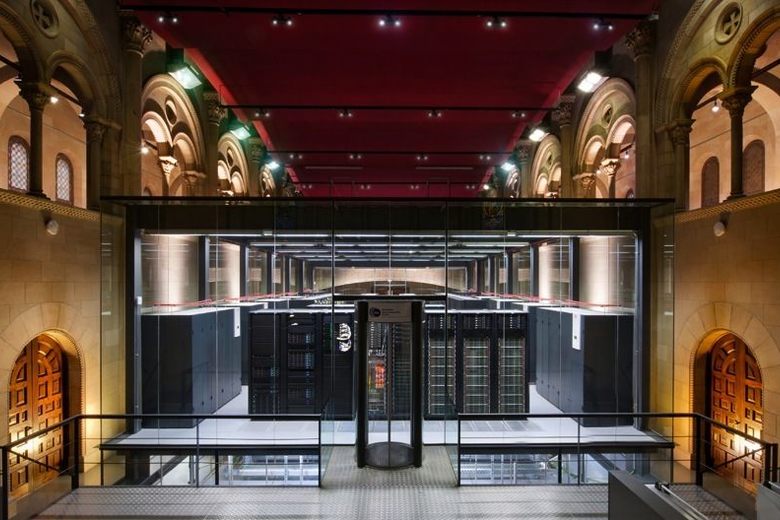
Universitat de Barcelona


Proposed Addendum g

Education facility managers, energy conservation workgroups and sustainability professionals are encouraged to participate directly in the ASHRAE standard development process.   Start at ASHRAE’s public commenting facility:

Online Standards Actions & Public Review Drafts

The ASHRAE catalog is a priority title in our practice.  This title appears on the standing agenda of our Infotech sessions.  See our CALENDAR for the next online meeting; open to everyone.
"One day ladies will take their computers for walks in the park and tell each other, "My little computer said such a funny thing this morning" - Alan Turing

Issue: [12-54]

Category: Telecommunications, Infotech, Energy

Colleagues: Mike Anthony, Robert G. Arno, Neal Dowling, Jim Harvey, Mike Hiler, Robert Schuerger, Larry Spielvogel

Workspace / ASHRAE


Modular Office Furniture Wiring

2026 NEC CMP-18 Public Input Report

CMP-18 Second Draft Report

“Office in a Small City” (1953) / Edward Hopper

Modular furniture systems with integral power and telecommunication fittings require attention to power and digital pathways.   “Modular systems furniture” is a generic term for bundles of panels, worksurfaces, shelves, and other items sold by a single manufacturer as a package for furnishing offices.  The modular furniture system environment is characterized by close proximity to electrical energy.   Where there is electrical energy there are concerns for shock and fire safety.

Fire safety considerations appear in NFPA 70 National Electrical Code (NEC)– generally in Articles 210 (Branch Circuits), Article 220 (Branch Circuit, Feeder and Service Load Calculations) — and with more specific safety considerations appearing in Articles 604 (Manufactured Wiring Systems) and Article 605 (Office Furnishings).   The current edition of the National Electrical Code is linked below:

Public Access 2023 National Electrical Code

Over the past 30-odd years modular furniture manufacturers have worked out a lot of the bugs in products; making it easier for furniture contractors to deliver a safer and more effective installation.  What remains are site-specific conditions — such as lighting load, current draw of space heaters and personal air conditioners through the furniture power pathway — that must be reckoned with.   A sample of other considerations:

  • Harmonic heating of the furniture pathway caused by non-linear, harmonic load
  • The risk of double-phasing when circuit breakers are joined with handle ties back at the panelboard and share a neutral
  • Any lighting equipment used with the partitions must have of properly sized cord no more than 9 ft long
  • Modularity in power tap cords (“whips’) between furniture raceways and the first gathering point

There are other safety and sustainability issues related to USB outlets, and data/voice outlets[2] that we will cover in another post and in our collaborations with IEEE SCC-18 and the IEEE Education & Healthcare Facilities Committee (IEEE E&H).

Seneca College / Toronto

We find office wiring a relatively lively “promontary” in safety and sustainability circles.   The transcript of debate among interior wiring experts is always a good place to listen in on the technical discussion; linked below:

Public Input Report – 2023 National Electrical Code Panel 7 

Public Input Report – 2023 National Electrical Code Panel 18

We find manufactured wiring concepts tracking that effects office occupancies for all industries.  Market incumbents continue advocacy for more ground fault and tamper-resistant receptacles in day care and gymnasium.

A more significant debate tracks in Chapter 2 — related to office modular furniture wiring because electrical load calculations determine how designers specify branch circuits for all occupancy classifications present in education communities (which is nearly every occupancy type defined in the International Building Code):

Public Input Report – 2023 National Electrical Code Panel 2

,Standards Michigan, beginning with its inspiration in the original University of Michigan standards advocacy enterprises, has a long and storied engagement with Chapter 2 of the NEC covered here and also academic literature and also in research sponsored by NFPA’s Fire Protection Research Foundation.

We always encourage our workpoint experts in the thousands of electrical and telecommunication units in the education and healthcare facilities industry to participate directly in the NFPA Code Development process (CLICK HERE to join a committee).

Since both the National Electrical Code and the National Electrical Safety Code revision cycles are roughly coincident in 2021 we working on electrical power issues every day, collaborating with the IEEE E&H Committee.   Online meetings are open to everyone.


Issue: [16-102]

Category: Electrical, Interior Furnishings, Telecommunications

Colleagues: Mike Anthony, Jim Harvey, Massimo Mitolo


[1]  Rightsizing electrical power systems in large commercial facilities

[2] Commercial Building Telecommunications Cabling Standard


More


Data Center Operations & Maintenance

"One day ladies will take their computers for walks in the park and tell each other, "My little computer said such a funny thing this morning" - Alan Turing

Information and communications technology (ICT) is a fast-moving economic space in which a mix of consensus, consortia and open-source standards form the broad contours of leading practice.   ICT standards tend to follow international developments — more so than, say, fire safety standards which are more familiar to education facility leadership.  All school districts, colleges, universities and university-affiliated health care systems have significant product, system, firmware and labor resources allocated toward ICT.

The Building Industry Consulting Service International (BICSI) is a professional association supporting the advancement of the ICT community in all markets.   This community is roughly divided between experts who deal with “outside-plant” systems and “building premise” systems on either side of the ICT demarcation (or Point-of-Presence).   BICSI standards cover the wired and wireless spectrum of voice, data, electronic safety & security, project management and audio & video technologies.  Its work is divided among several committees as shown in the landing page of its standards setting enterprise, linked below:

BICSI International Standards Program

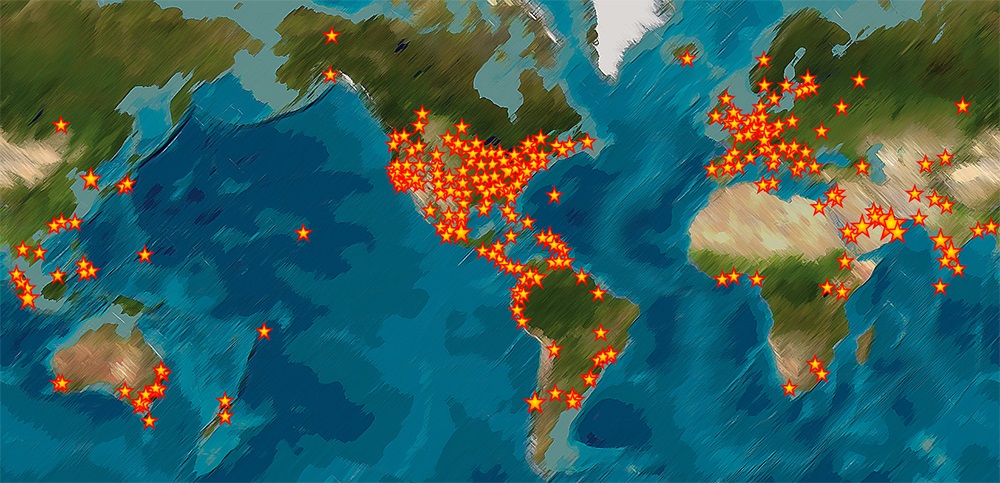
The stars on the map above indicate where BICSI Standards are currently in use (CLICK ON IMAGE).

Education communities are stewards of significant information and communication technology infrastructure.  Accordingly, we track the development of BICSI 009 Data Center Operations and Maintenance Best Practices.   This title provides requirements, recommendations, and best practices for the operation and maintenance of data centers including but not limited to standard operating procedures, emergency operating procedures, maintenance, governance, and management.  Those comments are now being integrated into a revised standard to be released as soon as the restrictions of the pandemic are eased.  For more information you may communicate directly with Jeff Silveira (jSilveira@bicsi.org)

As of this posting, all BICSI best practice titles are stable and current; though our recent communication with its leadership indicates that BICSI standards setting has been slowed by the pandemic.

A fair amount of content in BICSI standards are inspired by movement in safety concepts of the National Electrical Code; particularly on matters involving wiring, grounding and lightning protection.  We maintain all BICSI best practice titles on the standing agenda of our Infotech 200 teleconference.  See our CALENDAR for the next online meeting; open to the public.   On this topic we collaborate with the IEEE Education & Healthcare Facilities Committee meets four times monthly in European and American time zones; also open to the public.


Issue: [19-30]

Category: Telecommunications, Infotech

Colleagues: Mike Anthony, Jim Harvey, Michael Hiler


LEARN MORE:


Workspace / BICSI


Data Center Wiring

The bookwheel, also known as a revolving bookcase, was invented by an Italian scholar and polymath named Agostino Ramelli. Ramelli was born in 1531 in Ponte Tresa, a town in present-day Italy, and he lived during the Renaissance period.

Ramelli’s invention, described in his work titled “Le diverse et artificiose machine del capitano Agostino Ramelli” (The Various and Ingenious Machines of Captain Agostino Ramelli), was published in 1588. This book showcased a collection of 195 mechanical devices.  

Ramelli’s work contributed to the growing interest in mechanical inventions during the Renaissance period. His bookwheel design remains a fascinating example of early engineering and ingenuity, highlighting the desire for knowledge and practical solutions in the pursuit of learning and scholarly endeavors.

2026 NEC Articles 645-646-647 Information Technology Equipment, et. al First Draft Report

2026 NEC Articles 645-646-647 Information Technology Equipment, et. al Second Draft Report

“Bookwheel” Early Data Center

The standard of care for wiring safety for data centers —  a continually expanding presence in education communities even before the pandemic  — is established in National Electrical Code Articles 645 (Information Technology Equipment), Article 646 (Modular Data Centers) and Article 647 (Sensitive Electronic Equipment).   You will notice that these articles cover the topic comprehensively and bear the imprint of competing Producer-Interest groups.  There are no User-Interest representatives on Code-Making Panel 12 that represent the final fiduciary in education communities even though education communities are one of the largest markets for information and communication technology systems.

The current version of NFPA 70 is linked below:

2026 National Electrical Code

2023 National Electrical Code

Transcripts  of technical committee action during the 2026 revision (CMP-16) are linked below because they will inform our recommendations for the 2026 National Electrical Code.  Keep in mind that the Technical Correlating Committee is moving content around the Code in order to make the NEC easier to use by experts.

CMP-16 First Draft Report | Public Input with Committee Response 

CMP-16 Second Draft Report

The transcripts of technical committee action during the 2023 revision are linked below because they will inform our recommendations for the 2026 National Electrical Code.

Code‐Making Panel 12 Public Input Report

Code-Making Panel 12 Public Comment Report

National Electrical Code CMP-12

We will use these in our exploration of what we might propose for improvements in the 2026 revision.  Public comment on the First Draft of the 2026 Edition will be received until August 28th.

The issues that have been in play in these articles of the NEC are familiar to veterans of the “food fight” – occupancy classification, cable specifications, fire protection, ventilation, energy consumption, surge protection, licensing of engineers. etc.  We look for market-making excesses by opposing stakeholders that seek to limit their risk while raising the (financial) risk to education communities.

We encourage our colleagues to participate in the NFPA code development process directly.  We also encourage stakeholders in education communities — students, faculty and staff  to join us during any of the teleconferences we co-host with the IEEE Education & Healthcare Facilities Committee 4 times monthly in both European and American time zones.   See our CALENDAR for the next online meeting.

"One day ladies will take their computers for walks in the park and tell each other, "My little computer said such a funny thing this morning" - Alan Turing


Related standards:

NFPA 75: Standard for the Fire Protection of Information Technology Equipment

2024 International Building Code: Special Detailed Requirements Based on Occupancy and Use

2024 International Building Code: Section 304.1 Business Group B

Freely Available ICT Standards

United States Technical Advisory Group Administrator: INCITS

TC 64 Electrical installations and protection against electric shock

“Le Lac Léman ou Près d’Evian au lac de Genève” 1883 François BocionISO and IEC Joint Technical Committee 1  is the work center for international information and communications technology (ICT) standards that are relevant to education communities.  In accordance with ISO/IEC JTC 1 and the ISO and IEC Councils, some International Standards and other deliverables are made freely available for standardization purposes.

Freely Available International Standards

We at least follow action, and sometimes contribute data and user-interest perspective, to the development of standards produced by several ANSI-accredited ICT standard developing organizations — ATIS, BICSI, IEEE, INCITS, TIA among them.  US-based organizations may communicate directly with Lisa Rajchel, ANSI’s ISO/IEC JTC 1 Senior Director for this project: lrajchel@ansi.org.  Our colleagues at other educational organizations should contact their national standards body.

We scan the status of Infotech and Cloud standards periodically and collaborate with a number of IEEE Societies.  See our CALENDAR for the next online meeting; open to everyone.
More

The ISO/IEC Joint Technical Committee for Information Technology (JTC 1)

ISO/IEC JTC 1/SC 36 Information technology for learning, education and training

ISO/IEC JTC 1/SC 32 Data management and interchange

Telecommunications Service Point

Today we get down in the weeds to examine the point of common coupling between a building and a telecommunication service provider.  In many cases the TSP is the university itself.

TIA-758-C (2021) Customer-Owned Outside Plant Telecommunications Infrastructure Standard. Covers direct-buried cable, conduit systems, duct banks, handholes, manholes, burial depths, warning tape, backfill, and route planning. → Includes minimum bend radii, pulling tensions, separation from power, and environmental protection.  Applies to copper, coaxial, and optical fiber in underground pathways.
TIA-590-B (2015) Standard for Physical Location and Protection of Below-Ground Fiber Optic Cable Plant.  Focuses on fiber optic underground protection. → Specifies burial depths, marker tape, locator wires, armored vs. non-armored cable, and risk mitigation (e.g., flood zones).


Higher education settlements often require a more diverse approach to designing and implementing ICT systems than that of a typical commercial building.  First of all, educational settlements are frequently one building. That means not only does the ICT infrastructure need to meet the varying demands of a specific building, but multiple buildings must all be integrated into one cohesive design.

In an environment of providing multifunctional spaces within one building, it is common to find a combination of commercial, industrial, data center, health care and entertainment environments within just a few buildings; hence our preference for the word “settlements” over the more widely used word “campus”.

TIA Standards

ANSI/TIA-568-C series: Telecommunications Cabling Standards.  Specifies the requirements for various aspects of structured cabling systems, including cabling components, installation, and testing.

TIA-569-B: Telecommunications Pathways and Spaces.  Provides guidelines for the design and installation of pathways and spaces for telecommunications cabling.

TIA-606-B: Administration Standard for Commercial Telecommunications Infrastructure.  Specifies administration practices for the telecommunications infrastructure of commercial buildings.

Our inquiry cuts across the catalogs of several other standards developers:

NEC (National Electrical Code).  NEC Article 800 specifically addresses the installation of communications circuits and equipment.

ISO/IEC 11801: Information technology — Generic cabling for customer premises.  Defines generic telecommunications cabling systems (structured cabling) used for various services, including voice and data.

IEEE 802.3: Ethernet Standards. Defines standards for Ethernet networks, which are commonly used for data communication in buildings.

UL 497: Protectors for Paired Conductor Communications Circuits. Addresses requirements for protectors used to safeguard communications circuits from overvoltage events.

GR-1089-CORE: Electromagnetic Compatibility and Electrical Safety. Published by Telcordia (now part of Ericsson), this standard provides requirements for the electromagnetic compatibility and electrical safety of telecommunications equipment.

FCC Part 68: Connection of Terminal Equipment to the Telephone Network. Outlines the technical requirements for connecting terminal equipment to the public switched telephone network in the United States.

Local building codes and regulations also include requirements for the installation of telecommunication service equipment.


Last update: October 12, 2019

All school districts, colleges, universities and university-affiliated health care systems have significant product, system, firmware and labor resources allocated toward ICT.   Risk management departments are attentive to cybersecurity issues.   All school districts, colleges, universities and university-affiliated health care systems have significant product, system, firmware and labor resources allocated toward ICT.

The Building Industry Consulting Service International (BICSI) is a professional association supporting the advancement of the ICT community.   This community is roughly divided between experts who deal with “outside-plant” systems and “building premise” systems on either side of the ICT demarcation point.   BICSI standards cover the wired and wireless spectrum of voice, data, electronic safety & security, project management and audio & video technologies.  Its work is divided among several committees:

BICSI Standards Program Technical Subcommittees

BICSI International Standards Program

BICSI has released for public review a new consensus document that supports education industry ICT enterprises:  BICSI N1 – Installation Practices for Telecommunications and ICT Cabling and Related Cabling Infrastructure.    You may obtain a free electronic copy from: standards@bicsi.org; Jeff Silveira, (813) 903-4712, jsilveira@bicsi.org.

Comments are due November 19th.


You may send comments directly to Jeff (with copy to psa@ansi.org).   This commenting opportunity will be referred to IEEE SCC-18 and the IEEE Education & Healthcare Facilities Committee which meets 4 times monthly in American and European time zones and will meet today.  CLICK HERE for login information.

Issue: [18-191]

Category: Telecommunications, Electrical, #SmartCampus

Colleagues: Mike Anthony, Jim Harvey, Michael Hiler

Readings:

What is Grounding and Bonding for Telecommunication Systems?


Adhiyamaan College of Engineering


Call for Members

“A medieval missionary tells that he has found the point where heaven and Earth meet…” CLICK IMAGE

As ANSI’s United States Technical Advisory Group Leader, the International Committee on Information Technology Standards manages public consultations originating from the Geneva partner organizations that coordinate national standards organizations such as ANSI. The IEC develops its consensus titles in relatively smaller parcels which means that public review can be released in batches of 10 to 100 at a time. We see the same tsunami-like releases coming from ISO subcommittees.  Hard to keep up with but we try; giving priority to titles incorporated by reference into codes, standards and regulations at the state and federal level.   Meaningful information affecting #TotalCostofOwnership of education communities are typically buried deep, deep into best practice literature.

By comparison, most US-based standards setting organizations bundle best practice concepts into chapters and books.   The books are big but they move more slowly and, arguably, have been superceded within weeks; a discussion for another colloquium.

A broad overview of INCITS information and communication standards setting is linked below:

Catalog of Standards

Note that the titles are product titles (not interoperability) titles.  We generally devote resources to interoperability titles for reasons we explain in our ABOUT.

We collaborate closely with the Institute of Electrical and Electronic Engineers, the world’s largest professional organization for the world’s most transformative technologies.  Every 12 hours our algorithm picks up commenting opportunities relevant to the business side of the education industry and redirects them to the subject matter experts in the IEEE Education & Healthcare Facilities Committee which meets 4 times monthly in European and American time zones.

This much said, we always encourage direct participation in INCITS standards setting activity and in its administrative role as the US TAG to ISO/IEC Joint Technical Committee 1.   CLICK HERE to get started on your own.

The INCITS suite is included on the syllabus of our Infotech and Global See our CALENDAR for the next online meeting; open to everyone.
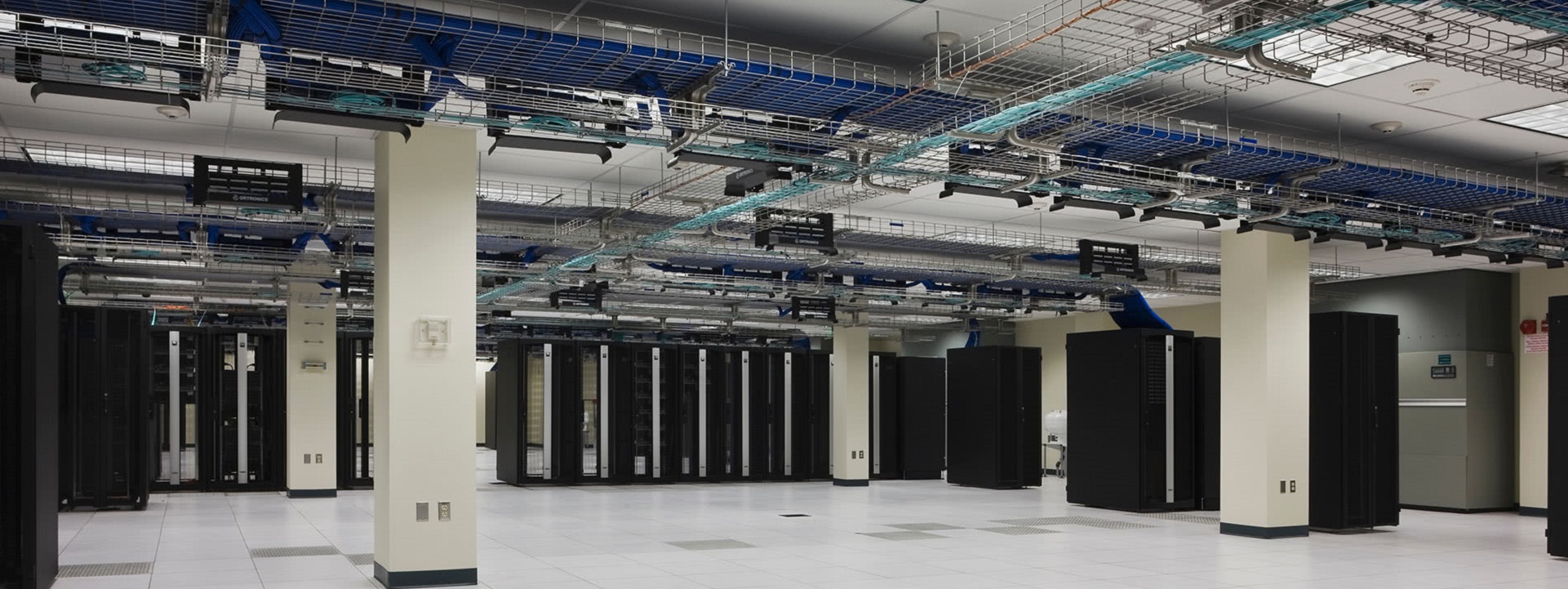


More

Freely available ISO/IEC JTC1 Standards


Electronic Equipment Recycling

The Impact of E-Waste / Student Art Guide

We are observers in the development of a new ANSI accredited electronic equipment recycling standard  produced with the leadership of NSF International; a Michigan-based standards developer (founded at the University of Michigan) not far from our own offices and one of the largest in the world. 

The electronic recycling space is growing quickly — reaching far upstream the value chain into how electronic equipment is designed in the first place.  An overview of the project is available in the link below:

Joint Committee on Environmental Leadership Standard for Servers

A public edition is linked below:

NSF/ANSI 426 – 2019 Environmental Leadership and Corporate Social Responsibility Assessment of Servers

This standard moved swiftly to market under NSF International’s continuous maintenance process.  We bring it to the attention of the education facilities industry as a recommendation for lowering #TotalCostofOwnership.   Participation as a User interest in American national standards development reduces “wheel reinvention” in which many recycling workgroups unnecessarily start from scratch, eliminates the need to attend costly workshops hosted by trade associations and significantly minimizes destructive competition.  

This title is on the standing agenda of our Redivivus colloquium.   Since our interest lies primarily with electrotechnology we collaborate with the IEEE Standards Association.  See our CALENDAR for the next online meeting; open to everyone.
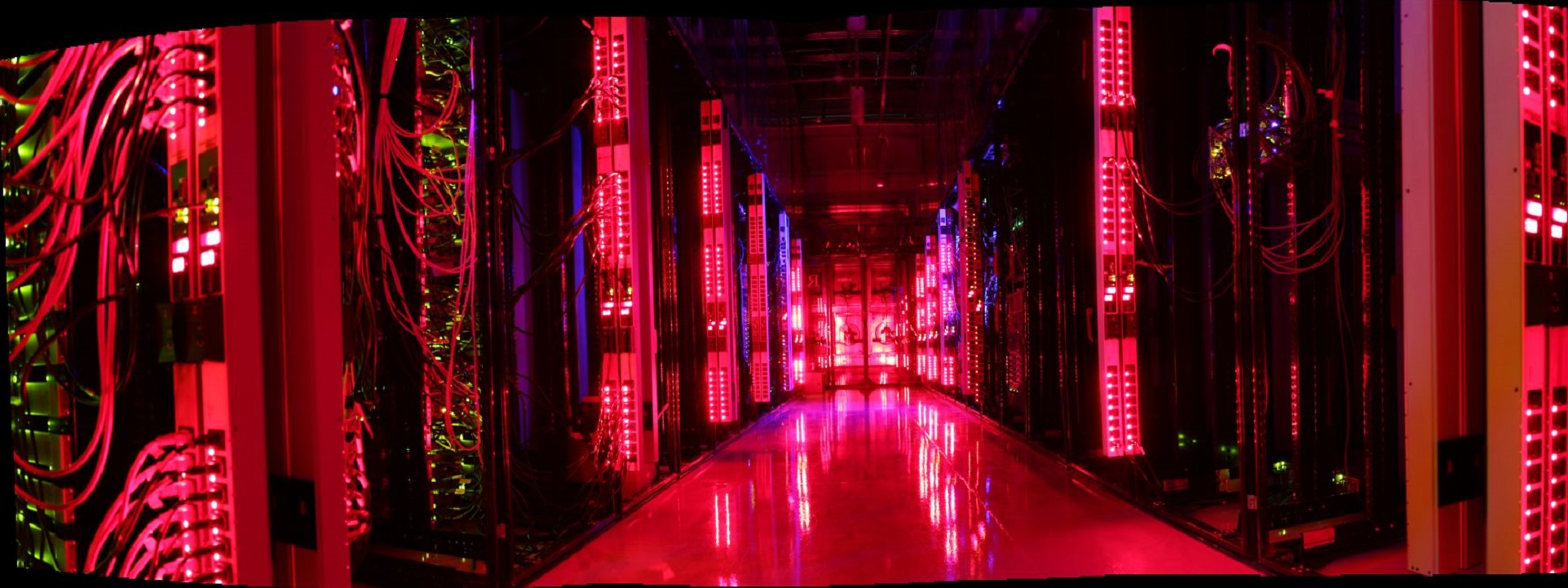
 

Issue: [14-74], [15-147], [15-148]

Category: Electrical, Telecommunications, Interior 

Colleagues: Mike Anthony, Jim Harvey, Richard Robben

Archive / NSF 426 Electronic Equipment Recycling


Best Practice for Educational Institutions & Facilities

This content is accessible to paid subscribers. To view it please enter your password below or send mike@standardsmichigan.com a request for subscription details.

Layout mode
Predefined Skins
Custom Colors
Choose your skin color
Patterns Background
Images Background
Standards Michigan
error: Content is protected !!
Skip to content