Category Archives: Monthly Construction

Loading
loading...

Ædificare & Utilization

New Construction Release Schedule: https://www.census.gov/construction/c30/release.html

The next report will be released February 27th; possibly the result of government shutdowns.  Given that the regular monthly cadence has been interrupted we will continue placing it on our first day of the month custom.


There’s been a significant redesign of the look and feel of the monthly Census Bureau reports construction activity. Today we sort through the rather more granular statistics that inform our recommendations for facility spend.


December 1, 2025

It has been 20 years since we began tracking educational settlement facility spend.  Starting this month we will examine federal government data together with the best available data about space utilization to enlighten our response to the perfectly reasonable question: “Are we over-building or under-building or building ineffectively”.  Use the login credentials at the upper right of our home page.

United States: Schools of Architecture

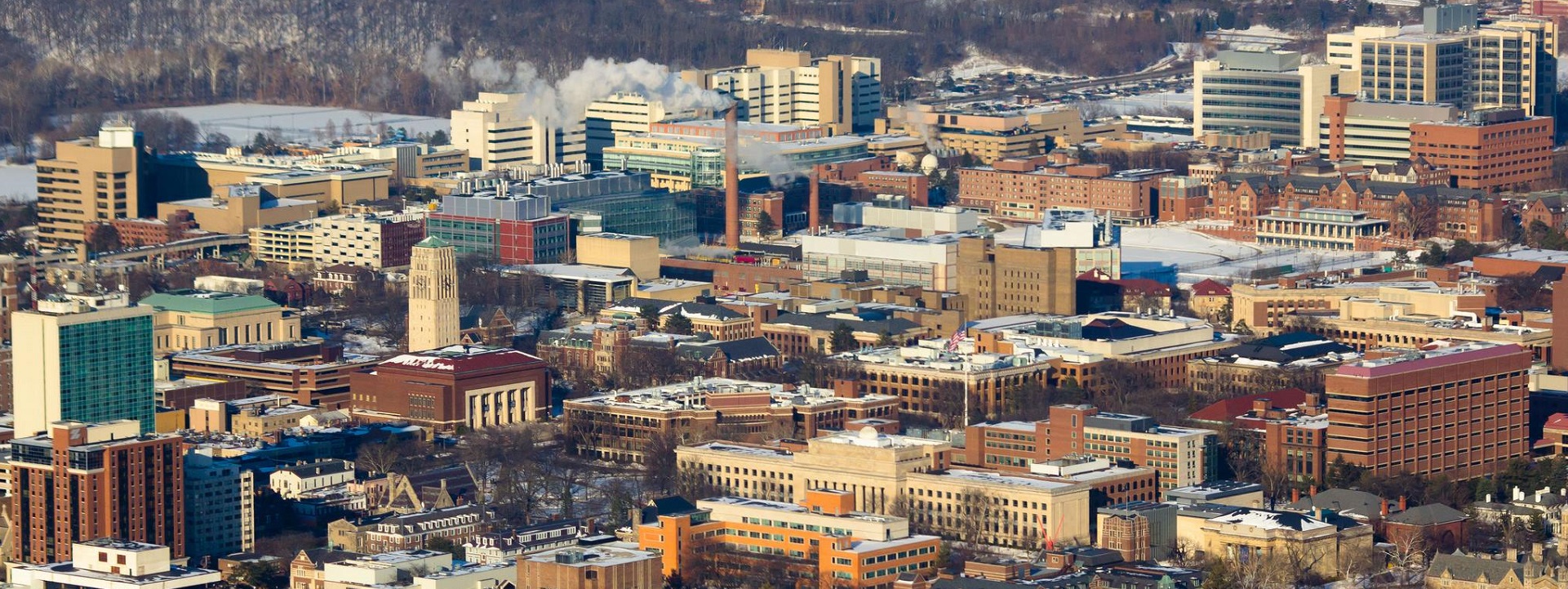
The Society for College and University Planning (Ann Arbor, Michigan)

National Center for Education Statistics

The Financial Impact of Architectural Design: Balancing Aesthetics and Budget in Modern Construction

 

Homeschooling

2022 International Existing Building Code 

  • University College London

As reported by the US Department of Commerce Census Bureau the value of construction put in place by August 2025 by the US education industry proceeded at a seasonally adjusted annual rate of $137.604 billion.  This number does not include renovation for projects under 50,000 square feet and new construction in university-affiliated health care delivery enterprises.   Reports are released two months after calendar month.  The complete report is available at the link below:

MONTHLY CONSTRUCTION SPENDING August 2025 (released two months after calendar month)


This spend makes the US education facilities industry (which includes colleges, universities, technical/vocational and K-12 schools, most university-affiliated medical research and healthcare delivery enterprises, etc.) the largest non-residential building construction market in the United States after commercial property; and fairly close.  For perspective consider total public + private construction ranked according to the tabulation most recently released:

$137.604 billion| Education Facilities

$155.728 billion | Power

$69.625 billion | Healthcare

Keep in mind that inflation figures into the elevated dollar figures.  Overall — including construction, energy, custodial services, furnishings, security. etc., — the non-instructional spend plus the construction spend of the US education facilities is running at a rate of about $300 – $500 billion per year.

LIVE: A selection of construction cameras at  US schools, colleges and universities

Architectural Billings

We typically pick through the new data set; looking for clues relevant to real asset spend decisions.  Finally, we encourage the education facilities industry to contribute to the accuracy of these monthly reports by responding the US Census Bureau’s data gathering contractors.

Reconstruction of Ancient Agora


As surely as people are born, grow wealthy and die with extra cash,

there will be a home for that cash to sustain their memory and to steer

the cultural heritage of the next generation in beautiful settings.

More

National Center for Educational Statistics

AIA: Billings Index shows but remains strong May 2022

National Center for Education Statistics

Sightlines: Capital Investment College Facilities

OxBlue: Time-Lapse Construction Cameras for Education

Architectural Billing Index

IBISWorld Education Sector

US Census Bureau Form F-33 Survey of School System Finances

American School & University

Global Consistency in Presenting Construction & Life Cycle Costs

Carnegie Classifications

Eurocodes

Erasmus+ EU programme for education, training, youth and sport

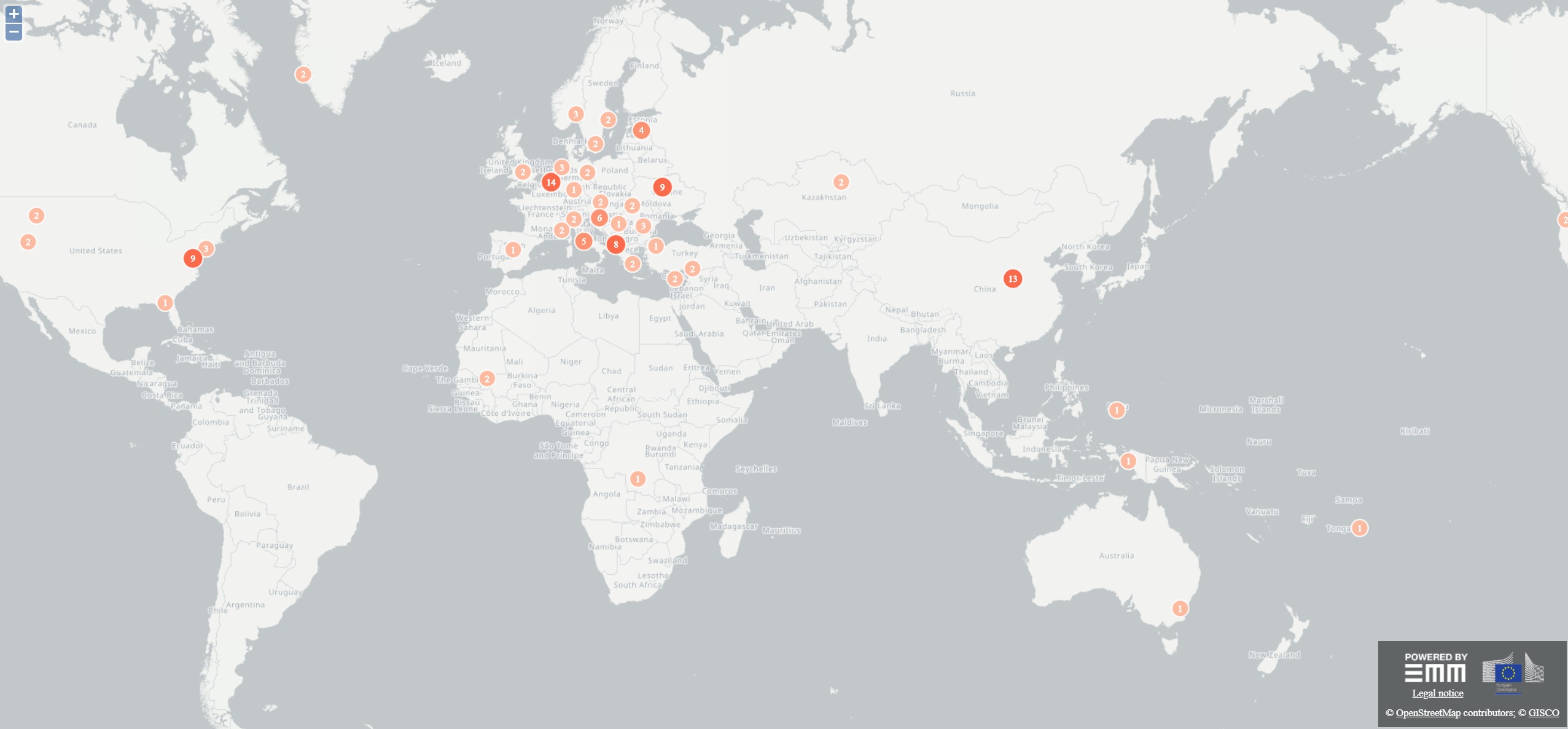
CLICK ON IMAGE TO LAUNCH INTERACTIVE MAP

The Eurocodes are ten European standards (EN; harmonised technical rules) specifying how structural design should be conducted within the European Union. These were developed by the European Committee for Standardization upon the request of the European Commission.  The purpose of the Eurocodes is to provide:

  • A means to prove compliance with the requirements for mechanical strength and stability and safety in case of fire established by European Union law.[2]
  • A basis for construction and engineering contract specifications.
  • A framework for creating harmonized technical specifications for building products (CE mark).

Since March 2010 the Eurocodes are mandatory for the specification of European public works and are intended to become the de facto standard for the private sector. The Eurocodes therefore replace the existing national building codes published by national standard bodies, although many countries have had a period of co-existence. Additionally, each country is expected to issue a National Annex to the Eurocodes which will need referencing for a particular country (e.g. The UK National Annex). At present, take-up of Eurocodes is slow on private sector projects and existing national codes are still widely used by engineers.

Eurocodes appear routinely on the standing agendas of several of our daily colloquia, among them the AEDificare, Elevator & Lift and Hello World! colloquia.    See our CALENDAR for the next online meeting; open to everyone.


More

REGULATION (EU) No 305/2011 OF THE EUROPEAN PARLIAMENT AND OF THE COUNCIL

Building Environment Design

Educational Settlement Finance

Giovanni Paolo Panini, An architectural capriccio with figures among Roman ruins

The post-pandemic #WiseCampus transformation requires significant capital to meet the sustainability goals of its leadership.  Campuses are cities-within-cities and are, to a fair degree, financed in a similar fashion.  Tax-free bonds are an effective instrument for school districts, colleges and universities — and the host community in which they are nested — for raising capital for infrastructure projects while also providing investors with, say $10,000 to $100,000, to allocate toward a tax-free dividend income stream that produces a return in the range of 2 to 8 percent annually.

An aging population may be receptive to investment opportunities that protect their retirement savings from taxation.

Once a month, we walk through the prospectuses of one or two bond offerings of school districts, colleges and universities and examine offering specifics regarding infrastructure construction, operations and maintenance.  We pay particular attention to details regarding “continuing operations”. Somehow the education industry has to pay for its green agenda.  See our CALENDAR for the next Finance colloquium; open to everyone.

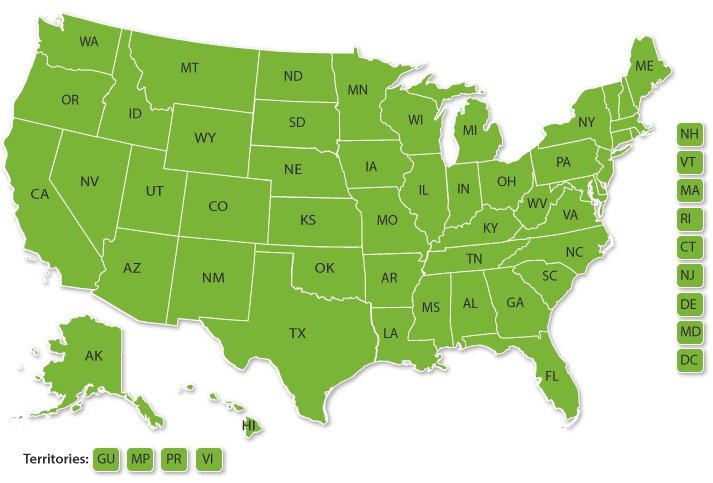
The interactive map provided by Electronic Municipal Market Access identifies state-by-state listings of tax-free bonds that contribute to the construction and operation of education facilities; some of which involved university-affiliated medical research and healthcare delivery enterprises.

CLICK ON IMAGE FOR INTERACTIVE MAP


If you need help cutting through this list please feel free to click in any day at 11 AM Eastern time.  Use the login credentials at the upper right of our hope page.  We collaborate with subject matter experts at Municipal Analytics and UBS.

Issue: [Various]

Category: Administration & Management, Finance, #SmartCampus

Colleagues: Mike Anthony, John Kaczor, Liberty Ziegahn

*We see the pandemic as a driver for a step-reduction in cost in all dimensions of education communities.  We coined the term with a hashtag about two years ago.

*College and university infrastructure projects are classified with public school districts under the rubric “municipal bonds” at the moment.  CLICK HERE for more information.


More:

Duke Law Review:  Don’t ‘Screw Joe the Plummer’: The Sausage-Making of Financial Reform

An Expanded Study of School Bond Elections in Michigan

Structural Design

Update: MARCH 6, 2025

https://1047223.us31.myftpupload.com/snow-load-calculator/

Design of Wood Structures

Call for public proposals for the 2028 edition


CLICK ON IMAGE

Every earthquake, tornado, hurricane, flood and ice storm inspires a revisit of standards action and building code development that we track on behalf of the US education facilities industry.  It is wise to keep pace with the full span of American Society of Civil Engineers (ASCE) regulatory product catalog because so much of the fundamental characteristics of college and university campuses–waterworks, roads, structures, energy etc.–is governed by the safety and sustainability concepts that vary from state-to state.

We follow a number of ASCE titles; among them ASCE/SEI 7-16 Minimum Design Loads and Associated Criteria for Buildings and Other Structures which describes the means for determining dead, live, soil, flood, tsunami, snow, rain, atmospheric ice, earthquake, and wind loads, and their combinations for general structural design. 

Free Access to the 2002 Edition

CLICK HERE to access them both.  You will need to register as a public commenter.

Background & Perspective:

As covered in previous posts, we pay special attention to how occupancy classifications are defined in the International Building Code and ASCE/SEI-7 because those definitions inform how the decisions of academic unit programmers, facility planners/managers and building design professionals contribute to our lower cost agenda.

Throughout 2019-2021  we will be following development of the next edition of the International Existing Building Code (IEBC) and its companion titles — in large measure a companion document for the safety concepts found in ASCE SEI-7 — because a great deal of construction activity in education facilities involves renovated space.

Stanford University Medical Center / Photo Credit: Perkins -Eastman

The revision cycle for the 2022 edition started earlier this year (see previous posts) and the meetings of various SEI-7 technical committees responding to public input is proceeding according to the schedule linked below:

SEI7-16 2022 REVISION CALENDAR

There are no open public consultations at this time (March 6, 2025).


Keep in mind that owing to weather conditions interrupting committee member travels, and the present COVID-19 pandemic contingency, some of the meetings may be cancelled or conducted online.  In any case,  as technical committees meet throughout 2019 exposure drafts open to public comment public will be uploaded to the ASCE public commenting facility:

More information about participating in the ASCE standards development process for this and other documents may be obtained from Jennifer Groupil (jgoupil@asce.org).

Moscow State University

Given that it is a relatively rarified standards space,  we group our tracking, discussion and prospective advocacy in the ASCE standards suite during our Construction Spend colloquia.  See our CALENDAR for the next online teleconference; open to everyone.


Issue: [13-68]

Category: Architectural, Civil Engineering, Structural Engineering

Colleagues: Mike Anthony, Jack Janveja, Jerry Schulte, Patti Spence

https://1047223.us31.myftpupload.com/archive-asce/


More

Public Access to Superceded Editions of ASCE SE-7

Tallest Educational Buildings in the World

National Council of Structural Engineers Associations

Design of a gateway for ubiquitous classroom

“King Nimrod ordering the construction of the Tower of Babel” (17th Century) Louis de Caullery


Smart classroom: Gateway for ubiquitous classroom

Hichem Bargaoui & Rawia Bdiwi

In educational environment, the use of new pedagogies such as collaborative learning requires an evolution from a traditional classroom model to active classroom. The students should be able to share resources to collaborate with each other through computers, tablets, or other devices. The design of smart classroom should enable the control of audiovisual equipments, projectors, interactive whiteboards, in order to facilitate interaction among teachers and students. Ubiquitous computing or pervasive computing is a concept where processors and sensors are embedded in various physical objects to form a network and communicate information. Applying the pervasive computing can facilitate the collaborative learning by creating a smart learning environment. The ubiquitous classroom should be able to support interaction of heterogeneous devices connected through wireless links to a gateway. This paper presents a model of classroom that makes several smart devices such as laptops, tablets, projectors connected through a gateway in order to encourage communication of information between learners and the smart environment. Also, the gateway manages classroom smart devices by automatic detection and connectivity and it serves as application execution platform. Finally the gateway allows the classroom to be remote managed as well as the remote integration of application.


Source: IEEE Explore

Qu’est-ce qu’une nation?

Application of Big Data in Power System Reform

Construction Spend

“The Ideal City” (c. 1480) Fra Carnavale

Today at 15:00 UTC we run a status check on regulations, accredited consensus products, and consortia standards that inform the safety and sustainability of the real assets of education communities.  It is a large topic and we generally only have time to skim the surface of most of a few of them.  Of the few, we locate the highest priority then place it on the agenda of the corresponding daily colloquia.

Some of the stars to steer by:

  • Tax-free bond markets that provide financing for new square-footage and renovated square-footage; operations and maintenance
  • Status of the movement in codes and standards for labor and material; safety and sustainability
  • Expansion of building premise safety and sustainability consensus product scopes onto the spaces between buildings
  • The renovation-versus-new construction conundrum
  • Construction activity data points for education and university-affiliated healthcare facilities

According to IBISWorld Market Research the Educational Service market in the United States runs through about $1600 billion annually. and includes all the soft costs (i.e. nonreal, which is our primary focus) of sustaining civilization.

This is a kludgey number but, when used with other data points collected by government agencies, non-profit trade associations, construction market participants and anecdotes, provides perspective on how to build and maintain the architecture of education communities.

We pick through one or two prospectuses of educational bond offerings uploaded onto the Electronic Municipal Market Access website to see how the money will be spent; particularly how ongoing operation and maintenance expenditures are distinguished (if at all) from capital outlays intended to seed community growth.  There are many parties and counterparties involved in the money flow through tax-free education bonds.  In some cases, interest groups (such as labor unions) promote school bond referenda in order to secure work for their members.


More

National Center for Education Statistics

May 23: Report on the Condition of Education 2023

School Infrastructure Report Card

Ædificare & Utilization

Archive / US Census Bureau Construction Report

Smart Living Lab der FH Technikum Wien

“The aim of architecture is to elucidate the objectification of the will

at the lowest grade of its visibility and to present it in the most definite way,

to make the dumb will speak perceptibly, to bring the inaudible

audibly and visibly before our eyes.”

— Die Welt als Wille und Vorstellung

Johann Christoph Friedrich Wilhelm Schopenhauer


CFR Title 41: PART 102-76—DESIGN AND CONSTRUCTION

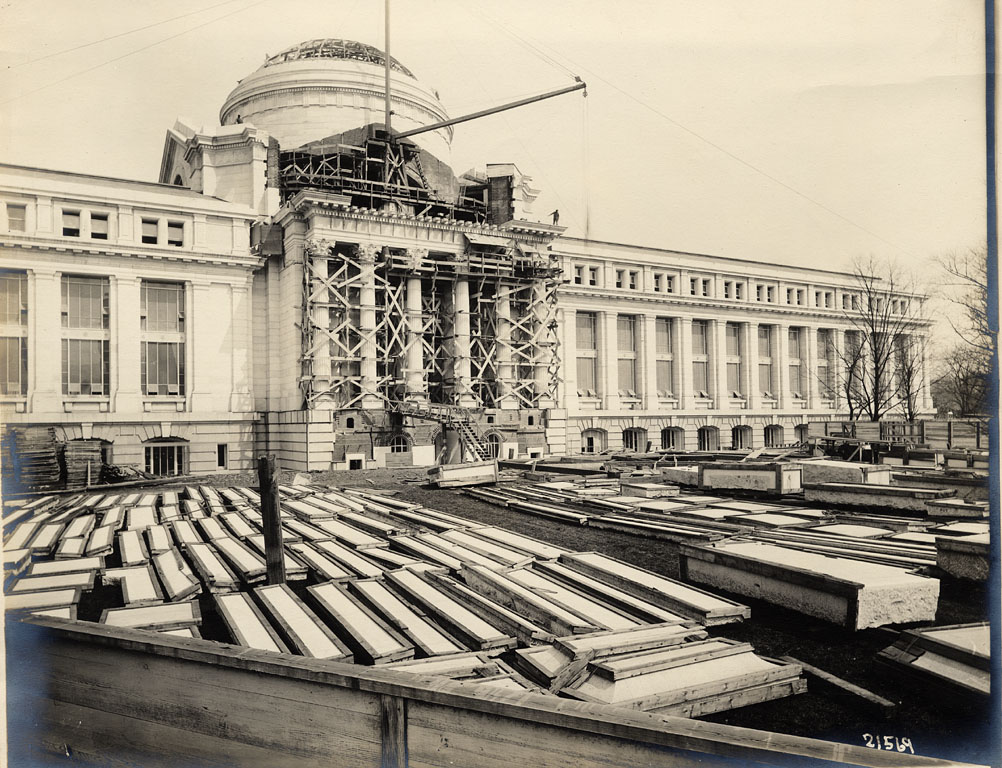
The Birth of a Building: Constructing the United States National Museum

The construction industry is one of the largest employers in any community and, as such, a significant generator of employment.  The so-called “multiplier effect” cited by economists means that when you add one person working in the construction industry you create two additional jobs in other sectors.

The construction industry is also one of the most heavily regulated; heavy regulation being a characteristic of many solid, but slow-growth economic sectors.

As public assets, education facilities are much like federal facilities — both expected to have a long life-cycles — reflected in the guidance in the in the link below.   In privately developed best practice literature authored by ANSI-accredited standards developers you will find federal regulations heavily referenced; but not the other way around.

Code of Federal Regulations Title 41: PART 102-76—DESIGN AND CONSTRUCTION

We track action in federal design and construction regulations because federal regulatory bodies are relatively well staffed.  Some within those groups may say otherwise but that is another discussion.  Federal regulators know know what other federal agencies are doing — such as the Occupational Safety & Health Administration and the Department of Energy  — and they seem to keep pace with private, non-profit standards developers.  Also: many colleges and universities enjoy the “halo effect” of having a National Laboratory or a Presidential Library * present within or near the footprint of their campus.  With the  halo comes the obligation to maintain separate staffing of finance and facility management professionals.

By statue (National Technology Transfer & Advancement Act) federal agencies defer to private standards setting organizations.   The limit of our attention in this section of the Code of Federal Regulations ends here.

We maintain federal construction standards on the standing agenda of our Model Building Code and Federal teleconferences.   See our CALENDAR for the next online meeting; open to everyone.


*  The University of Michigan, Harvard University, the University of Arkansas, and three other Texas universities — University of Texas at Austin,  Texas A&M and Southern Methodist University — are locations of presidential libraries governed by the provisions of this section of the Code of Federal Regulations


5.18

Public Procurement & Private Certification

ABSTRACT: Governments increasingly use their purchasing power to promote environmental policy objectives. We study the relationship between public municipal green-building procurement policies and diffusion of the US Green Building Council’s LEED certification program. We find a strong link between public green building procurement plans and voluntary private adoption of the LEED standard. We also observe an increase in LEED professional accreditation in communities that adopt a green procurement policy. We suggest that public policy may spur private certification by resolving the coordination problem that arises among developers and local building professionals in the diffusion of a new certification program.


Layout mode
Predefined Skins
Custom Colors
Choose your skin color
Patterns Background
Images Background
Standards Michigan
error: Content is protected !!
Skip to content