Named after Rear Admiral John A. Dahlgren, an influential figure in the development of naval ordnance. Its large, open space was ideal for indoor drills and military exercises. The hall was constructed between 1899 and 1903. Its design was overseen by Ernest Flagg, a prominent architect who designed several buildings at the Naval Academy. Today it houses the Drydock Restaurant, a gathering place for midshipmen, faculty, and visitors.
Named after Rear Admiral John A. Dahlgren (1809-1870) an influential figure in the development of naval ordnance during the United States Civil War. It served as an armory and drill hall for midshipmen. Its open space was ideal for indoor drills and military exercises.
The hall was constructed between 1899 and 1903. Its design was overseen by Ernest Flagg, a prominent architect who designed several buildings at the Naval Academy. Today it houses the Drydock Restaurant, a gathering place for midshipmen, faculty, and visitors.
The MIL-SPEC catalog and its evolution have had a significant impact on various industries beyond the military sector. Many civilian industries have adopted military standards as a benchmark for quality, reliability, and compatibility in their products and processes.
World War II Era:
The MIL-SPEC system traces its roots back to the World War II era when the U.S. military faced challenges in coordinating manufacturing efforts across multiple suppliers. To address these challenges, the military began developing specifications and standards that detailed the requirements for various equipment and materials, including dimensions, materials, performance criteria, and testing procedures.
Post-World War II:
After World War II, the MIL-SPEC catalog expanded significantly to cover a wide range of military equipment, ranging from electronics and aircraft components to clothing and food supplies. The standards were continuously updated and revised based on technological advancements, lessons learned, and evolving military needs.
Evolution into MIL-STD:
In the 1950s and 1960s, the MIL-SPEC system evolved into the Military Standard (MIL-STD) system to provide even more comprehensive and detailed specifications. MIL-STD documents incorporated a broader scope of requirements, including design criteria, quality control processes, and test methodologies. The MIL-STD system aimed to ensure consistent design and manufacturing practices across contractors and suppliers.
MIL-STD Transition to Commercial Standards:
Over time, the reliance on MIL-STDs started to decline, and there was a shift towards adopting commercial standards whenever possible. This transition allowed the military to benefit from the advancements and cost efficiencies of commercial technologies. However, certain critical military-specific standards, such as those related to security and specialized equipment, continued to be maintained within the MIL-STD framework.
DoD’s Transition to Performance-Based Specifications:
In recent years, the DoD has been moving away from prescriptive specifications (MIL-STDs) towards performance-based specifications. Performance-based specifications focus on defining the desired outcomes and performance requirements while allowing contractors greater flexibility in meeting those requirements. This approach encourages innovation, cost-effectiveness, and broader industry participation in military contracts.
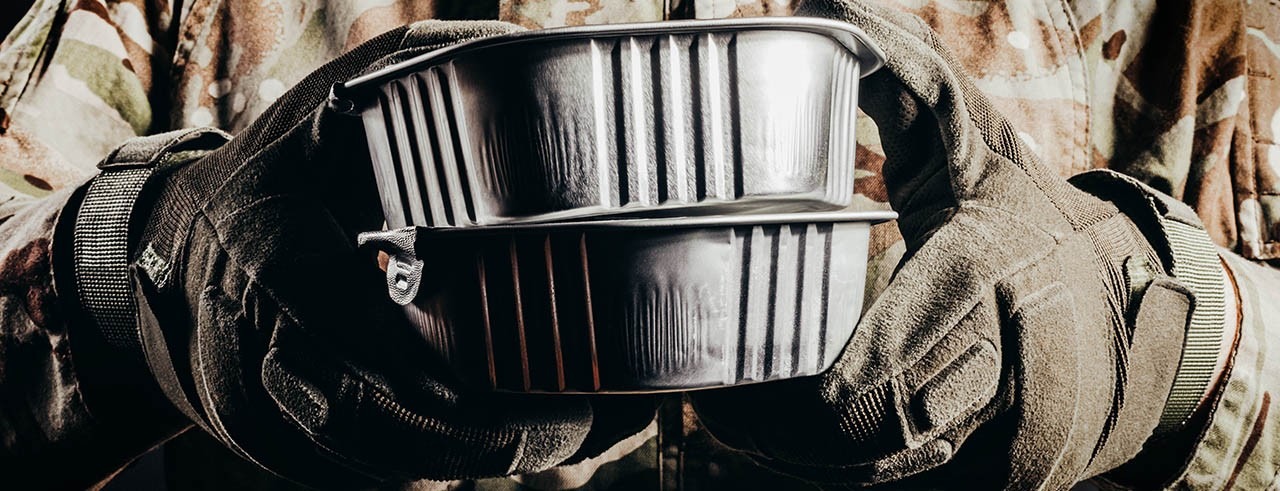
“Whether it’s chili with beans, barbecued beef or meatballs in marinara sauce, members of the United States military are served up a rotating menu of entrees through meals, ready to eat rations. Packed in individual pouches, these self-contained meals can be eaten during combat operations, humanitarian missions or field trainings, providing nourishment on the go. Yet while MREs were first piloted for U.S. military members during the Vietnam War, it wasn’t until the 1990s that it’s been possible for these meals to be served hot…
…We can thank a University of Cincinatti Professor of Mechanical Engineering for that.” (And transforming the civilian emergency food industry, to boot)
Today at the usual hour we take will take a broad view of the technical standards catalog of all military branches as they apply to the educational settings of each of the US military branches. Use the login credentials at the upper right of our home page.
“Overgrown military establishments are under any form of government inauspicious to liberty, and are to be regarded as particularly hostile to republican liberty.” Farewell Address, September 19, 1796.
United States defense standards are used to help achieve standardization objectives by the U.S. Department of Defense. Standardization is beneficial in achieving interoperability, ensuring products meet certain requirements, commonality, reliability, total cost of ownership, compatibility with logistics systems, and similar defense-related objectives. Defense standards are also used by other non-defense government organizations, technical organizations, and industry.
Military technical standards and public sector technical standards differ primarily in their purposes, scope, and requirements. Military standards — such as MIL-STD and MIL-SPEC — are designed to ensure high reliability, durability, and performance under extreme conditions, as they often pertain to defense systems, weaponry, and other critical applications. These standards prioritize security, robustness, and interoperability in challenging environments, and typically involve stringent testing and certification processes.
In contrast, public sector technical standards, like those developed by the International Organization for Standardization or the Institute of Electrical and Electronics Engineers, are geared towards broader civilian applications. They focus on safety, quality, efficiency, and compatibility for a wide range of industries, including manufacturing, technology, and services. These standards aim to facilitate trade, ensure consumer safety, and promote innovation and best practices. While public sector standards also emphasize reliability and performance, they are generally less rigid than military standards, reflecting a broader range of use cases and operational conditions.
Our interest lies in the built environment for higher education students seeking careers in the military. Many marquee colleges and universities are, at best, ambivalent about the presence of the military in their educational settlements. Alas, that is a discussion for another organization; not ours.
We list a few pros and five cons regarding how the National Institute of Building Sciences (NIBS) may support our primary mission this industry, based on its alignment with the National Clearinghouse for Educational Facilities (NCEF) and the National Center on School Infrastructure (NCSI).
Pros
Comprehensive Resource Hub via NCEF: NIBS manages the National Clearinghouse for Educational Facilities (NCEF), established by the U.S. Department of Education in 1997, which serves as a vital resource for school administrators, facility managers, designers, and researchers. It provides free access to news, events, data, and statistics on school facilities planning, design, funding, construction, and maintenance, enabling stakeholders to make informed decisions for safe, healthy, and high-performing educational environments.
Advocacy for Safe and Sustainable Schools: Through the National Center on School Infrastructure (NCSI), NIBS collaborates with partners to provide technical assistance and training to state and local educational agencies. This initiative focuses on improving public school infrastructure to ensure health, safety, sustainability, and equity, helping schools address challenges like aging facilities and climate resilience.
Development of Standards and Guidelines: NIBS develops criteria, guidelines, and best practices recognized by organizations like the American Institute of Architects (AIA) and the International Code Council (ICC). These resources can guide the construction and renovation of educational facilities to meet high-performance standards, ensuring durability, energy efficiency, and safety.
Promotion of Digital Transformation: NIBS supports initiatives like the U.S. National BIM Program, which promotes digital transformation in designing, constructing, and operating educational facilities. Building Information Modeling (BIM) can streamline project management, reduce costs, and improve facility maintenance in schools.
Stakeholder Collaboration: NIBS brings together experts from government, industry, labor, and academia to address challenges in the built environment. This collaborative approach fosters innovative solutions tailored to educational facilities, such as resilient design to mitigate natural hazards, which is critical for protecting students and staff.
Cons
Dependence on Funding and Membership: NIBS relies on a mix of public and private financing, including membership dues and grants. Budget constraints or shifts in funding priorities could limit the resources available for educational facility-specific programs like NCEF or NCSI, reducing their effectiveness.
Complexity of Implementation: The technical standards and guidelines developed by NIBS, such as those for BIM or resilience, may be complex and require significant expertise to implement. Smaller school districts with limited resources or technical know-how may struggle to adopt these advanced practices.
Potential for Slow Consensus-Building: NIBS emphasizes collaboration and consensus among diverse stakeholders, which can be time-consuming. This process may delay the development or implementation of solutions critical for addressing urgent needs in educational facilities, such as rapid repairs for aging infrastructure.
Limited Public Awareness: Despite its contributions, NIBS may not be widely known among local school administrators or facility managers. This lack of awareness could hinder the adoption of its resources, such as NCEF’s database or NCSI’s technical assistance, limiting their impact on the educational facilities industry.
NIBS offers significant benefits to the educational facilities industry through its resources, technical assistance, and collaborative approach, particularly via programs like NCEF and NCSI. However, its broad focus, funding dependencies, and the complexity of its solutions may pose challenges for widespread adoption, especially in under-resourced school districts. For more information on NIBS’s initiatives, visit nibs.org or explore specific programs like the NCSI at ed.gov.
George Guszcza and John Hughes, Hemson Consulting, shared strategic insights at @ricsamericas NYU-RICS Americas Conference 2025. They explored how NYC, NY State, and the federal government drive infrastructure and economic growth amid political uncertainty. #buildinginnovationpic.twitter.com/HunsxRJ5lZ
— National Institute of Building Sciences (@bldgsciences) May 7, 2025
Comment (MAA): A snarky slide title that implies that current policy is working. Uncertain policy means the American people are asking for change given US Debt; some of it accelerated by partisans of a large government and its handmaidens in academia.
After moonlighting in several underground Detroit bands as a drummer, Jack White founded the White Stripes with fellow Detroit native and then-wife Meg White in 1997. He graduated from Cass Tech High School and attended Wayne State University as a dramatic arts student; thereafter receiving an honorary degree; and since awarded eight Grammy Awards, among them, for his work on the soundtrack of “Cold Mountain”.
“Seven Nation Army” is one of the most iconic and popular songs of the early 21st century and is routinely performed at athletic events at all levels in the United States. Its view count on YouTube is closing in on 1 billion. Several factors contributed to the song’s popularity:
Memorable Guitar Riff: The song is instantly recognizable for its distinctive and powerful guitar riff played by Jack White. The riff, created using a semi-acoustic guitar and an octave pedal, became an anthem for many music enthusiasts.
Catchy Chorus: The song features a catchy and memorable chorus with the repeated lyrics, “I’m gonna fight ’em off, a seven nation army couldn’t hold me back.” This repetition and simplicity added to its appeal and made it easy for listeners to sing along.
Sports and Pop Culture: “Seven Nation Army” transcended the music scene and found its way into various aspects of popular culture. The song became a favorite at sports events around the world, particularly in stadiums and arenas. Its use in sports contexts, such as football chants, contributed to its widespread recognition.
Critical Acclaim: The song received critical acclaim for its raw energy, innovative sound, and Jack White’s distinctive vocals. It won a Grammy Award for Best Rock Song in 2004 and became a defining track for The White Stripes.
Cover Versions and Remixes: The song’s popularity was further fueled by numerous cover versions and remixes by various artists across different genres. This contributed to its longevity and continued relevance in diverse musical contexts.
As a result of these factors, “Seven Nation Army” has endured as a cultural phenomenon, maintaining its popularity long after its initial release.
I’m gonna fight ’em off
A seven nation army couldn’t hold me back
They’re gonna rip it off
Taking their time right behind my back
And I’m talking to myself at night
Because I can’t forget
Back and forth through my mind
Behind a cigarette
And the message coming from my eyes
Says “Leave it alone”
Don’t want to hear about it
Every single one’s got a story to tell
Everyone knows about it
From the Queen of England to the Hounds of Hell
And if I catch it coming back my way
I’m gonna serve it to you
And that ain’t what you want to hear
But that’s what I’ll do
And the feeling coming from my bones
Says “Find a home”
I’m going to Wichita
Far from this opera forevermore
I’m gonna work the straw
Make the sweat drip out of every pore
And I’m bleeding, and I’m bleeding, and I’m bleeding
Right before the Lord
All the words are gonna bleed from me
And I will sing no more
And the stains coming from my blood
Tell me “Go back home”
This content is accessible to paid subscribers. To view it please enter your password below or send mike@standardsmichigan.com a request for subscription details.
Instant coffee is a staple in many people’s lives. Whenever you need a quick pick me up without having to go through the struggle of making an entire cup of coffee from scratch, instant coffee is there and ready. The earliest version of instant coffee was invented in the 18th century in Britain. It was called a “coffee compound” and was patented by the British government. In the United States, instant coffee was developed in 1853. It was tested during the Civil War in cake form, but instant coffee didn’t really take off until later. In 1901, Dr. Satori Kato was able to manufacture a stable powdered coffee, using a process he developed for making instant tea. In 1909, George Constant Louis Washington was able to get a patent and start the mass production of instant coffee, though the coffee was a novelty, it didn’t taste great.
Even though the coffee didn’t taste great, that didn’t stop it from being a staple among soldiers. The coffee got popular, and the mass production really blew up during World War 1. Caffeine provided the boost that soldiers needed while they were away at war and getting ready for battle. Instant coffee made getting that boost easy for soldiers and even after the war was over, still wanted the same instant coffee. Among some soldiers it was nicknamed, “cup of George.”
Instant coffee for the military was a large profitable market that G. Washington Coffee, Nescafe, and others had capitalized on. From 1939 to 1945, during World War 2, Nescafe and other brands of instant coffee supplied large quantities to the military. During one year of the war the U.S. military bought more than one million cases of Nescafe, which was their entire annual output of Nestle’s U.S. plant.
Nescafe became the most popular brand of instant coffee and was able to grow in popularity very quickly because of their new method of creating instant coffee. Around 1938, by co-drying coffee extract along with an equal amount of soluble carbohydrate they improved the taste. This made it better than the G. Washington Coffee because it was much more enjoyable.
There are two basic methods for producing instant coffee, freeze-drying and spray-drying. In freeze-drying, the coffee extract is frozen to about – 40°C and cut into granules. The frozen granules are then dried at low temperature and under vacuum. The quality of the aroma and flavor are protected by the very low temperature and gentle drying conditions. For spray-drying, in spray-drying the coffee extract is sprayed into a stream of hot air at the top of a tall cylindrical tower. As the droplets fall, they dry, becoming a fine powder by the time they reach the bottom. The powder may then be texturized into granules to facilitate dosage and dissolution. The quality of the aroma and flavor are preserved thanks to the very fast drying occurring during this process.
There are loads of instant coffee brands that people can choose from. Nescafé, Starbucks VIA, Maxwell House, Folgers, Robert Timms, International Roast, and Kava are a couple of popular brands, but there’s a bunch more at the grocery store. It’s all about finding which one you enjoy the most and then you’re able to have coffee whenever you need it.
New update alert! The 2022 update to the Trademark Assignment Dataset is now available online. Find 1.29 million trademark assignments, involving 2.28 million unique trademark properties issued by the USPTO between March 1952 and January 2023: https://t.co/njrDAbSpwBpic.twitter.com/GkAXrHoQ9T






.jpg)