Category Archives: Metal

Loading
loading...

Allied Trade Specialist


The MIL-SPEC catalog and its evolution have had a significant impact on various industries beyond the military sector. Many civilian industries have adopted military standards as a benchmark for quality, reliability, and compatibility in their products and processes.

World War II Era:

The MIL-SPEC system traces its roots back to the World War II era when the U.S. military faced challenges in coordinating manufacturing efforts across multiple suppliers.  To address these challenges, the military began developing specifications and standards that detailed the requirements for various equipment and materials, including dimensions, materials, performance criteria, and testing procedures.

Post-World War II:

After World War II, the MIL-SPEC catalog expanded significantly to cover a wide range of military equipment, ranging from electronics and aircraft components to clothing and food supplies.  The standards were continuously updated and revised based on technological advancements, lessons learned, and evolving military needs.

Evolution into MIL-STD:

In the 1950s and 1960s, the MIL-SPEC system evolved into the Military Standard (MIL-STD) system to provide even more comprehensive and detailed specifications.  MIL-STD documents incorporated a broader scope of requirements, including design criteria, quality control processes, and test methodologies.  The MIL-STD system aimed to ensure consistent design and manufacturing practices across contractors and suppliers.

MIL-STD Transition to Commercial Standards:

Over time, the reliance on MIL-STDs started to decline, and there was a shift towards adopting commercial standards whenever possible.  This transition allowed the military to benefit from the advancements and cost efficiencies of commercial technologies.  However, certain critical military-specific standards, such as those related to security and specialized equipment, continued to be maintained within the MIL-STD framework.

DoD’s Transition to Performance-Based Specifications:

In recent years, the DoD has been moving away from prescriptive specifications (MIL-STDs) towards performance-based specifications. Performance-based specifications focus on defining the desired outcomes and performance requirements while allowing contractors greater flexibility in meeting those requirements. This approach encourages innovation, cost-effectiveness, and broader industry participation in military contracts.

Welding Standards

2017 National Electrical Code § 110.5

Changes in the National Electrical Code do not happen in bold strokes, neither do they happen without building a consensus among many stakeholders. After twelve years proposing that aluminum wiring as a conducting material receive bright line permission in the Chapter One of the NEC (instead of having it buried in the wiring tables of Chapter Three) — Mike Anthony’s proposal to add the word “or aluminum” (as an appropriate electrical conducting material) to this section of the NEC was approved and now stands as an option for electrical engineers and contractors. The result:

Ω The feeder building premise power chain can cost 2/3rd less — because aluminum wiring is 1/3rd the cost of copper wiring

Ω  “Swing feeders” on a large campus style medium voltage power grid can be built more economically; thereby increasing the reliability of an appropriately designed and operated power grid.

Christel Hunter explains a significant change in the 2017 National Electrical Code (NEC).   Getting two words changed in Section 110.5 of the NEC may not seem to be as disruptive a concept as it really is.   For the emergent #SmartCampus, use of aluminum wiring — especially for lengthy medium voltage feeders — presents the possibility of more economically feasible backup feeders which, in the case of university-affiliated medical research and healthcare delivery enterprises, can be worth millions of dollars per minute when forced outage restoration times are reduced. with the energization of a “backup swing feeder”.

Aluminum wiring — when installed according to specification — reduces the material cost of building premise wiring by 2/3rd’s.

Issue: [11-28]

Category: Electrical

Colleagues: Mike Anthony, Jim Harvey, Richard Robben

Aluminum wiring costs 2/3rds less and is about half the weight of copper wiring. Aluminum wiring does require a larger cross sectional area — and sometimes larger raceway — for the same ampere “throughput” as copper wiring.

Metals

Hephaestus: God of Fire, Metalwork, and Building

MasterFormat Division 5: Metals


Today we refresh our understanding of action in the catalogs of the following standards developers in the metalwork domain:

American Society of Mechanical Engineers

ASME Boiler & Pressure Vessel Code Section IX Welding

Determining Strength of Corroded Pipelines

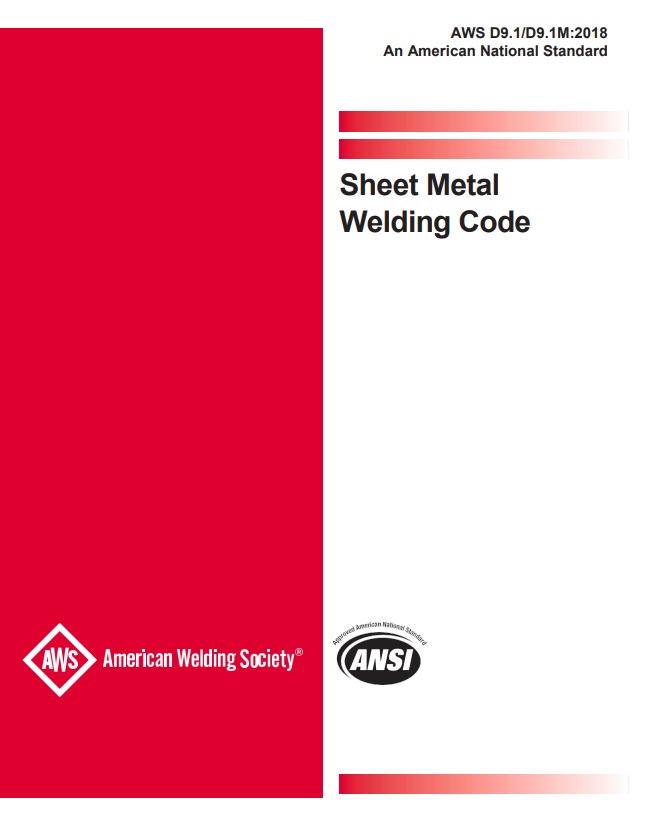
American Welding Society

ASTM International

Institute of Electrical and Electronic Engineers

Human-centered augmented reality manual arc welding active safety design

International Code Council

International Building Code Chapter 22 Steel
International Fire Code Chapter 35 Welding and Other Hot Work

International Electrotechnical Commission TC 26

International Standardization Organization TC/44

National Fire Protection Association

National Electrical Code Article 630 Electric Welders
Install 50 Amp welder outlet circuit in workshop for 220/240 VAC MIG welder

National Electrical Code CMP-12

Electrical Safety in the Workplace

Occupational Safety and Health Administration

Welding, Cutting and Brazing

Sheet Metal and Air Conditioning Contractors

Welding Mathematics

Open to everyone.  Use the login credentials at the upper right of our home page.

Readings

The troubled history of vocational education

Smith-Hughes Act of 1917


Welding technology has evolved over centuries, and it’s difficult to credit a single person with advancing it because they each played a role in the “gales of innovation” described by Joseph Schumpeter.  Here are a few notable individuals:

  1. Sir Humphry Davy (1778-1829): Davy, an English chemist and inventor, is often credited with the discovery of the electric arc, a critical development in welding technology. His work laid the foundation for many modern welding processes.
  2. Elihu Thomson (1853-1937): Thomson, an American engineer and inventor, made substantial contributions to electric welding technology. He improved the design of welding machines and was a pioneer in developing the resistance welding process.
  3. Nikolay Benardos (1842-1905): A Russian inventor and engineer, Benardos is often credited with patenting one of the first arc welding methods using carbon electrodes. His work helped popularize arc welding as a practical joining method.
  4. C.L. Coffin (1877-1959): Coffin, an American engineer, played a crucial role in the development of the submerged arc welding process. This method is still widely used in heavy industry for its high deposition rates.
  5. Charles Picard and Auguste De Meritens: These two inventors are credited with developing the first successful welding process using a consumable electrode, known as metal-arc welding. Their work laid the foundation for modern stick welding.
  6. Carl Wilhelm Siemens (1823-1883): Siemens, a German engineer, made significant contributions to the development of gas welding. His work with gas flames laid the groundwork for the oxyfuel welding and cutting processes that became essential in industry.
  7. Percy Spencer (1894-1970): Spencer, an American engineer, accidentally discovered microwave heating while working with radar equipment during World War II. His discovery indirectly contributed to the development of microwave welding techniques.

These individuals are the first names that collectively advanced welding technology.

Determining Strength of Corroded Pipelines

Massachusetts Institute of Technology

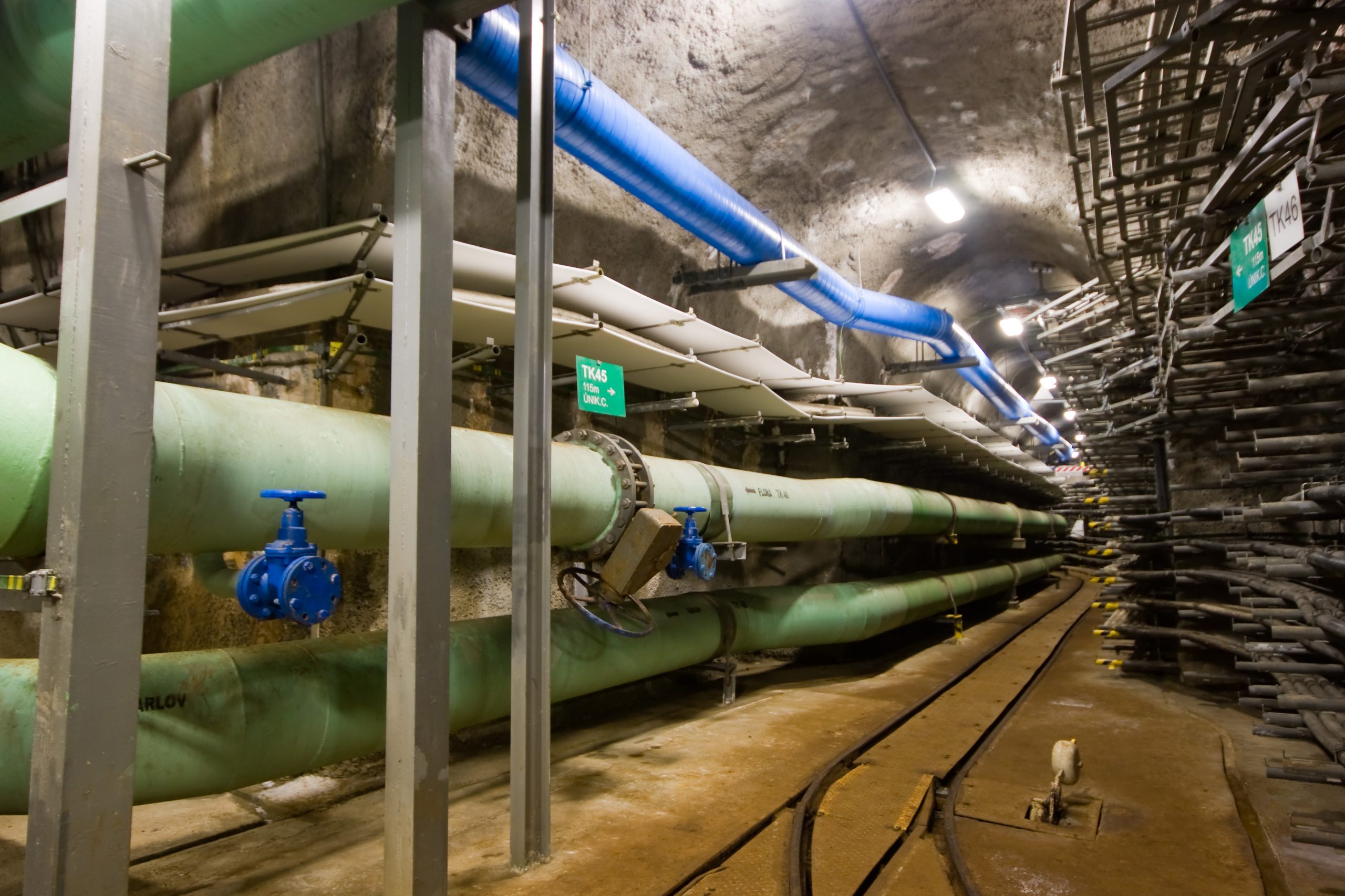
As cities-within-cities many colleges and universities own and maintain at least 10 miles —  and possibly up to 1000 miles —  of underground piping for water, steam and natural gas; much of it under pressure within buildings or in outside, underground tunnels.  The American Society of Mechanical Engineers develops a suite of standards for these, and many other piping systems:

ASME B31 Piping System Standards

Fluids running under pressure are a significant infrastructure hazard in educational and all communities

ASME has released a redline of  B31 Manual for Determining the Remaining Strength of Corroded Pipelines for public comment:

ANSI Standards Action Pages 137 – 139

ASME often posts its redlines in ANSI Standards Action as well as on its standard development platform:

https://cstools.asme.org/

This document is intended solely for the purpose of providing guidance in the evaluation of metal loss in pressurized pipelines and piping systems.

Comments are due July 26th.

You may send comments (with optional copy to psa@ansi.org) to: Ray Rahaman, rahamanr@asme.org

The ASME consensus product line is on the standing agenda of our periodic Mechanical, Energy and Nota Bene teleconferences.  See our CALENDAR for the next online meeting; open to everyone.

Issue: [19-148]

Category: District Energy, Energy, Mechanical

Colleagues: Richard Robben, Larry Spielvogel


Electrical Safety in the Workplace

Nicola Tesla in his Laboratory | Click image


The NFPA suite of electrical safety titles are most familiar to the education facility safety community because NFPA documents run deeply in local public safety culture; dominated by an over-arching concern for protection from fire.

The NFPA 70-series of documents are developed according to ANSI-accredited due process requirements that features a comparatively rigorous administration of stakeholder balance; much more so than the electrotechnology consensus documents prepared by the Institute of Electrical and Electronic Engineers Standards Association which is much broader in global reach.

Generally speaking, the IEEE — the world’s largest professional association — is dominated by electrotechnology experts who work on behalf of the user-interest in the US standards system; hence our close collaboration with the IEEE Education and Healthcare Facilities Committee as the the emergent #WiseCampus rolls out.  We also present an informed vote supported by the IEEE Industrial Applications Society.

University of Washington

The cultural difference between fire safety community and the electrotechnology community must be understood in order to understand how, why and where the NFPA-70 series of documents harmonize and conflict with IEEE Standards Association electrical safety codes and standards.   You find an abundance of academic faculty and researchers developing IEEE documents; not so many of the same developing NFPA documents.

We list the complete NFPA 70-suite below:

NFPA 70 National Electrical Code® (2020)

NFPA 70A National Electrical Code® Requirements for One- and Two-Family Dwellings[1]

NFPA 70B Recommended Practice for Electrical Equipment Maintenance

NFPA 70E Standard for Electrical Safety in the Workplace®

Note that two on the foregoing list receives special (legal) handling as “code”.

We provide links to the transcripts of the 2024 technical committee meetings to show the scope of discussion that goes into the preparation of this document:

Electrical Safety in the Workplace (EEW-AAA)

Public Input Report

Public Comment Report

The circumstances of the pandemic have restrained the normal course of business at NFPA, as it has most other standards developers.  We make near-daily contact with many NFPA titles so click in any day at 15:00 UTC for an update.

Public Input on the 2027 Revision will be received until June 4, 2024.

We are happy to discuss proposals for the next revision of NFPA 70E any day at 15:00 UTC but direct you to the possibility of more detailed discussion during any of the bi-weekly online meetings of the IEEE Education and Healtcare Facilities Committee.[2]

Issue: [3-3], [6-4], [10-14], [12-19], [15-160] and [18-135]

Category: Electrical, Public Safety, Risk Management

Colleagues: Mike Anthony, Jim Harvey, Joe Tedesco


[1] Many colleges and universities own and operate real assets that are covered by residential building codes; frequently on the perimeter of a campus or farther off-site as in the case of residential assets that are donated to the university.   We generally confine our advocacy to education facilities that are classified as commercial and covered by NFPA 70, 70B and 70E, though we are happy to consult with facility managers on NFPA 70A as necessary.

[2] Standards Michigan is undertaking a 50-state rollout during 2019 because, among other reasons, national committees across the entire span of accredited standards, tend to be dilutive.  We want to offer more support for state exceptions to the codes and standards that affect the safety and sustainability goals of the education industry.

Archive / NFPA 70E Electrical Safety in the Workplace

Layout mode
Predefined Skins
Custom Colors
Choose your skin color
Patterns Background
Images Background
Standards Michigan
error: Content is protected !!
Skip to content