


Category Archives: Intellectual Property IP
- Home
- Archive by category "Intellectual Property IP"

loading...

2026 National Patent Application Drafting Competition
The NPADC is a team competition for law students to develop skills in drafting patent applications, focusing on U.S. patent law. Teams receive a hypothetical invention statement, conduct prior art searches, draft specifications and claims, and present their work to judges, including patent examiners and practitioners. For 2025, the invention was an extra-uterine system for supporting premature fetuses, indicating the complexity of tasks involved
There is no publicly available timetable for the 2026 National Patent Application Drafting Competition (NPADC) from the United States Patent and Trademark Office (USPTO) as of the latest available information. The USPTO typically releases detailed schedules for the NPADC closer to the competition year, often in the fall of the preceding year (e.g., October or November 2025 for the 2026 competition).
After months of hard work, the top five teams met at USPTO headquarters today for the final round of the 2025 National Patent Application Drafting Competition. 🏆 And the winners are … ⬇️
🥇 First place — @UofMNLawSchool pic.twitter.com/uwNSJR0oBy
— USPTO (@uspto) April 4, 2025

Thomas Jefferson was the leader in founding the United States Patent Office. Jefferson was a strong supporter of the patent system and believed that it was essential for promoting innovation and progress in the United States. As the first Secretary of State Jefferson was responsible for implementing the country’s patent system.
Article I, Section 8, Clause 8 of the United States Constitution reads as follows:
“The Congress shall have Power To promote the Progress of Science and useful Arts, by securing for limited Times to Authors and Inventors the exclusive Right to their respective Writings and Discoveries.”
In 1790, Jefferson drafted the first Patent Act, which established the procedures for applying for and granting patents. The act also created the United States Patent Office as a government agency to oversee the patent system. Jefferson appointed the first Patent Board, which was responsible for reviewing patent applications and making recommendations to the Secretary of State.
Jefferson was deeply involved in the early development of the Patent Office and was instrumental in shaping its policies and procedures. He believed that the patent system should be accessible to all inventors, regardless of their social or economic status, and he worked to streamline the patent application process to make it more efficient and user-friendly.
In recognition of his contributions to the development of the patent system, Jefferson is often referred to as the “Father of American Innovation.”

This clause grants Congress the authority to establish a system of patents and copyrights to protect the intellectual property of inventors and authors. The purpose of this system is to encourage innovation and creativity by providing inventors and authors with a temporary monopoly on their creations, allowing them to profit from their work and invest in future projects. The clause also emphasizes the importance of promoting the progress of science and the useful arts, reflecting the belief of the founders that the development of new technologies and inventions was essential for the growth and prosperity of the United States.
Over the years, the Patent Office has played a crucial role in the development of the United States as a technological leader, granting patents for inventions ranging from the telephone and the light bulb to the airplane and the computer. Today, the Patent Office is part of the United States Department of Commerce and is responsible for examining patent applications and issuing patents to inventors and companies.
Welcome to the 2025 National Patent Application Drafting Competition!
2024 National Patent Application Drafting Competition
Congratulations to the winners of this year’s National Patent Application Drafting Competition – Khailee, Bree, Rita, and Maria from @gwlaw, and thank you to all participants! Learn more about the competition: https://t.co/gB64fnXaM6 pic.twitter.com/FWqak6Mr1m
— USPTO (@uspto) April 14, 2023
From creating a race car safety device that protects drivers from injury to revolutionizing chemotherapy, Spartans have contributed to more than 3,300 inventions. #SpartansWill pic.twitter.com/dchCs0BFBx
— MSU (@michiganstateu) February 21, 2025

Innovation and Competitiveness in Artificial Intelligence
The International Trade Administration (ITA) of the U.S. Department of Commerce (DOC) is requesting public comments to gain insights on the current global artificial intelligence (AI) market. Responses will provide clarity about stakeholder concerns regarding international AI policies, regulations, and other measures which may impact U.S. exports of AI technologies. Additionally, the request for information (RFI) includes inquiries related to AI standards development. ANSI encourages relevant stakeholders to respond by ITA’s deadline of October 17, 2022.
Commerce Department Launches the National Artificial Intelligence Advisory Committee
Save the date! NIST is set to release our AI Risk Management Framework this week.
📅 Thursday, January 26 at 10am ET
📍 Livestream (no registration needed)Learn more: https://t.co/2YmN2R6bTV pic.twitter.com/muICEyRYcP
— National Institute of Standards and Technology (@NIST) January 23, 2023







ANSI Essential Requirements

Click image
The National Technology Transfer and Advancement Act (NTTAA; United States Public Law 104-113) was signed into law March 7, 1996. The Act amended several existing acts and mandated new directions for federal agencies with the purpose of:
- Bringing technology and industrial innovation to market more quickly
- Encouraging cooperative research and development between business and the federal government by providing access to federal laboratories
- Making it easier for businesses to obtain exclusive licenses to technology and inventions that result from cooperative research with the federal government
The NTTAA — along with administrative circular A-119 from the White House Office of Management and Budget — made a direct impact on the development of new industrial and technology standards by requiring that all Federal agencies use privately developed standards, particularly those developed by standards developing organizations accredited by the American National Standards Institute (ANSI). In circular A-119 federal agencies were also encouraged to participate in the development of those standards. While discussion continues about how well the US non-government sector is doing to advance national technology strategy continues (see January 17, 2012 White House Memo M-12-08) the US standards system remains the most effective process for advancing national technology and economic priorities for the education university and others.
ANSI is not a standards developing organization itself; it only accredits them according to its Essential Requirements: Due process requirements for American National Standards. ANSI reports to the National Institute of Standards and Technology; a division of the US Department of Commerce; which reports to The President of the United States. Now comes a proposed revision to Section 3.1 of ANSI’s Patent Policy regarding the inclusion of patents in American national standards:
Comments are due by March 26th. You may comment directly to ANSI at this email address: psa@ansi.org. With respect to our higher priorities, we will not be commenting on this redline, though intellectual property and patent policies are high on the agenda of many research universities. We have advocated in other parts of the ANSI Essential Requirements document in the past, however — a history we are happy to explain at any of our weekly Open Door teleconferences every Wednesday, 11 AM Eastern time. Anyone is welcomed to join these discussions with the login information in the link below:
Issue: [11-31]
Contact: Mike Anthony, Jack Janveja, Christine Fischer, Rich Robben

Intellectual Property in the Age of Open Source
Join us for our in-person event hosted by the Silicon Valley Chapter, #IP year-in-review on 1/18, 2023, from 4 – 5:30 PM ET in which leading experts will review key IP-related developments during the 2022 calendar year. Reserve your spot now: https://t.co/yVZSv28hb6. pic.twitter.com/nVEG2H5Pn4
— LES (U.S.A. and Canada) (@LESUSACanada) December 28, 2022

Varieties of Innovation
History News Network: Why Do So Many Professors Hate America?
Business innovation involves creating new or improved business processes, models, or strategies to achieve organizational goals and gain a competitive advantage. It focuses on enhancing efficiency, customer experience, and overall business performance. Business innovation may encompass changes in marketing, operations, management, or other aspects of the business ecosystem.
On the other hand, technology innovation revolves around the development and application of new technologies or the improvement of existing ones. It aims to introduce novel solutions, products, or services by leveraging advancements in technology. Technology innovation can be driven by scientific research, engineering breakthroughs, or the integration of emerging technologies to address specific needs.
While business innovation is broad and encompasses various facets of organizational improvement, technology innovation specifically centers on advancements in technology and their strategic implementation. Successful companies often integrate both types of innovation to stay competitive, using business innovation to optimize processes and technology innovation to enable novel solutions and capabilities.
Noteworthy innovations relevant to the development and maintenance of the real assets of education settlements:
- Proptech Platforms: Various proptech (property technology) platforms have emerged to streamline property management tasks, including tenant communication, rent collection, and maintenance requests. Examples include Buildium, AppFolio, and Propertyware.
- Blockchain in Real Estate: Blockchain technology is being explored for its potential to enhance transparency, security, and efficiency in real estate transactions. Smart contracts on blockchain can automate and secure property transactions.
- Virtual and Augmented Reality (VR/AR): VR and AR technologies are being used for virtual property tours, allowing potential buyers or tenants to explore properties remotely. This helps in saving time and making more informed decisions.
- Predictive Analytics: Data analytics and machine learning are being employed to analyze market trends, predict property values, and assess investment opportunities. This enables more data-driven decision-making in real estate.
- IoT (Internet of Things): IoT devices are being integrated into buildings for smart property management. This includes smart thermostats, security systems, and energy-efficient solutions, enhancing overall property performance.
- Automated Valuation Models (AVMs): AVMs leverage algorithms and data analysis to estimate property values. These tools provide quick and automated property valuations, aiding in pricing decisions.
- Digital Transaction Platforms: Platforms that facilitate end-to-end digital real estate transactions are gaining popularity. These platforms aim to simplify the buying and selling process, reducing paperwork and increasing efficiency.
- Energy-efficient Technologies: Sustainable and energy-efficient solutions are becoming integral to real estate development. Innovations include smart building systems for energy management, green construction materials, and renewable energy integration.
- Crowdfunding for Real Estate: Crowdfunding platforms allow individuals to invest in real estate projects with smaller amounts of capital. This democratizing approach to real estate investment provides opportunities for a broader range of investors.
- Facial Recognition and Biometrics: Some property management systems are incorporating facial recognition and biometric technologies for enhanced security in access control and building management.

Innovation management

Central Dome of the Gallery des Machines Exposition Universelle de Paris | Louis Beroud (1889)
We find the United States education industry strengthening its voice in the global standards system with leadership provided by the International Association of Innovation Professionals (IAOIP); the US Technical Advisory Group Administrator for the French-inspired ISO TC 279 Innovation management covered here in the posts below. Of the 5300 colleges and universities in the US the seven that are members of the TAG at the moment are:
University of Minnesota
Arizona State University
Lone Star College
Nova Southeastern
Oral Roberts University
Texas A&M University
Florida Institute of Technology
CLICK HERE for the complete list.
We do not advocate in this standard but we track it along with about 20 of the 21,000 ISO standards. We mention it now because in tracking live public consultation notices we see opportunities that may interest other parts of the education industry — notably academic units and business schools; as well as the many technology transfer units in many research universities charged with generating licensing revenue. The landing page for the US TAG is linked below:
IAOIP and ISO TC279 – Innovation Management Technical Advisory Group
You are encouraged to communicate directly with Dr. Brett Trusko, President and CEO, International Association of Innovation Professionals, 4422 Castlewood Street, Suite 200, Sugar Land, TX 77479; phone: 925.858.0905; e-mail: brett@iaoip.org. We also refer this standard to the standing agenda of our Global and Human Resource teleconferences. See our CALENDAR for the next online meeting; open to everyone.
Issue: [17-303]
Category: Academics, International
Contact: Mike Anthony (mike@standardsmichigan.com), Christine Fischer (chrisfis@umich.edu)
*See “Education Enterprise” ISO Focus, January 2015, pp 33-37
LEARN MORE:
Breaking new ground with better innovation management https://t.co/wjjbJzx5dD
— Jose Alcorta (@AlcortaJose) February 22, 2019
Posted September 25, 2018

Texas A&M University
Recent communication from International Association of Innovation Professionals (IAOIP) indicates that it continues to welcome participation from the US education industry. There are many academic programs and faculty devoted to international studies and innovation that could offer students a front-row seat for the development of international technology policy.
We are happy to explain the opportunity to faculty and staff any day during our daily 11 AM online meetings. You may also communicate directly with Dr. Brett Trusko, President and CEO, International Association of Innovation Professionals, 4422 Castlewood Street, Suite 200, Sugar Land, TX 77479; phone: 925.858.0905; e-mail: brett@iaoip.org
Posted April 26, 2018
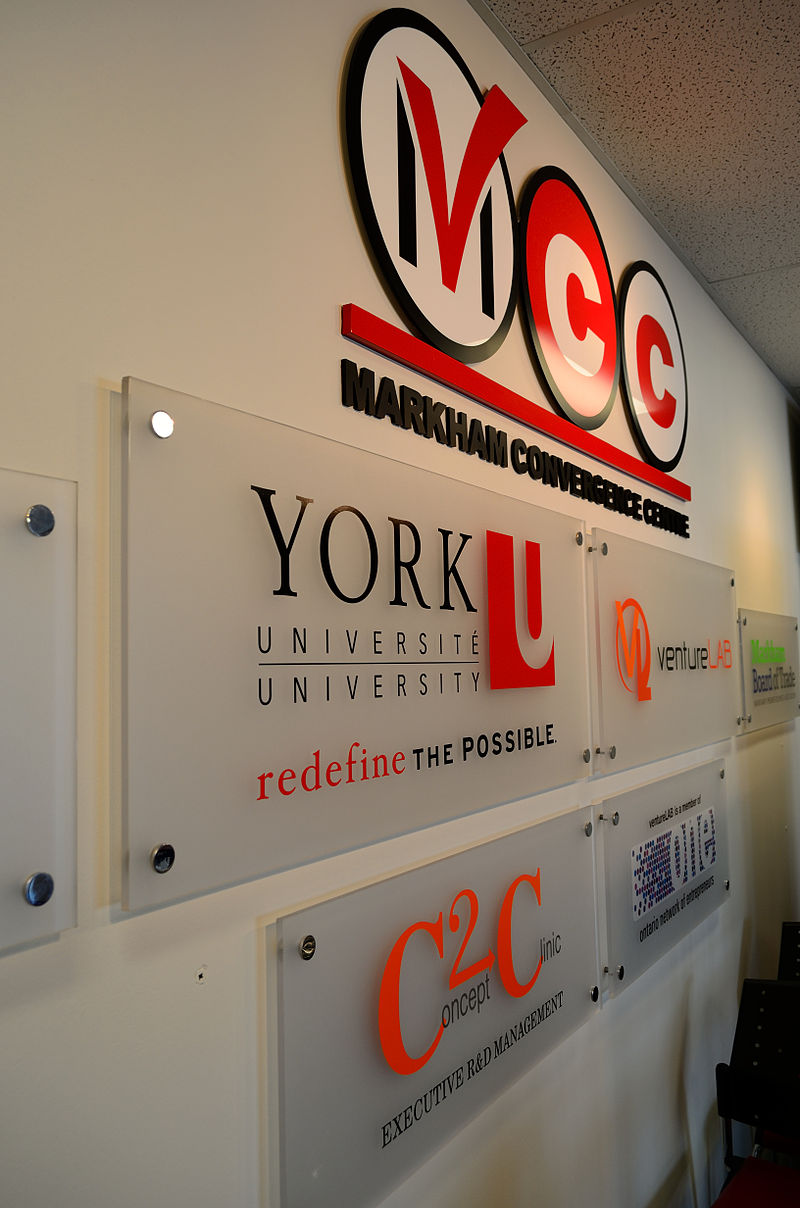
York University Markham Campus | Ontario, Canada
The International Association of Innovation Professionals (IAOIP) has submitted an Application for Accreditation for a new proposed U.S. Technical Advisory Group (TAG) to ISO TC 279 Innovation management and a request for approval as TAG Administrator. The proposed TAG intends to operate using the Model Operating Procedures for U.S. Technical Advisory Groups to ANSI for ISO Activities as contained in Annex A of the ANSI International Procedures.
Standards Michigan applauds any organization that assumes leadership in developing the US position on any international standard promulgated by Geneva Secretariats — the International Organization for Standardization, the International Telecommunications Union and the International Electrotechnical Commission. Few activities offer such an ideal front row seat at the world speeding toward us.
The education industry — notably the academic segment of the higher education industry — is notably absent in US leadership positions in international standards. We have been in this space as a user interest for a long time (See ABOUT) and the shortage of education industry engagement (especially the user-interest) has not gone is unnoticed or written about.* While the majority of the 1800-odd colleges and universities have academic programs that claim leadership in international and/or innovation studies, only Georgia Tech and the University of Texas Medical Branch are US TAG administrators for the American National Standards Institute; the US member body to the Geneva Secretariats.

Université de Genève
Comments are due May 14th. To obtain a copy of the TAG application or to offer comments, please contact: Dr. Brett Trusko, President and CEO, International Association of Innovation Professionals, 4422 Castlewood Street, Suite 200, Sugar Land, TX 77479; phone: 925.858.0905; e-mail: brett@iaoip.org by May 14, 2018 (please copy jthompso@ansi.org).
Issue: [17-303]
Category: Academics, International
Contact: Mike Anthony (mike@standardsmichigan.com), Christine Fischer (chrisfis@umich.edu)
*See “Education Enterprise” ISO Focus, January 2015, pp 33-37
December 17, 2017

Oral Roberts University
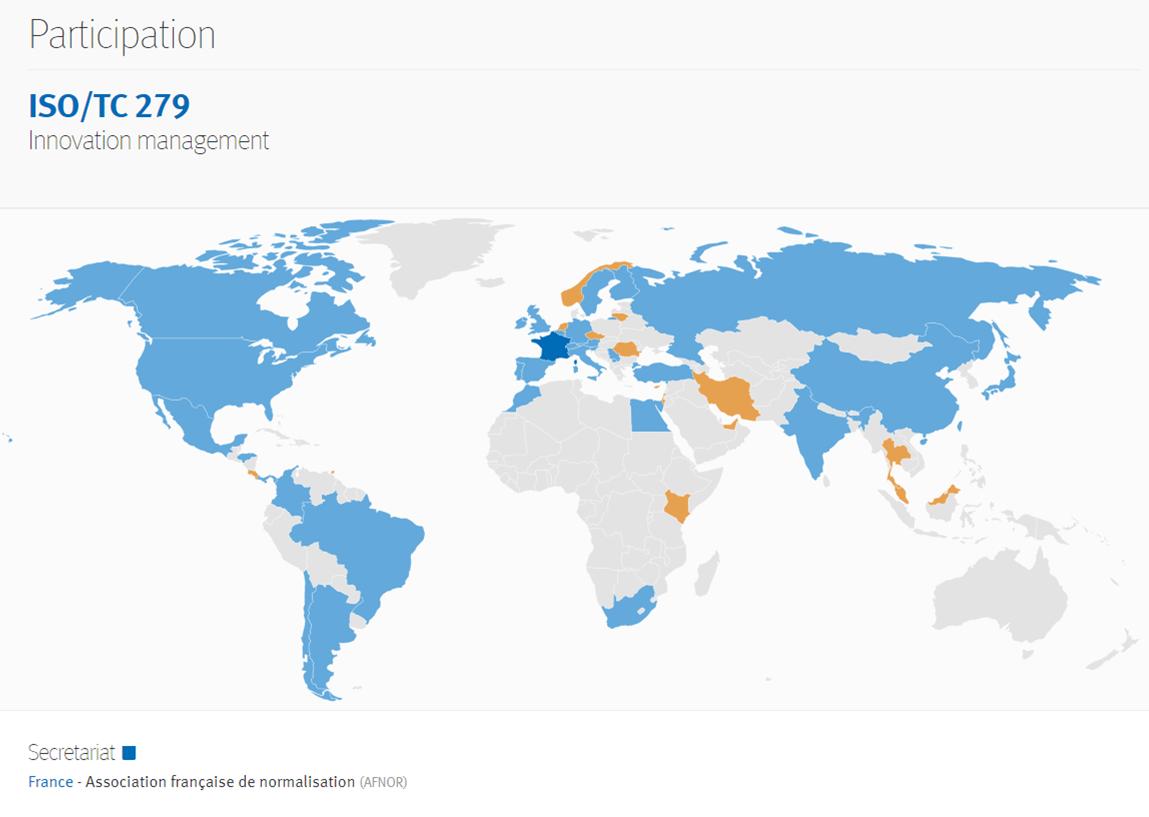
The American National Standards Institute (ANSI) has been informed that the American Society for Quality (ASQ), the current ANSI-accredited U.S. Technical Advisory Group Administrator (U.S. TAG) for the work of Technical Committee 279 of the International Organization for Standardization wishes to relinquish their role as U.S. TAG Administrator. The global Secretariat for TC 279 is the AFNOR Group — the national standardization body for France. The participating nations are shown in the map below:
(Click on Image for more information)
ISO/TC 279 operates under the following scope: Standardization of terminology tools and methods and interactions between relevant parties to enable innovation. From its Executive Summary:
“Yes we can innovate through standardisation. Standardization does not mean cloning. Standards on innovation management will allow organisations to share their best practices in innovation management. This will facilitate collaboration and also develop the capability to innovate and to bring innovations successfully to market. Today we face new challenges never met before by mankind: guaranteeing the sustainability of our activities in keeping our Earth habitable. Sustainable development (economic, ecologic, social sustainability) cannot be considered as ‘nice to have’, it is essential. It has to be viewed as a source of innovations, economic development and competiveness. It impacts innovation management and has to be taken into account at an early stage. Innovation is a key to global competitiveness and human or technological progress over the coming decades. Management Standards on innovation will break down the existing cultural, structural or organisational obstacles among/between organisations. These standards will provide best practices to support implementation of innovation policies as well in Small to Medium Enterprises (SMEs) as in worldwide groups including public institutions, universities, research centres or non-profit organisations. (Note in ISO, SME can mean Subject Matter Expert)
To achieve this goal the work will focus on a management system for innovation. To define this management system, experts will address: terminology, tools and methods such as but not limited to open innovation, design innovation, strategic intelligence, creativity management and also self-assessment of innovation management. Expectations for these standards are so high that there is no time to reinvent the wheel. TC 279 has to benefit from the previous work, including existing innovation literature, existing innovation standards, case studies, academic works, reports…) Summoning up the innovation community is a key factor. To make more and more stakeholders aware of this initiative communications action (communication kits, presence on social networks, press releases, events…) needs a special care.”
Organizations interested in serving as the U.S. TAG Administrator or participating on a U.S. TAG should contact ANSI’s ISO Team (isot@ansi.org)
Issue: [17-303]
Category: Academics, International
Contact: Mike Anthony (mike@standardsmichigan.com), Christine Fischer (chrisfis@umich.edu)
New update alert! The 2022 update to the Trademark Assignment Dataset is now available online. Find 1.29 million trademark assignments, involving 2.28 million unique trademark properties issued by the USPTO between March 1952 and January 2023: https://t.co/njrDAbSpwB pic.twitter.com/GkAXrHoQ9T
— USPTO (@uspto) July 13, 2023
Welcome
Standards Michigan Group, LLC
2723 South State Street | Suite 150
Ann Arbor, MI 48104 USA
888-746-3670
DIRECTIONS
 |
 |
|
 |
 |
|
 |
 |
Layout mode
Predefined Skins
Custom Colors
Choose your skin color
Patterns Background
Images Background
error: Content is protected !!
Skip to content