Category Archives: Health/OB-GYN

Loading
loading...

Neonatal Care Units

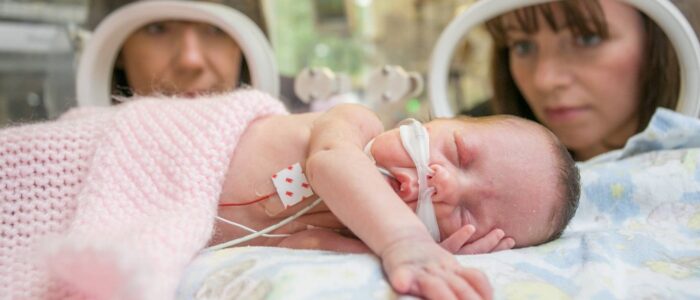
Today at 16:00 UTC we examine the interaction among several standards catalogs of ANSI accredited, consortia and ad hoc electrotechnology standards developers with respect to governmental regulation of maternity and neonatal care at all levels.
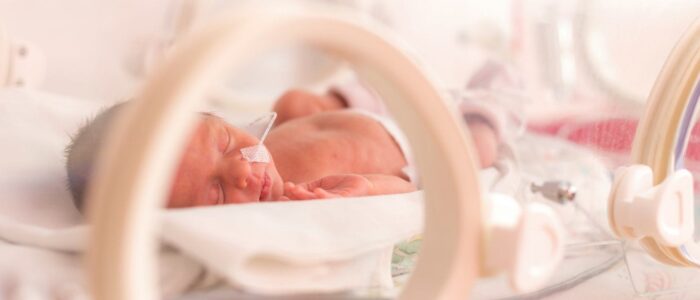
  • University of Kentucky

Maternity and obstetrics facilities

Architectural standards for Neonatal Intensive Care Units (NICUs) are designed to create a safe, efficient, and healing environment for newborns requiring intensive medical care. These standards encompass various aspects, including layout, space requirements, environmental controls, and infection control. Here are the key architectural standards for NICUs:

1. Space Requirements

Single-Patient Rooms: Preferably, NICUs should have single-patient rooms to reduce the risk of infection and provide privacy for families. The recommended size for each room is around 150 square feet.
Open Bay Design: If single-patient rooms are not feasible, open bay designs with a minimum of 120 square feet per infant space should be considered.
Family Areas: Incorporate family zones within or adjacent to the patient care area to support family involvement in care.

2. Environmental Controls

Lighting: Use adjustable lighting to mimic natural day-night cycles. Dimmable and indirect lighting is recommended to reduce stress on infants.
Noise Control: Implement sound-absorbing materials and design to maintain noise levels below 45 decibels. Alarms and other auditory signals should be as non-disruptive as possible.
Temperature and Humidity: Maintain a controlled environment with temperatures between 72-78°F and relative humidity between 30-60% to support the infants’ thermal regulation.

3. Infection Control

Hand Hygiene Facilities: Provide sinks with touchless faucets in each patient room and strategically placed hand sanitizer dispensers.
Air Quality: Use HEPA filtration systems to maintain high air quality and reduce airborne infections. Ensure proper ventilation and air exchange rates.
Surfaces and Materials: Use easily cleanable and antimicrobial surfaces and materials to minimize the risk of infection.

4. Functional Design

Nurse Stations: Design nurse stations to have a clear line of sight to all patient areas. Centralized and decentralized stations can be used depending on the layout.
Equipment and Storage: Include adequate storage space for medical equipment and supplies within close proximity to patient care areas. Ensure equipment is easily accessible yet out of the way to prevent clutter.
Utilities and Support Spaces: Provide adequate space for utilities such as oxygen, medical gases, electrical outlets, and data ports. Support spaces should include areas for medication preparation, clean and dirty utility rooms, and staff break areas.

5. Safety and Accessibility

Emergency Access: Ensure clear and unobstructed pathways for emergency access and equipment transport.
Accessibility: Design the unit to be fully accessible to staff, patients, and families, including those with disabilities. Compliance with ADA (Americans with Disabilities Act) standards is essential.
Security: Implement security measures to control access to the NICU, including electronic access control systems and surveillance cameras.

6. Aesthetic and Healing Environment

Color and Decor: Use calming colors and artwork to create a soothing environment. Avoid bright or overly stimulating colors.
Nature Integration: Where possible, incorporate natural elements such as views of nature, indoor plants, and natural light to promote a healing environment.

7. Flexibility and Future Expansion

Modular Design: Use a modular design approach to allow for easy reconfiguration and future expansion of the NICU as needed.
Scalability: Plan for scalable infrastructure to accommodate technological advancements and changing patient care needs.
These architectural standards aim to provide a safe, efficient, and supportive environment for both the infants and their families, while also meeting the operational needs of healthcare providers.

Case Studies:

A newborn in distress

Neonatal Clinical Outcomes: a Comparative Analysis

Camera-Based Heart Rate Variability for Estimating the Maturity of Neonatal Autonomic Nervous System

Modulation frequency analysis of seizures in neonatal EEG

EEG ‘diarization’ for the description of neonatal brain injuries


List of colleges and universities with extensive neonatal research and clinical facilities:

East Coast

    1. Harvard University (Boston, MA)
      • Affiliated with Boston Children’s Hospital and Brigham and Women’s Hospital.
      • Specialized centers for neonatal intensive care and research.
    2. Johns Hopkins University (Baltimore, MD)
      • Strong neonatal research through the Johns Hopkins Children’s Center.
    3. Columbia University (New York, NY)
      • Known for the Morgan Stanley Children’s Hospital and advanced neonatal care.
    4. University of Pennsylvania (UPenn) (Philadelphia, PA)
      • Penn Medicine and Children’s Hospital of Philadelphia (CHOP) collaborate on neonatal studies.

Midwest

    1. University of Chicago (Chicago, IL)
      • Comer Children’s Hospital focuses on neonatal care and research.
    2. University of Michigan (Ann Arbor, MI)
      • The C.S. Mott Children’s Hospital has a Level IV NICU and leads neonatal innovation.
    3. Washington University in St. Louis (St. Louis, MO)
      • Affiliated with St. Louis Children’s Hospital for neonatal research.

South

    1. Duke University (Durham, NC)
      • Duke Children’s Hospital is known for its neonatal-perinatal research.
    2. University of Texas Southwestern Medical Center (Dallas, TX)
      • Conducts cutting-edge neonatal research in partnership with Parkland Hospital.
    3. Vanderbilt University (Nashville, TN)
      • The Monroe Carell Jr. Children’s Hospital has a strong neonatal program.

West Coast

    1. Stanford University (Stanford, CA)
      • Lucile Packard Children’s Hospital is a leader in neonatal research and care.
    2. University of California, San Francisco (UCSF) (San Francisco, CA)
      • Renowned for its neonatology program and neonatal clinical trials.
    3. University of Washington (Seattle, WA)
      • Affiliated with Seattle Children’s Hospital for neonatal research.

International

    1. University of Toronto (Toronto, Canada)

      • SickKids Hospital is a global leader in neonatal care and research.
    2. University College London (UCL) (London, UK)
      • Neonatal research at Great Ormond Street Hospital and University College Hospital.
    3. University of Melbourne (Melbourne, Australia)
      • Affiliated with the Royal Children’s Hospital and its neonatal programs.

Children’s Hospital Neonatal Intensive Care

Some of the common electro-technologies used in a neonatal care unit include:

  • Incubators: These temperature-controlled units create a controlled environment to keep premature or sick infants warm and protected.
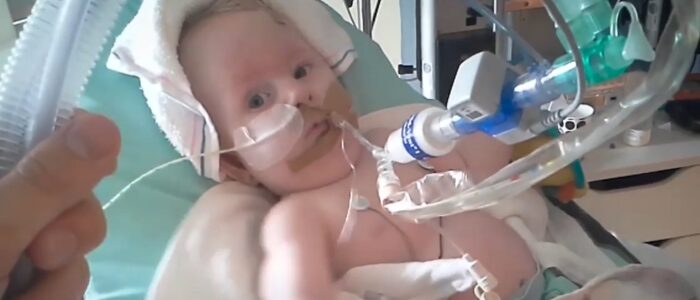
  • Ventilators: Mechanical ventilators assist newborns with respiratory distress by delivering oxygen and helping them breathe.
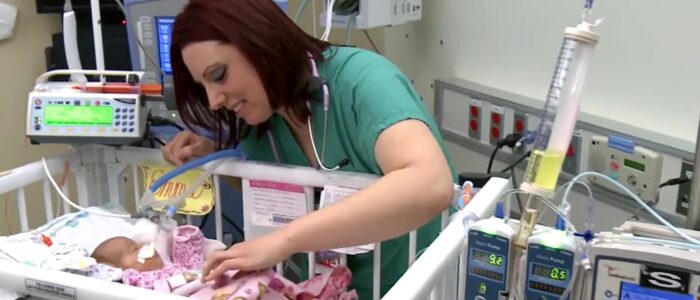
  • Monitors: These devices track vital signs such as heart rate, oxygen levels, blood pressure, and temperature to ensure the baby’s health and detect any abnormalities.
  • Phototherapy Lights: Special lights are used to treat jaundice in newborns, helping to break down excess bilirubin in the blood.
  • Intravenous Pumps: These pumps are used to deliver medications, fluids, and nutrients directly into the baby’s bloodstream.
  • Feeding Tubes: For infants who are unable to feed orally, feeding tubes are used to deliver breast milk or formula directly into their stomach.
  • Blood Gas Analyzers: These machines measure the levels of oxygen, carbon dioxide, and other gases in a baby’s blood to monitor respiratory status and acid-base balance.
  • Infusion Pumps: Used to administer controlled amounts of fluids, medications, or nutrients to newborns.
  • CPAP/BiPAP Machines: Continuous Positive Airway Pressure (CPAP) and Bi-level Positive Airway Pressure (BiPAP) machines help newborns with breathing difficulties by providing a continuous flow of air pressure.
  • Neonatal Resuscitation Equipment: This includes equipment such as resuscitation bags, endotracheal tubes, laryngoscopes, and suction devices used during emergency situations to assist with newborn resuscitation.

It’s important to note that specific tools and equipment may vary depending on the level of neonatal care provided by the unit, the needs of the infants, and the policies of the healthcare facility.

Neonatal care, as a specialized field, has been shaped by the contributions of several pioneers in medicine. Here are a few notable figures who have made significant advancements in neonatal care:

  • Dr. Virginia Apgar was an American obstetrical anesthesiologist who developed the Apgar score in 1952. The Apgar score is a quick assessment tool used to evaluate the overall health of newborns immediately after birth. It assesses the baby’s heart rate, respiratory effort, muscle tone, reflex irritability, and color, providing valuable information for prompt intervention and monitoring.
  • Dr. Martin Couney, a pioneering physician, established incubator exhibits at world fairs and amusement parks in the early 20th century. He promoted the use of incubators to care for premature infants and played a significant role in popularizing the concept of neonatal intensive care.
  • Dr. Virginia A. Apgar, an American pediatrician and neonatologist, made significant contributions to the field of neonatology. She specialized in the care of premature infants and conducted extensive research on neonatal resuscitation and newborn health. She also developed the Apgar scoring system, although unrelated to Dr. Virginia Apgar mentioned earlier.
  • Dr. Lula O. Lubchenco was an influential researcher and neonatologist who made important contributions to the understanding of newborn growth and development. She developed the Lubchenco Growth Chart, which provides a standardized assessment of a newborn’s size and gestational age, aiding in the identification and monitoring of growth abnormalities.
  • Dr. Mary Ellen Avery was a renowned American pediatrician and researcher whose work focused on understanding and treating respiratory distress syndrome (RDS) in premature infants. She identified the importance of surfactant deficiency in RDS and contributed to the development of surfactant replacement therapy, revolutionizing the care of preterm infants.

These individuals, among many others, have played pivotal roles in advancing the field of neonatal care, improving the understanding, diagnosis, treatment, and overall outcomes for newborn infants.

Healthcare Facilities Code

IEEE  Education & Healthcare Facility Electrotechnology


The De-Population Bomb

February 16, 2024: North Shore Medical Center abruptly closes neo-natal, labor and delivery units

United States National Institute of Health Gene Map


“In 1970, Stanford professor Paul Ehrlich published a famous book, The Population Bomb, in which he described a disastrous future for humanity: 

‘The battle to feed all of humanity is over. In the 1970s and 1980s hundreds of millions of people will starve to death in spite of any crash programs embarked upon now.’

That prediction turned out to be very wrong, and in this interview American Enterprise Institute scholar Nicholas Eberstadt tells how we are in fact heading toward the opposite problem: not enough people. For decades now, many countries have been unable to sustain a #population replacement birth rate, including in Western Europe, South Korea, Japan, and, most ominously, China. The societal and social impacts of this phenomenon are vast. We discuss those with Eberstadt as well as some strategies to avoid them.”

Out take [35:22]:

“…All right this gets us right to the heart of of your essay and of the matter quoting you yet again the single best predictor for National fertility rates happens to be wanted family size as reported by women now you note there are polls that ask women how many children they’d like and you know that this doesn’t correlate perfectly with birth rates but it’s the best indicator in one sense this is a reassuring even heartening finding it highlights the agency at the very heart of our Humanity…

[“You’re talking about free will there people choosing their family size but if we permit the non-material realm of life to figure into our inquiry we may conclude that proposals to revive the American birth rate through subsidies vastly underestimate the challenge the challenge May ultimately prove to be civilizational in nature”] 

okay so I look at first of all that hits like a two by four — civilizational in nature — and on the one hand I think to myself wait a minute aren’t we all supposed to be delighted that in this modern world women are in a position to participate in the workforce they’re in a position to choose more carefully more explicitly more intentionally the number of children they’d like to have aren’t we supposed to believe that that’s a wonderful thing and that releasing that many women to the workforce should increase the dynamism and growth of our [economy]…and all that…good, good, good…”

Evensong “A Boy and A Girl”

University of Rochester New York

Child Day Care

Why Daycare Is So Expensive In America

Children’s Hospital Neonatal Intensive Care

Health 400 | OB-GYN

Healthcare Facilities Code

Design & Operation of Health Care Facilities

New 820-Bed Hospital | $1.9B

Standards Ohio


Key details:

  • Total project cost: $1.9 billion (largest single facilities project in Ohio State history).
  • Size: About 1.9 million square feet.
  • Beds: Up to 820 all-private rooms.
  • Additional features: 234 ICU beds, expanded emergency and surgical services, connections to other medical buildings, and a new parking garage.
  • Timeline: Construction started around 2020, with substantial completion and opening in early 2026.

Related:

2024 International Plumbing Code | ASPE Plumbing Design Handbook

| ASHRAE 188 Legionellosis: Risk Management for Building Water Systems

International Building Code Meeting minutes #67 2025-12-12

IEEE 602 (White Book) Recommended Practice for Electric Systems in Health Care Facilities

Healthcare Facilities Code

Design & Operation of Health Care Facilities

Elevator Safety Code

Cx Building Commissioning

February 2026: New 820-Bed Inpatient Hospital at Ohio State University

The new 820-bed inpatient tower at The Ohio State University Wexner Medical Center (known as University Hospital) opened in February 2026 and represents the largest single-facility project in the university’s history, with a focus on patient-centered care, advanced technology, and sustainability.

Based on available project details, there were no reported major electrical problems or disruptions during construction or activation that hindered progress—in fact, electrical systems were tested successfully with no operational challenges noted during key milestones like the activation of exterior lighting. Instead, several noteworthy electrical and technology-related features and innovations have contributed to the project’s overall success, particularly in enhancing energy efficiency, patient experience, and operational performance.

Energy Efficiency and Sustainability Initiatives

The hospital’s design emphasizes sustainable electrical systems, earning it a green bond designation for its bonds and a sustainability award from the Ohio Facilities Construction Commission early in the project. Key aspects include:

  • Optimized energy consumption: The building incorporates enhanced commissioning of electrical systems to ensure high performance and reduced energy use, aligning with broader goals to minimize costs and environmental impact. This includes low-carbon energy sources and utility plant management, allowing savings to be redirected toward patient care.
  • Daylight maximization: Patient rooms feature 9-foot windows to flood spaces with natural light, reducing reliance on artificial lighting and supporting faster recovery while lowering electricity demands.
  • LED lighting integration: The iconic Block O exterior sign (30 feet tall, 365 feet above ground, and weighing nearly 3 tons) uses about 750 feet of energy-efficient LED lighting, symbolizing the hospital’s commitment to modern, low-energy illumination. Electrical systems for this were pre-tested, ensuring seamless activation without issues.

These elements not only promote eco-friendly operations but also position the hospital as a model for future healthcare facilities, with designs that conserve energy and adapt to evolving needs.

Technological and Electrical Innovations for Care

Electrical infrastructure supports cutting-edge features that improve clinical outcomes and user experience:

  • Digital patient interfaces: Every private room includes a 75-inch digital screen powered by integrated electrical and cabling systems, enabling telehealth, video conferencing, room controls (e.g., lighting and temperature), educational content, entertainment, and relaxation tools. This fosters team-based care and patient empowerment.
  • Surgical and operational tech: Cabling installations in operating rooms facilitate surgical video integration, allowing real-time audio/video during procedures for better collaboration and training. The building’s modernized spaces accommodate advanced technology, with simulations during pre-opening phases identifying and resolving minor electrical tweaks (e.g., call button functionality) to ensure reliability.
  • Infrastructure scale: With 50 elevators and state-of-the-art diagnostic areas, the electrical backbone (managed under mechanical-electrical-plumbing oversight) supports high-reliability power for critical care, including 234 ICU beds and neonatal units.

These electrical-enabled innovations have helped the project stay ahead of schedule (reaching substantial completion in late 2025) and under budget in key areas, contributing to its acclaim as a forward-thinking facility that elevates care for Ohio’s growing population. No significant electrical setbacks were publicly documented, unlike a brief structural pause in 2022 for a cracked concrete column (unrelated to electrical systems). Overall, the seamless integration of efficient, reliable electrical systems has been a key factor in the hospital’s successful launch and its role in advancing healthcare innovation.

MaternityMetrix

Related:

University of British Columbia: SUPPORTING THE TRANSITION TO PARENTHOOD WITH ONLINE SEX AND RELATIONSHIP KNOWLEDGE PILOT STUDY

Founder of Maternity Metrix, Dr. Akkeneel Talsma


How to Make Baby Food

How to Make Banana Puree for Babies

Special Supplemental Nutrition Program for Women, Infants, and Children

Before the commercialization of baby food, parents typically prepared homemade baby food using simple kitchen tools and ingredients. Here’s a general overview of how baby food was made traditionally:

Selection of Ingredients: Parents would select fresh fruits, vegetables, grains, and meats suitable for their baby’s age and dietary needs. These ingredients were chosen based on their nutritional value and ease of digestion.

Cooking: The selected ingredients would be cooked using methods such as boiling, steaming, or baking to soften them and make them easier for the baby to eat. Cooking methods were chosen to preserve as much of the natural nutrients as possible.

Mashing or Pureeing: Once cooked, the ingredients would be mashed or pureed into a smooth consistency suitable for a baby’s developing digestive system. This could be done using tools like a fork, potato masher, food mill, or blender.

Straining (Optional): Some parents might choose to strain the pureed food to remove any seeds, skins, or fibers that could be difficult for a baby to digest or might pose a choking hazard.

Storage: Homemade baby food could be stored in small containers or ice cube trays and frozen for future use. This allowed parents to prepare larger batches of baby food at once and thaw individual portions as needed.

Feeding: When it was time to feed the baby, parents would simply thaw the desired portion of homemade baby food and serve it to their baby using a spoon or by bottle-feeding.

Variety: Parents would typically introduce a variety of flavors and textures to their baby over time, gradually expanding their palate and exposing them to a wide range of nutrients.

Overall, making homemade baby food required time, effort, and attention to detail, but many parents preferred it because they had control over the quality and ingredients used, ensuring that their baby received nutritious and wholesome meals.

Standards Iowa

Layout mode
Predefined Skins
Custom Colors
Choose your skin color
Patterns Background
Images Background
Standards Michigan
error: Content is protected !!
Skip to content