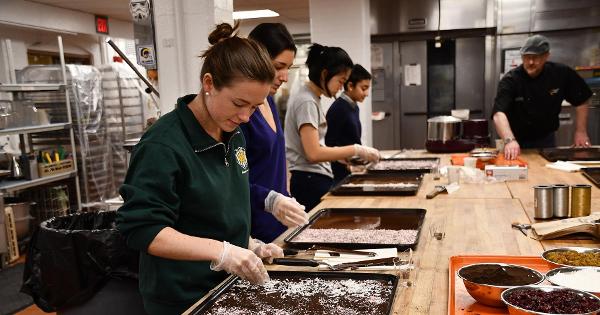
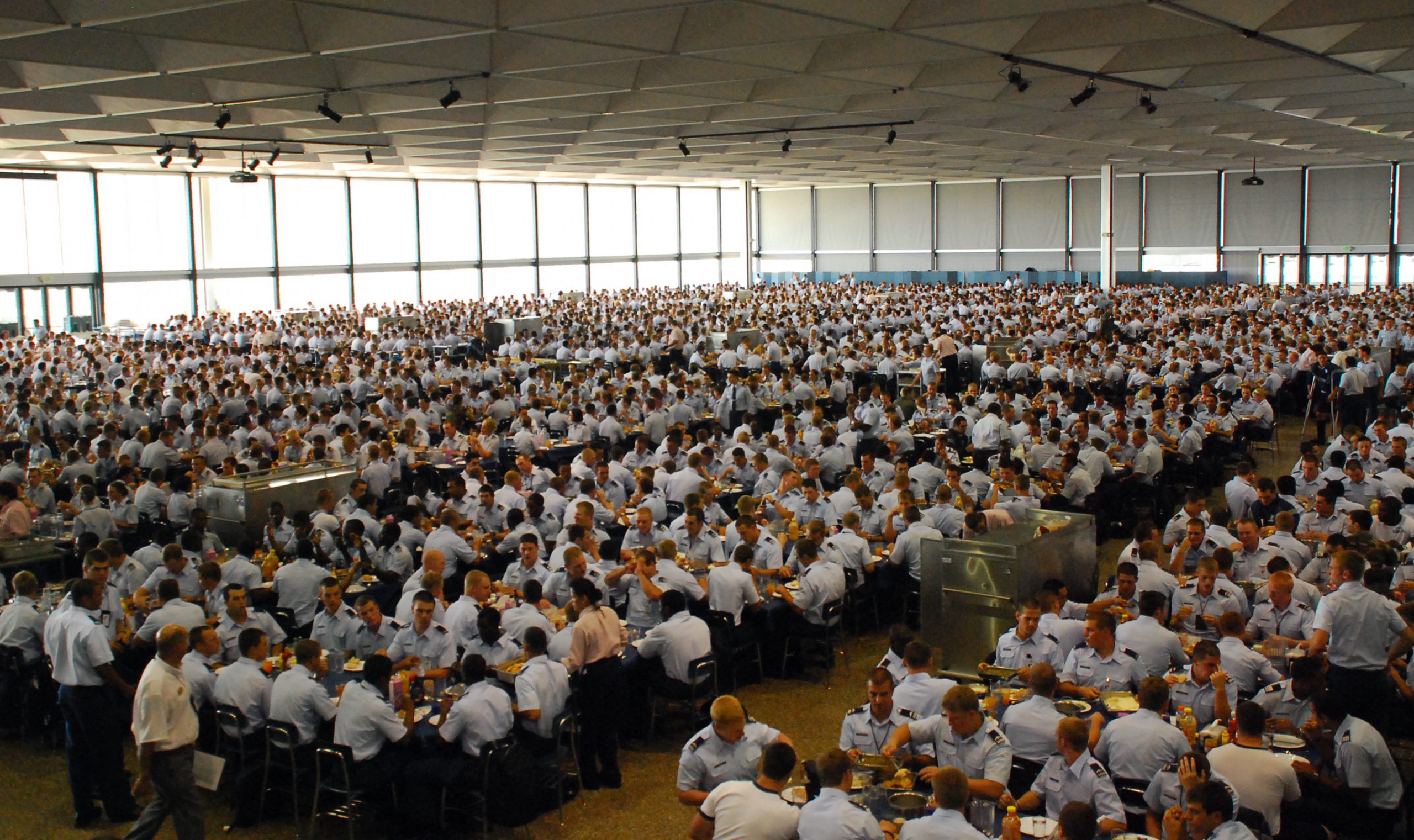
More than 4,000 cadets gather for lunch inside Mitchell Hall at the U.S. Air Force Academy in Colorado Springs, Colo., Aug. 10, 2009. A staff of 200 food service professionals prepare nearly 13,000 meals per day for cadets throughout the academic year. (U.S. Air Force photo/Ann Patton)
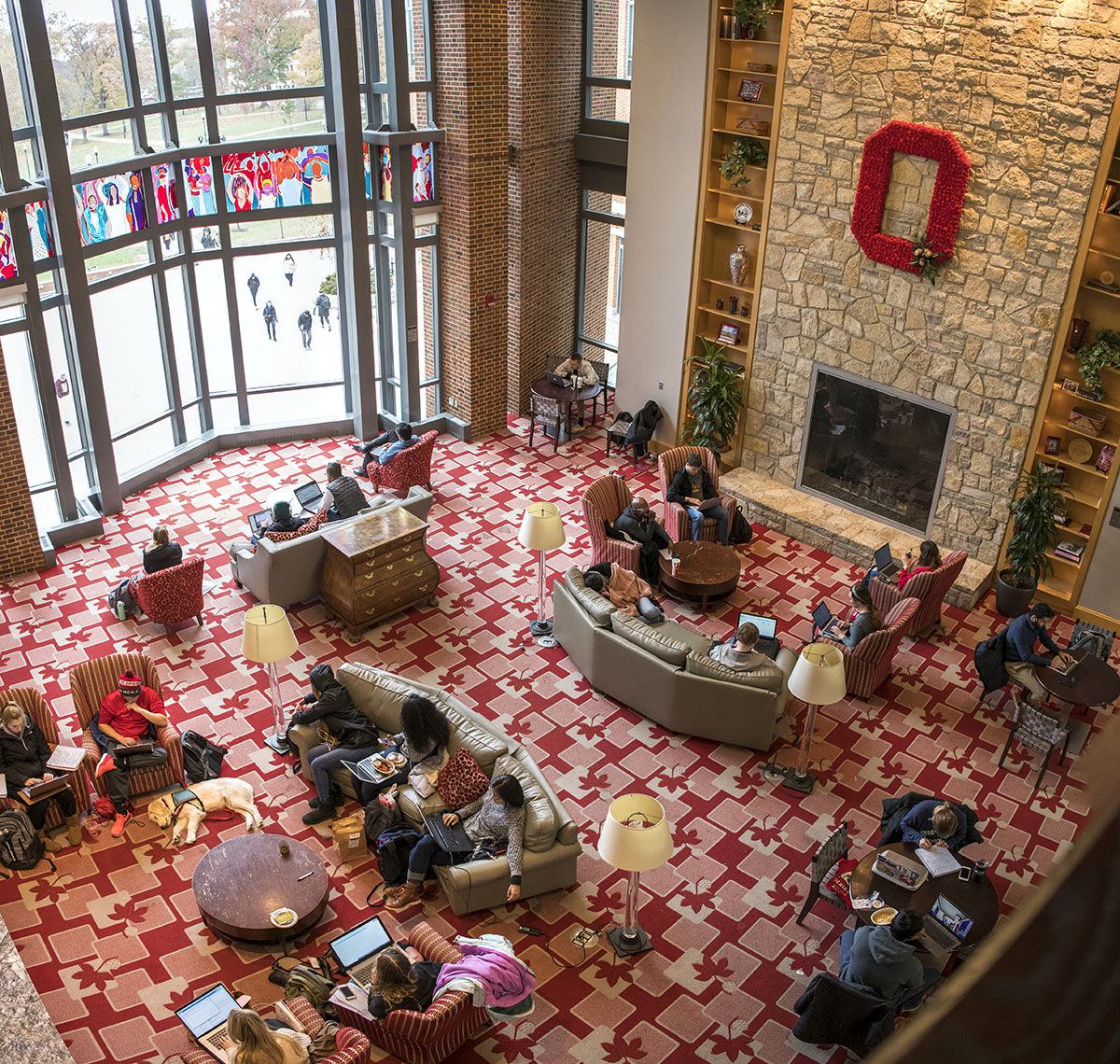
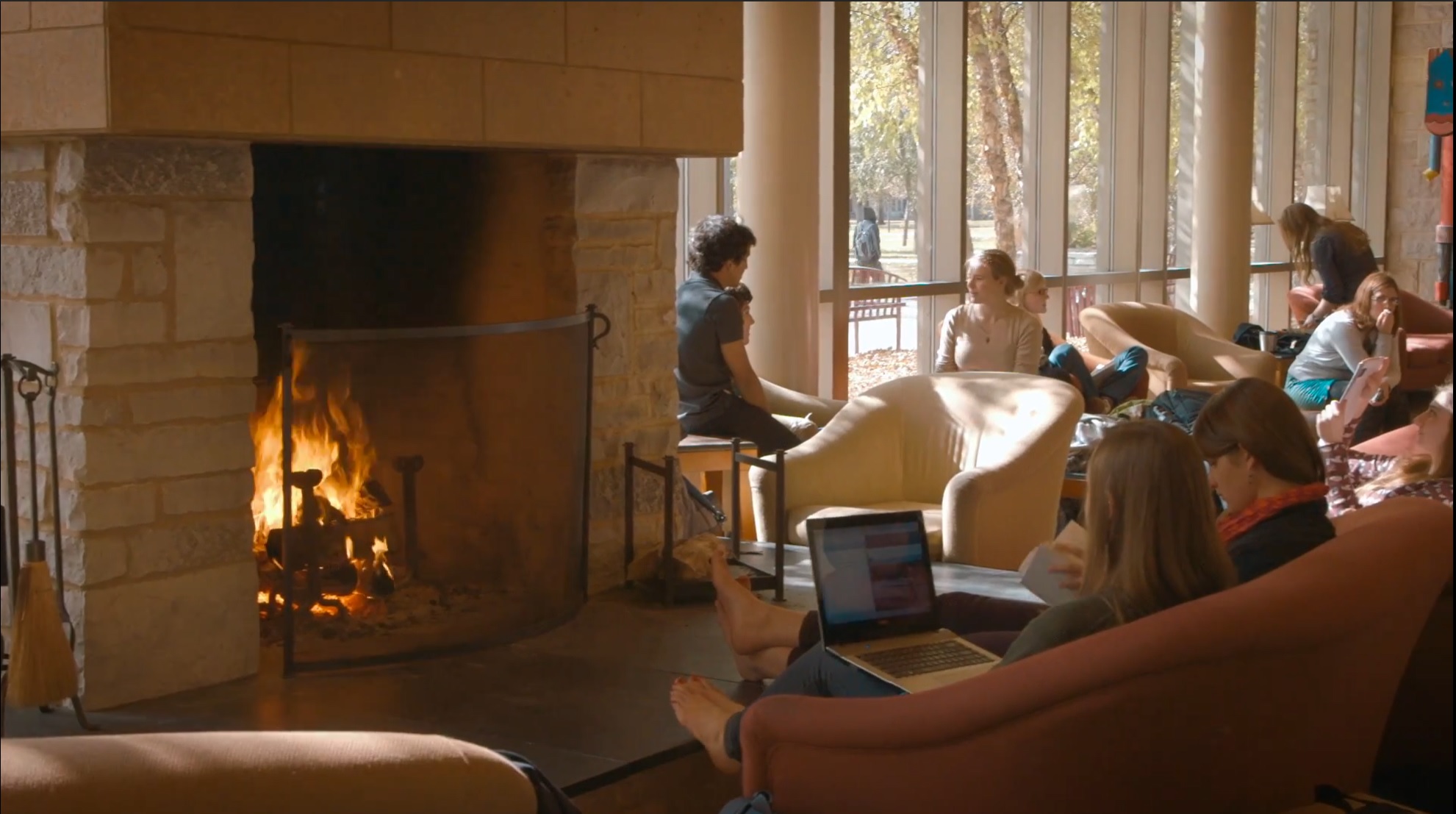
Many accommodations such as dormitories, fraternities and sororities have working fireplaces — wood burning and natural gas. Community spaces such as student unions, libraries and recreation spaces also have fireplaces as a central feature.
The purpose of NFPA 211 is to reduce fire hazards by discovering and promulgating best practice for the safe removal of flue gases, the proper installation of solid fuel-burning appliances, and the correct construction and installation of chimneys, fireplaces, and venting systems. The current 2019 Edition is linked below:
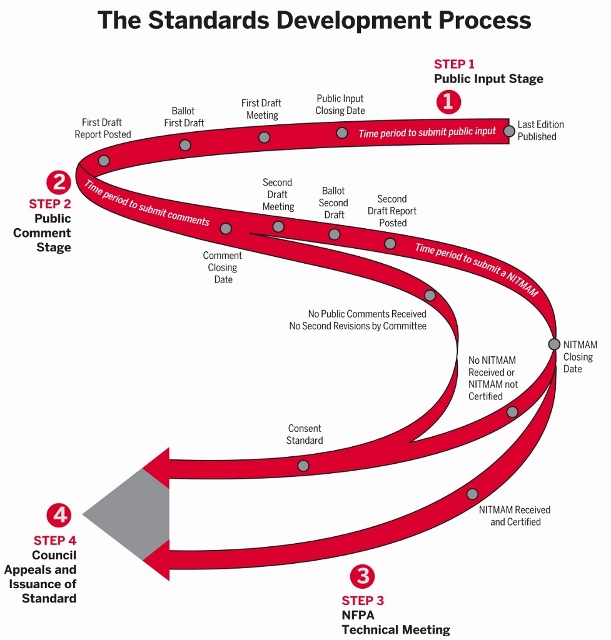
The 2024 has been released. To guide our inquiry into safety and sustainability concepts for the 2027 Edition we like review the developmental transcripts of previous edition:
Today at the usual hour we sort through the NFPA stack for fire safety system aspects during renovation, alteration, or rehabilitation of buildings. Two sections come to mind:
Chapter 43 (NFPA 101): Building Rehabilitation
NFPA 241: Safeguarding Construction, Alteration, and Demolition Operations
Use the login credentials at the upper right of our home page.
The Life Safety Code addresses those construction, protection, and occupancy features necessary to minimize danger to life from the effects of fire, including smoke, heat, and toxic gases created during a fire. It is widely incorporated by reference into public safety statutes; typically coupled with the consensus products of the International Code Council. It is a mighty document — one of the NFPA’s leading titles — so we deal with it in pieces; consulting it for decisions to be made for the following:
(1) Determination of the occupancy classification in Chapters 12 through 42.
(2) Determination of whether a building or structure is new or existing.
(3) Determination of the occupant load.
(4) Determination of the hazard of contents.
There are emergent issues — such as active shooter response, integration of life and fire safety systems on the internet of small things — and recurrent issues such as excessive rehabilitation and conformity criteria and the ever-expanding requirements for sprinklers and portable fire extinguishers with which to reckon. It is never easy telling a safety professional paid to make a market for his product or service that it is impossible to be alive and safe. It is even harder telling the dean of a department how much it will cost to bring the square-footage under his stewardship up to the current code.
The 2021 edition is the current edition and is accessible below:
Public input on the 2027 Revision will be received until June 4, 2024. Public comment on the Second Draft 2027 Revision will be received until March 31, 2026.
Since the Life Safety Code is one of the most “living” of living documents — the International Building Code and the National Electric Code also move continuously — we can start anywhere and anytime and still make meaningful contributions to it. We have been advocating in this document since the 2003 edition in which we submitted proposals for changes such as:
• A student residence facility life safety crosswalk between NFPA 101 and the International Building Code
• Refinements to Chapters 14 and 15 covering education facilities (with particular attention to door technologies)
• Identification of an ingress path for rescue and recovery personnel toward electric service equipment installations.
• Risk-informed requirement for installation of grab bars in bathing areas
• Modification of the 90-minute emergency lighting requirements rule for small buildings and for fixed interval testing
• Modification of emergency illumination fixed interval testing
• Table 7.3.1 Occupant Load revisions
• Harmonization of egress path width with European building codes
There are others. It is typically difficult to make changes to stabilized standard though some of the concepts were integrated by the committee into other parts of the NFPA 101 in unexpected, though productive, ways. Example transcripts of proposed 2023 revisions to the education facility chapter is linked below:
Since NFPA 101 is so vast in its implications we list a few of the sections we track, and can drill into further, according to client interest:
Chapter 3: Definitions
Chapter 7: Means of Egress
Chapter 12: New Assembly Occupancies
Chapter 13: Existing Assembly Occupancies
Chapter 16 Public Input Report: New Day-Care Facilities
Chapter 17 Public Input Report: Existing Day Care Facilities
Chapter 18 Public Input Report: New Health Care Facilities
Chapter 19 Public Input Report: Existing Health Care Facilities
Chapter 28: Public Input Report: New Hotels and Dormitories
Chapter 29: Public Input Report: Existing Hotels and Dormitories
Chapter 43: Building Rehabilitation
Annex A: Explanatory Material
As always we encourage front-line staff, facility managers, subject matter experts and trade associations to participate directly in the NFPA code development process (CLICK HERE to get started)
NFPA 101 is a cross-cutting title so we maintain it on the agenda of our several colloquia —Housing, Prometheus, Security and Pathways colloquia. See our CALENDAR for the next online meeting; open to everyone.
Issue: [18-90]
Category: Fire Safety, Public Safety
Colleagues: Mike Anthony, Josh Elvove, Joe DeRosier, Marcelo Hirschler
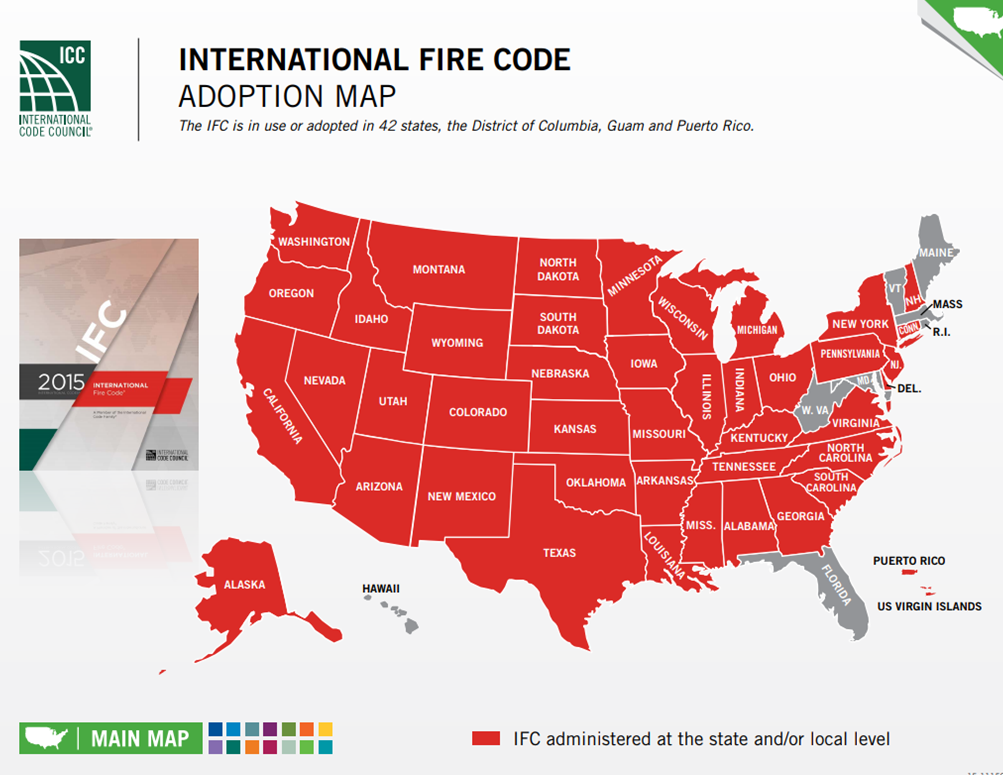
Following the ICC Group A revision cycle public consultation on the 2024 International Fire Code will begin. The ICC will announce the development schedule sometime in 2022.
We limit our resources simply tracking the proposals that run through Group E (Educational) and Group I (Institutional) occupancies in the Group A suite with closer attention to the state they are adopted whole cloth or with local exceptions. In many cases, IFC adoption by state and local authorities is delayed by one or more previous code revisions. This delay in adoption may be necessary in order for jurisdictions to evaluate the impact of changes upon the region under their authority.
Public safety budgets historically support the local and state fire marshal and his or her staff. The revenue stream of many trade associations originates from membership, conference attendance, training and certification enterprises that service the public sector stakeholder. Manufacturer sponsorship of trade association conferences is noteworthy.
Unless there is an idea, or proposed regulation that has run off the rails (either in terms of rigor or cost increase) — we place fire safety in the middle of our ranking of priorities. With gathering pace, we find many fires safety goals being met with electrotechnologies where we place our highest priority.
Click on image for more information. The map is updated by expert agencies frequently so we recommend a web search for an update.
Significant code changes rarely happen within a 3-year cycle so it is wise to follow ideas as they travel through the agendas of technical committees through several cycles as administered by the Fire Code Action Committee.
The ICC posts the transcripts of public proposals, technical committee responses to public proposals, public response to the technical committee response and the final balloting in a fair and reasonable fashion as can be seen in the transcripts linked below:
A search on the terms “classroom” or “school” in any of the documents above offers granular insight into the trend of current thinking. We find fire extinguishers placement a perennial concern across several standards suites. You will note the careful consideration of proposals for use of the mass notification systems, now integrated into fire alarm systems and their deployment in active shooter situations.
The transcripts reveal detailed understanding and subtlety.
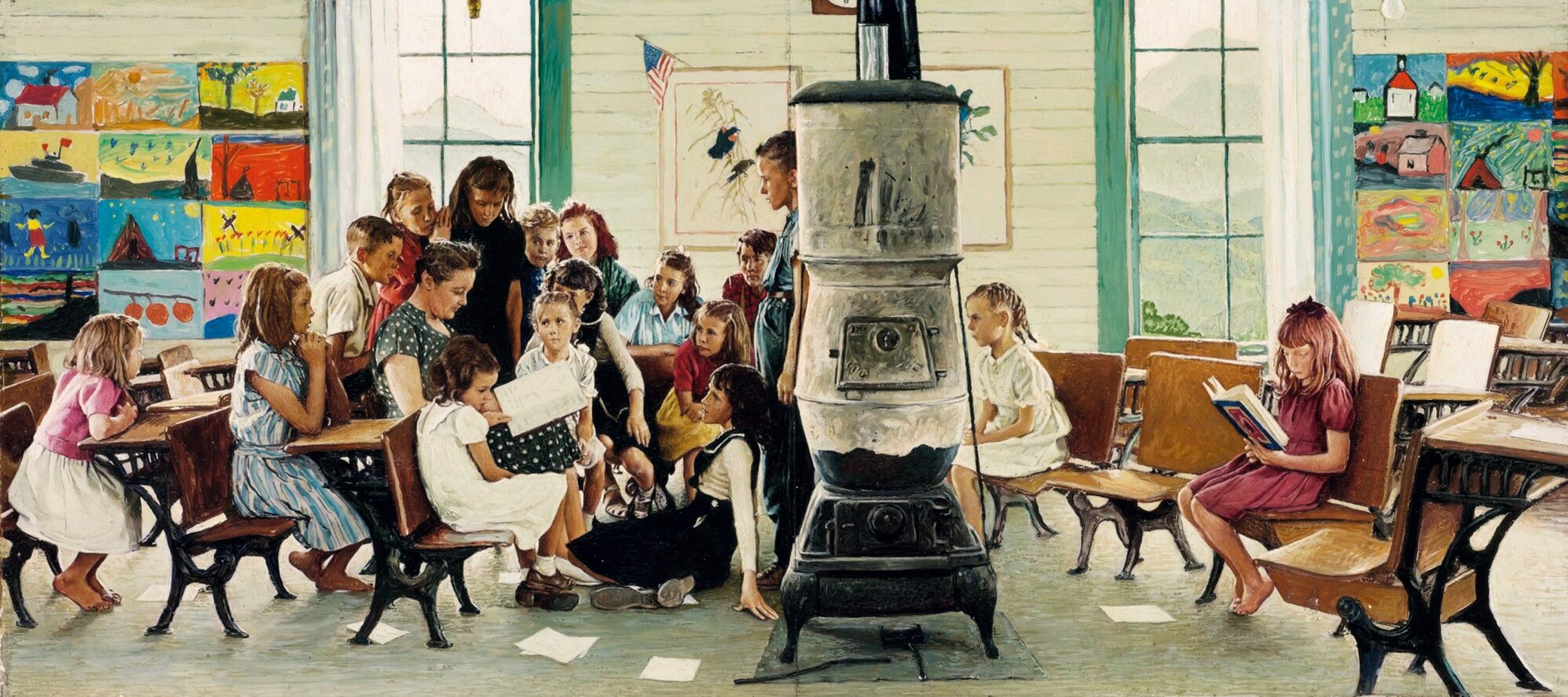
“The Country School” | Winslow Homer
There are many issues affecting the safety and sustainability of the education facility industry. We add value to the industry because of our cross-cutting perspective on the hundreds of “silos”created by the competition (and sometimes cooperation) among accredited, consortia and open-source standards developers. We have the door open every day at 11 AM Eastern time to enlighten understanding of them all. We also host a breakout teleconference every month to drill into the specifics of standards action on fire safety for the real assets of school districts, colleges and universities. See our CALENDAR for the next online meeting.
Finally, we persist in encouraging education industry facility managers (especially those with operations and maintenance data) to participate in the ICC code development process. You may do so by CLICKING HERE.
The ICC Group B Code Meetings will be hosted soon and open to the public:
The Group B tranche is largely focused on energy, structural, residential and existing building concepts but all of the titles cross-reference the IFC in some way so it is wise to follow how the concepts re-arrange and cross-reference themselves with each cycle.
Issue: [16-169]
Category: Architectural, Facility Asset Management, Space Planning
This content is accessible to paid subscribers. To view it please enter your password below or send mike@standardsmichigan.com a request for subscription details.
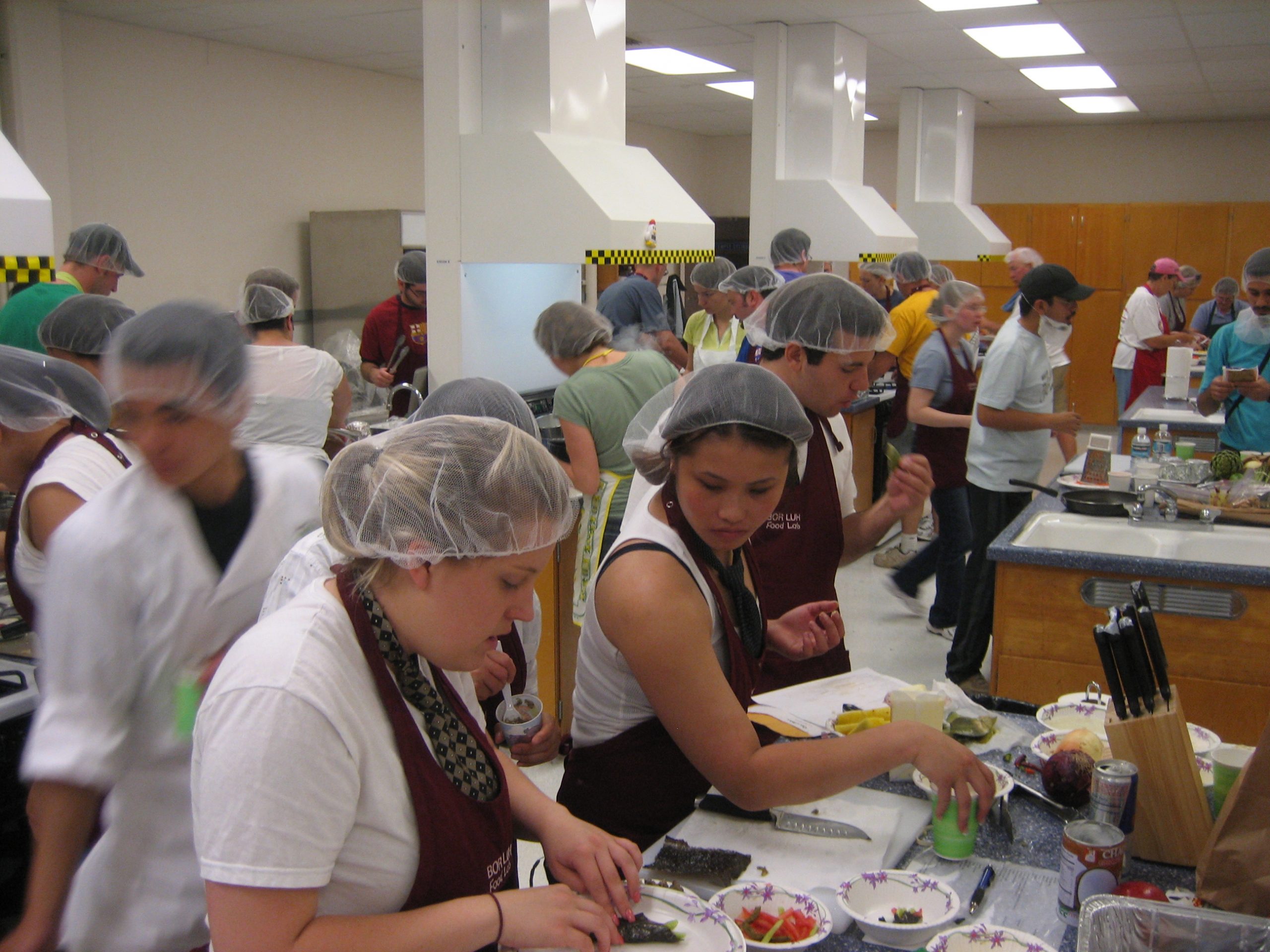
One of the concentrated risk aggregations in any school district, college, university and technical school, athletic venues and university-affiliated healthcare systems, rests in the food preparation units. On a typical large research university there are hundreds of kitchens in dormitories, student unions, athletic venues, hospitals and — to a surprising degree — kitchen facilities are showing up in classroom buildings. Kitchens that used to be located on the periphery of campus and run by private industry are now moving into instructional spaces and operated by private food service vendors.
Food preparation facilities present safety challenges that are on the same scale as district energy plants, athletic concession units, media production facilities and hospital operating rooms. There are 20 accredited standards setting organizations administering leading practice discovery in this space. Some of them concerned with fire safety; others concerned with energy conservation in kitchens, still others concerned with sanitation. The International Kitchen Exhaust Cleaning Association is one of the first names in this space and maintains an accessible standards development home page; linked below:
The IKECA catalog of titles establish a standard of care for cleaning activity that fills gaps in related ASHRAE, ASME, ICC and NFPA titles. For example:
IKECA I10 Standard for the Methodology for Inspection of Commercial Kitchen Exhaust Systems
IKECA C10 Standard for the Methodology for Cleaning Commercial Kitchen Exhaust Systems
We encourage subject matter experts in food enterprises in the education industry to communicate directly with John Dixon at IKCEA (jdixon@fernley.com) or Elizabeth Franks, (215) 320-3876, information@ikeca.org, International Kitchen Exhaust Cleaning Association, 100 North 20th Street, Suite 400, Philadelphia, PA 19103.
We are happy to get specific about how the IKECA suite contributes to lower education community cost during our Food teleconferences. See our CALENDAR for the next online meeting; open to everyone.
Kitchen cooking ranks high as the causes of fire hazard in the built environment. ASHRAE 154 provides design criteria for the performance of commercial cooking ventilation systems. Education communities have hundreds of food preparation enterprises in school districts, residence halls, hospitals and athletic venues. It is not intended to circumvent any safety, health or environmental requirement; however we find a fair amount of drama regarding the competing requirements of fire safety and sustainability among subject matter experts. The stabilized version is dated 2022.
“Dutch Kitchen” / Artist Unknown
A noteworthy title in the ASHRAE standards catalog is ASHRAE 154 Ventilation for Commercial Cooking Operations. Food preparation enterprises in school districts, residence halls, hospitals and athletic venues and central features in education communities. Access to the 2022 edition is linked below:
The purpose of ASHRAE 154 is to provide design criteria for the performance of commercial cooking ventilation systems. It covers kitchen hoods, exhaust systems and replacement air systems, It is not intended to circumvent any safety, health or environmental requirement; however we find a fair amount of drama between partisans of air movement controls and energy conservation interests. Fire safety and the sustainability advocates are well funded voices.
There are no open consultations at the moment; but you may track release of any at the link below:
Titles in the ASHRAE catalog move swiftly; many of them consultations lasting less than 45 days.
Interior environmental air safety is a concern that cuts across many professional disciplines. Accordingly, we maintain this title on the standing agendas of several colloquia — Mechanical Engineering, Energy and Housing. Starting 2022 we will break out this the subject of a separate, dedicated colloquium See our CALENDAR for the next online meeting; open to everyone.
Colleagues: David Conrad, Richard Robben, Larry Spielvogel
Kitchen cooking ranks high as the causes of fire hazard in the built environment. ASHRAE 154 provides design criteria for the performance of commercial cooking ventilation systems. Education communities have hundreds of food preparation enterprises in school districts, residence halls, hospitals and athletic venues. It is not intended to circumvent any safety, health or environmental requirement; however we find a fair amount of drama regarding the competing requirements of fire safety and sustainability among subject matter experts. The stabilized version is dated 2022.
NFPA 72 National Fire Alarm and Signaling Code is one of the core National Fire Protection Association titles widely incorporated by reference into public safety legislation. NFPA 72 competes with titles of “similar” scope — International Fire Code — developed by the International Code Council. We place air quotes around the word similar because there are gaps and overlaps depending upon whether or not each is adopted partially or whole cloth by the tens of thousands of jurisdictions that need both.
Our contact with NFPA 72 dates back to the early 2000’s when the original University of Michigan advocacy enterprise began challenging the prescriptive requirements for inspection, testing and maintenance (IT&M) in Chapter 14. There are hundreds of fire alarm shops, and thousands of licensed fire alarm technicians in the education facility industry and the managers of this cadre of experts needed leadership in supporting their lower #TotalCostofOwnership agenda with “code-writing and vote-getting”. There was no education industry trade association that was even interested, much less effective, in this space so we had to do “code writing and vote getting” ourselves (See ABOUT).
Code writing and vote getting means that you gather data, develop relationships with like minded user-interests, find agreement where you can, then write proposals and defend them at NFPA 72 technical committee meetings for 3 to 6 years. Prevailing in the Sturm und Drang of code development for 3 to 6 years should be within the means of business units of colleges and universities that have been in existence for 100’s of years. The real assets under the stewardship of these business units are among the most valuable real assets on earth.
Consider the standard of care for inspection, testing and maintenance. Our cross-cutting experience in over 100 standards suites allows us to say with some authority that, at best the IT&M tables of NFPA 72 Chapter 14 present easily enforceable criteria for IT&M of fire alarm and signaling systems. At worst, Chapter 14 is a solid example of market-making by incumbent interests as the US standards system allows. Many of the IT&M requirements can be modified for a reliability, or risk-informed centered maintenance program but fire and security shops in the education industry are afraid to apply performance standards because of risk exposure. This condition is made more difficult in large universities that have their own maintenance and enforcement staff. The technicians see opportunities to reduce IT&M frequencies — thereby saving costs for the academic unit facility managers — the enforcement/compliance/conformity/risk management professionals prohibit the application of performance standards. They want prescriptive standards for bright line criteria to make their work easier to measure.
While we have historically focused on Chapter 14 we have since expanded our interest into communication technologies within buildings since technicians and public safety personnel depend upon them. Content in Annex G — Guidelines for Emergency Communication Strategies for Buildings and Campuses — is a solid starting point and reflects of our presence when the guidance first appeared in the 2016 Edition. We shall start with a review of the most recent transcript of the NFPA Technical Committee on Testing and Maintenance of Fire Alarm and Signaling Systems
Public comment of the First Draft of the 2025 Edition is receivable until May 31, 2023. As always, we encourage direct participation in the NFPA process by workpoint experts with experience, data and even strong opinions about shortcomings and waste in this discipline. You may key in your proposals on the NFPA public input facility linked below:
You will need to set up a (free) NFPA TerraView account. Alternatively, you may join us any day at 11 AM US Eastern time or during our Prometheus or Radio colloquia. See our CALENDAR for the online meeting.
Issue: [15-213]
Category: Fire Safety & Security, #SmartCampus, Informatics
Colleagues: Mike Anthony, Joe DeRosier, Josh Elvove, Jim Harvey, Marcelo Hirschler
New update alert! The 2022 update to the Trademark Assignment Dataset is now available online. Find 1.29 million trademark assignments, involving 2.28 million unique trademark properties issued by the USPTO between March 1952 and January 2023: https://t.co/njrDAbSpwBpic.twitter.com/GkAXrHoQ9T





_Mauritshuis_171.jpg)