Category Archives: Fire Protection

Loading
loading...

Animal Safety

“One of the Family” 1880 | Frederick George Cotman

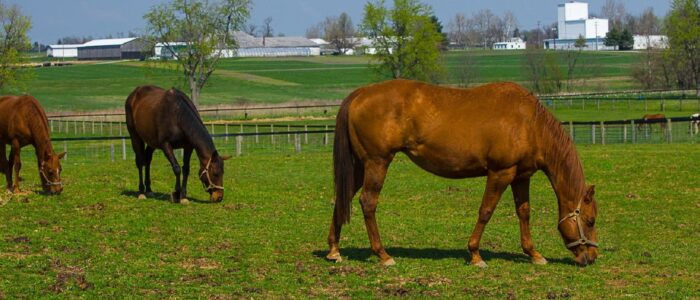
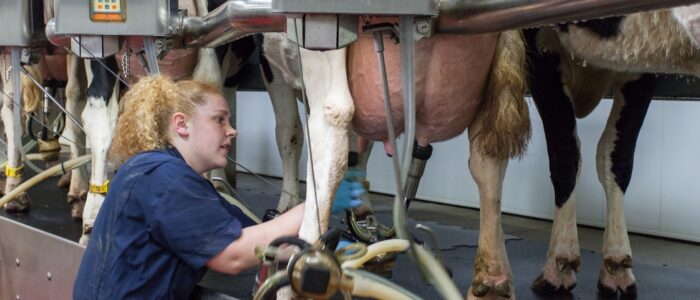
NFPA 150 Fire and Life Safety in Animal Housing Facilities Code has entered its s025 revision cycle.   Many education communities are responsible for animal safety in academic units, research enterprises. museums and even — as in the United Kingdom — large farm animals that wander freely on campus with students, faculty and staff.  The number of colleges and universities that permit students to live with their pets has expanded; and with it the responsibilities of university administration.

From the document scope:

This standard shall provide the minimum requirements for the design, construction, fire protection, and classification of animal housing facilities.  The requirements of NFPA 150 recognize the following fundamental principles:

(1) Animals are sentient beings with a value greater than that of simple property.

(2) Animals, both domesticated and feral, lack the ability of self-preservation when housed in buildings and other structures.

(3) Current building, fire, and life safety codes do not address the life safety of the animal occupants. The requirements found in NFPA 150 are written with the intention that animal housing facilities will continue to be designed, constructed, and maintained in accordance with the applicable building, fire, and life safety codes.

The requirements herein are not intended to replace or rewrite the basic requirements for the human occupants. Instead, NFPA 150 provides additional minimum requirements for the protection of the animal occupants and the human occupants who interact with those animals in these facilities. 


A full description of the project is linked below:

Fire and Life Safety in Animal Housing Facilities Code

Access to the 2025 Edition is linked below:

FREE ACCESS NFPA 150

We provide the transcript of the back-and-forth on the current 2022 edition to inform how education communities can contribute to the improvement of this title; a subject that stirs deep feelings about animal safety in research enterprises.

NFPA 150 First Draft Agenda

NFPA 150 Second Draft Report

Public comment on the Second Draft of the 2025 Edition will be received until March 27, 2024.   

We have been advocating risk-informed animal safety concepts in this document since the 2013 Edition and have found that it is nearly impossible to overestimate the sensitivity of educational communities to the life safety of animals — either for agriculture or medical research.

We maintain the entire NFPA catalog on the standing agenda of our Prometheus colloquia.  See our CALENDAR for the next online meeting; open to everyone.
"i thank You God for most this amazing day:for the leaping greenly spirits of trees and a blue true dream of sky;and for everything which is natural which is infinite which is yes" -- e.e.cummings ('Seventy-One Poems' 1950)


Issue: [11-1] and [19-5]

Category: Fire Protection, Facility Asset Management, Academic, Risk Management

Colleagues: Mike Anthony, Josh Elvove, Joe DeRosier

More:

Protecting Animals When Disaster Strikes

Animals 300


Bibliography:

25 Most Pet-Friendly Colleges

National Institute of Health: Policy on Humane Care and Use of Laboratory Animals

International Building Code: Section 304 (Business Group B): Animal hospitals, kennels and pounds

Terrestrial Animal Health Code

IEEE Guide for Animal Deterrents for Electric Power Supply Substations

ASHRAE Animal Facilities

IEEE Livestock Monitoring System

Ventilation Design Handbook on Animal Research Facilities

HVAC Design in Animal Facilities

USDA Animal Welfare Information Center

ISO Assistance Dogs

US Department of Agriculture: Animal Welfare Act and Animal Welfare Regulations

S. 4288: Reducing Animal Testing Act

Guaranteeing safety of animals under risk of fire: conceptual framework and technical issues analysis

Protecting Animals When Disaster Strikes


Property Loss Prevention

Architect and Engineers Data Sheet Download | Updates January 2026

These are generally downloads.  We are happy to pick through the changes to the Electrical stack depending upon interest.

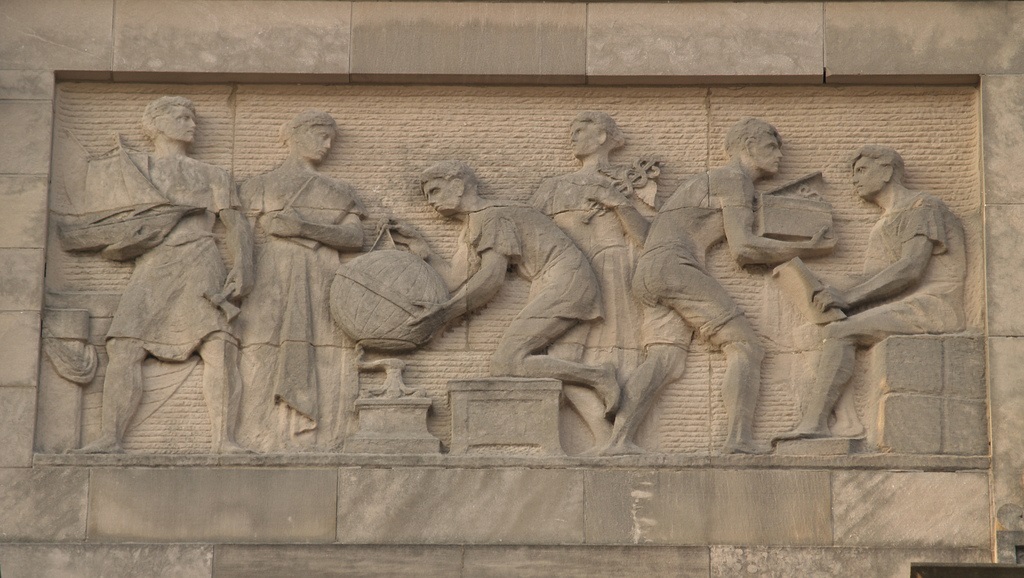
Left Panel Of George Julian Zolnay’s Allegorical “Academic, Business & Manual Education” Granite Frieze At Francis L. Cardozo High School (Washington, DC)

All fifty United States have their own “signature” disaster with which to reckon; some more than others.   California has earthquakes, Florida has hurricanes, Missouri has floods; and so on,  Life and property loss are preventable; but losses will persist because technical solutions notwithstanding, culture determines human behavior.  It is impossible to be alive and safe.

FM Global is one of several organizations that curate privately developed consensus products that set the standard of care for many industries; education communities among them.  These standards contribute to the reduction in the risk of property loss due to fire, weather conditions, and failure of electrical or mechanical equipment.  They incorporate nearly 200 years of property loss experience, research and engineering results, as well as input from consensus standards committees, equipment manufacturers and others.

If you want FMGlobal as your insurance carrier, or to supplement your organization’s self-insurance program, then you will likely be assigned an FMGlobal conformity professional.

A scan of its list data sheets indicate a number of noteworthy updates of documents establishing minimum requirements for safety technologies common in education facilities:

Technical Reports Supporting Code Change

Note that the bulk of the safety concepts in the foregoing titles incorporate by reference the safety concepts that cross our radar every day   FM Global provides direct access to the full span of its documents at this link:

FM GLOBAL PROPERTY LOSS PREVENTION DATA SHEETS

Note FM Global updates its standards every three months:

Standards in Progress

To respond to calls for public consultation you will need to set up (free) access credentials.

We keep FMGlobal titles — and the literature of other property insurers involved in standards setting — on the standing agenda of our Risk, Snow and Prometheus colloquia.  See our CALENDAR for the next meeting.

Issue: [Various]

Category: Risk, Facility Asset Management


More

Deloitte University: Innovation in Insurance

University of Pennsylvania demonstrates the critical importance of sprinklers in dormitories

Syracuse University presents an eclectic mix of risk management challenges

Jackson Laboratory

Representative force majeure clauses.

Example 1: Basic Force Majeure Clause

“Neither party shall be liable for any failure or delay in performance of its obligations under this agreement due to events beyond its reasonable control, including but not limited to acts of God, war, terrorism, civil commotion, labor strikes, and natural disasters. The affected party shall promptly notify the other party of the force majeure event and take reasonable steps to mitigate its impact on performance. During the continuance of such events, the obligations of the affected party shall be suspended, and the time for performance shall be extended.”

Example 2: Detailed Force Majeure Clause

“In the event that either party is unable to perform its obligations under this agreement due to a force majeure event, the affected party shall promptly notify the other party in writing, specifying the nature and anticipated duration of the force majeure event. Force majeure events shall include, but are not limited to, acts of God, strikes, lockouts, government action or inaction, war, terrorism, epidemics, and natural disasters. The affected party shall use reasonable efforts to overcome or mitigate the effects of the force majeure event. If the force majeure event continues for a period of [specified duration], either party may terminate this agreement by providing written notice to the other party.”


Life Safety Code

Today at the usual hour we sort through the NFPA stack for fire safety system aspects during renovation, alteration, or rehabilitation of buildings.  Two sections come to mind:

Chapter 43 (NFPA 101): Building Rehabilitation


NFPA 241: Safeguarding Construction, Alteration, and Demolition Operations
Use the login credentials at the upper right of our home page.

Educational and Day-Care Occupancies (July 23, 2025 Second Draft Transcript)

The Life Safety Code addresses those construction, protection, and occupancy features necessary to minimize danger to life from the effects of fire, including smoke, heat, and toxic gases created during a fire.   It is widely incorporated by reference into public safety statutes; typically coupled with the consensus products of the International Code Council.   It is a mighty document — one of the NFPA’s leading titles — so we deal with it in pieces; consulting it for decisions to be made for the following:

(1) Determination of the occupancy classification in Chapters 12 through 42.

(2) Determination of whether a building or structure is new or existing.

(3) Determination of the occupant load.

(4) Determination of the hazard of contents.

There are emergent issues — such as active shooter response, integration of life and fire safety systems on the internet of small things — and recurrent issues such as excessive rehabilitation and conformity criteria and the ever-expanding requirements for sprinklers and portable fire extinguishers with which to reckon.  It is never easy telling a safety professional paid to make a market for his product or service that it is impossible to be alive and safe.  It is even harder telling the dean of a department how much it will cost to bring the square-footage under his stewardship up to the current code.

The 2021 edition is the current edition and is accessible below:

NFPA 101 Life Safety Code Free Public Access

Public input on the 2027 Revision will be received until June 4, 2024.  Public comment on the Second Draft 2027 Revision will be received until March 31, 2026.


Since the Life Safety Code is one of the most “living” of living documents — the International Building Code and the National Electric Code also move continuously — we can start anywhere and anytime and still make meaningful contributions to it.   We have been advocating in this document since the 2003 edition in which we submitted proposals for changes such as:

• A student residence facility life safety crosswalk between NFPA 101 and the International Building Code

• Refinements to Chapters 14 and 15 covering education facilities (with particular attention to door technologies)

• Identification of an ingress path for rescue and recovery personnel toward electric service equipment installations.

• Risk-informed requirement for installation of grab bars in bathing areas

• Modification of the 90-minute emergency lighting requirements rule for small buildings and for fixed interval testing

• Modification of emergency illumination fixed interval testing

• Table 7.3.1 Occupant Load revisions

• Harmonization of egress path width with European building codes

There are others.  It is typically difficult to make changes to stabilized standard though some of the concepts were integrated by the committee into other parts of the NFPA 101 in unexpected, though productive, ways.  Example transcripts of proposed 2023 revisions to the education facility chapter is linked below:

Chapter 14 Public Input Report: New Educational Occupancies

Educational and Day Care Occupancies: Second Draft Public Comments with Responses Report

Since NFPA 101 is so vast in its implications we list a few of the sections we track, and can drill into further, according to client interest:

Chapter 3: Definitions

Chapter 7: Means of Egress

Chapter 12: New Assembly Occupancies

Chapter 13: Existing Assembly Occupancies

Chapter 16 Public Input Report: New Day-Care Facilities

Chapter 17 Public Input Report: Existing Day Care Facilities

Chapter 18 Public Input Report: New Health Care Facilities

Chapter 19 Public Input Report: Existing Health Care Facilities

Chapter 28: Public Input Report: New Hotels and Dormitories

Chapter 29: Public Input Report: Existing Hotels and Dormitories

Chapter 43: Building Rehabilitation

Annex A: Explanatory Material

As always we encourage front-line staff, facility managers, subject matter experts and trade associations to participate directly in the NFPA code development process (CLICK HERE to get started)

NFPA 101 is a cross-cutting title so we maintain it on the agenda of our several colloquia —Housing, Prometheus, Security and Pathways colloquia.  See our CALENDAR for the next online meeting; open to everyone.
 

Issue: [18-90]

Category: Fire Safety, Public Safety

Colleagues: Mike Anthony, Josh Elvove, Joe DeRosier, Marcelo Hirschler

More

ARCHIVE / Life Safety Code 2003 – 2018


Fire and Life Safety in Stadiums

Kitchen Exhaust


God walks among the pots and pans.

— Saint Teresa of Ávila c.1582


One of the concentrated risk aggregations in any school district, college, university and technical school, athletic venues and university-affiliated healthcare systems, rests in the food preparation units.  On a typical large research university there are hundreds of kitchens in dormitories, student unions, athletic venues, hospitals and — to a surprising degree — kitchen facilities are showing up in classroom buildings.  Kitchens that used to be located on the periphery of campus and run by private industry are now moving into instructional spaces and operated by private food service vendors. 

Food preparation facilities present safety challenges that are on the same scale as district energy plants, athletic concession units, media production facilities and hospital operating rooms.   There are 20 accredited standards setting organizations administering leading practice discovery in this space.  Some of them concerned with fire safety; others concerned with energy conservation in kitchens, still others concerned with sanitation.    The International Kitchen Exhaust Cleaning Association is one of the first names in this space and maintains an accessible standards development home page; linked below:

IKCEA Standards

The IKECA catalog of titles establish a standard of care for cleaning activity that fills gaps in related ASHRAE, ASME, ICC and NFPA titles.  For example:

IKECA I10 Standard for the Methodology for Inspection of Commercial Kitchen Exhaust Systems

IKECA C10 Standard for the Methodology for Cleaning Commercial Kitchen Exhaust Systems

Hazards posed by un-maintained exhaust systems are covered in the NFPA Report: Structure Fires in Eating and Drinking Establishments

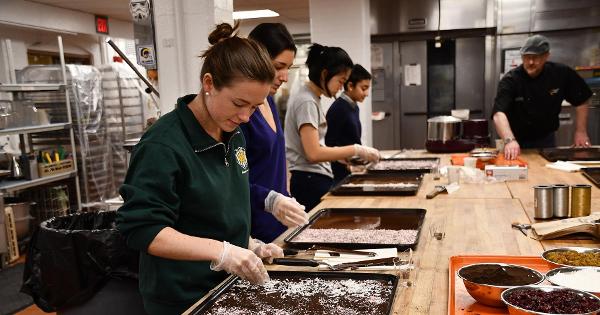
Princeton University Teaching Kitchen

We encourage subject matter experts in food enterprises in the education industry to communicate directly with John Dixon at IKCEA (jdixon@fernley.com) or Elizabeth Franks, (215) 320-3876, information@ikeca.org, International Kitchen Exhaust Cleaning Association, 100 North 20th Street, Suite 400, Philadelphia, PA 19103.   

We are happy to get specific about how the IKECA suite contributes to lower education community cost during our Food  teleconferences.  See our CALENDAR for the next online meeting; open to everyone.

Issue: [18-24]

Category: Facility Asset Management

Colleagues:  Larry Spielvogel, Richard Robben


LEARN MORE:

Dormitories, Fraternities, Sororities and Barracks

Keele University “Look When You Cook”

Commercial Kitchen Ventilation

Traps, Interceptors and Separators

Workspace / IKCEA


Fire Alarm & Signaling Code

“Prometheus Bound” | Thomas Cole (1847)

NFPA 72 National Fire Alarm and Signaling Code is one of the core National Fire Protection Association titles widely incorporated by reference into public safety legislation.   NFPA 72 competes with titles of “similar” scope — International Fire Code — developed by the International Code Council.  We place air quotes around the word similar because there are gaps and overlaps depending upon whether or not each is adopted partially or whole cloth by the tens of thousands of jurisdictions that need both.

Our contact with NFPA 72 dates back to the early 2000’s when the original University of Michigan advocacy enterprise began challenging the prescriptive requirements for inspection, testing and maintenance (IT&M) in Chapter 14.  There are hundreds of fire alarm shops, and thousands of licensed fire alarm technicians in the education facility industry and the managers of this cadre of experts needed leadership in supporting their lower #TotalCostofOwnership agenda with “code-writing and vote-getting”.   There was no education industry trade association that was even interested, much less effective, in this space so we had to do “code writing and vote getting” ourselves (See ABOUT).

Code writing and vote getting means that you gather data, develop relationships with like minded user-interests, find agreement where you can, then write proposals and defend them at NFPA 72 technical committee meetings for 3 to 6 years.  Prevailing in the Sturm und Drang of code development for 3 to 6 years should be within the means of business units of colleges and universities that have been in existence for 100’s of years.  The real assets under the stewardship of these business units are among the most valuable real assets on earth.

Consider the standard of care for inspection, testing and maintenance.  Our cross-cutting experience in over 100 standards suites allows us to say with some authority that, at best the IT&M tables of NFPA 72 Chapter 14 present easily enforceable criteria for IT&M of fire alarm and signaling systems.  At worst, Chapter 14 is a solid example of market-making by incumbent interests as the US standards system allows.   Many of the IT&M requirements can be modified for a reliability, or risk-informed centered maintenance program but fire and security shops in the education industry are afraid to apply performance standards because of risk exposure.   This condition is made more difficult in large universities that have their own maintenance and enforcement staff.  The technicians see opportunities to reduce IT&M frequencies — thereby saving costs for the academic unit facility managers — the enforcement/compliance/conformity/risk management professionals prohibit the application of performance standards.  They want prescriptive standards for bright line criteria to make their work easier to measure.

While we have historically focused on Chapter 14 we have since expanded our interest into communication technologies within buildings since technicians and public safety personnel depend upon them.  Content in Annex G — Guidelines for Emergency Communication Strategies for Buildings and Campuses — is a solid starting point and reflects of our presence when the guidance first appeared in the 2016 Edition.  We shall start with a review of the most recent transcript of the NFPA Technical Committee on Testing and Maintenance of Fire Alarm and Signaling Systems

NFPA 72 First Draft Meeting (A2024)

Public Emergency Reporting Systems (SIG-PRS) First Draft

Public comment of the First Draft of the 2025 Edition is receivable until May 31, 2023.   As always, we encourage direct participation in the NFPA process by workpoint experts with experience, data and even strong opinions about shortcomings and waste in this discipline.  You may key in your proposals on the NFPA public input facility linked below:

https://www.nfpa.org/login

You will need to set up a (free) NFPA TerraView account.   Alternatively, you may join us any day at 11 AM US Eastern time or during our Prometheus or Radio colloquia.   See our CALENDAR for the online meeting.

Issue: [15-213]

Category: Fire Safety & Security, #SmartCampus, Informatics

Colleagues: Mike Anthony, Joe DeRosier, Josh Elvove, Jim Harvey, Marcelo Hirschler


More

2013 NFPA 72 National Fire Alarm and Signaling Code (357 pages)

TIA-222 Standard For Towers And Antenna Supporting Structures


Emergency Communication Strategies for Buildings


ARCHIVE / NFPA 72

National Center for Spectator Sports Safety and Security


προμηθέας 300

Fire Alarm Basics | Prometheus

Today we run through recent action in fire safety best practice literature.  Even though fire safety technologies comprise about 2-4 percent of a new building budget, the influence of the fire safety culture dominates all aspects campus safety; cybersecurity of public safety communication technology for example.

A small sample of the issues we have tracked in the past: (2002-2023).  Items in RED indicate success in reducing cost with no reduction in safety (i.e. successful rebuttal, typically market-making by incumbents)

  • Limiting vendor lock-in (promote interoperability) in building additions.
  • Limiting the tendency to lowball first cost in order to achieve vendor lock-in later in the facility life-cycle
  • Dormitory kitchen fire safety

Fire Safety of University Dormitory Based on Bayesian Network

  • Clarification of mixed-occupancy classifications (occupant loading)
  • Fixed interval (rather than risk-informed) inspection, testing and maintenance of fire alarm and protection system components
  • Fire alarm system upgrades during renovation

Gamification Teaching in School Fire Safety

  • Mixed zone and addressable alarm system wiring
  • Wireless initiation devices
  • Integrated fire protection systems (NFPA 3&4)
  • Portable fire extinguishers (NFPA 10)

Hospital Evacuation under Fire

  • Alarm system re-set procedures
  • Sprinkler system coverage for animals in research
  • Scalability of fire safety professional certification
  • Sprinklering of off-campus student housing
  • Advocating central (or campus district) fire pump systems

One of the newer issues to revisit over the past few years is the fire safety of tents.   Many colleges and universities are setting up large commercial tents outside buildings (within range of Wi-Fi) for students to congregate, study and dine.  We are also seeing back and forth on fire safety in theatrical performance venues in the International Code Council building safety catalog.

We approach these titles with an eye toward driving risk-informed, performance requirements that reduce risk and cost for the user interest; while recognizing the responsibility of competitor stakeholders.   It is not a friendly space for the user-interest who seeks to optimally resolve the competing requirements of safety and economy.   Vertical incumbents completely dominate this domain.

Prepared Hero Fire Blanket

Relevant NFPA Titles:

NFPA 10 Standard for Portable Fire Extinguishers

    • Public Input Closing Date: June 1, 2023

NFPA 13 Standard for the Installation of Sprinkler Systems

NFPA 25 Standard for the Inspection, Testing, and Maintenance of Water-Based Fire Protection Systems

NFPA 72 National Fire Alarm and Signaling Code®

    • Public Comment Closing Date: May 31, 2023

NFPA 75 Standard for the Fire Protection of Information Technology Equipment

NFPA 76 Standard for the Fire Protection of Telecommunications Facilities

NFPA 92 Standard for Smoke Control Systems

    • Public Comment Closing Date: January 4, 2023

International Code Council Group A 2021/2022 Code Cycle

Use the login credentials at the upper right of our home page.


More

NFPA Report: Structure Fires in Dormitories, Fraternities, Sororities and Barracks 

ASTM Committee E0% on Fire Standards

Standing Agenda / Prometheus


Key Updates on Fire Safety Standards

Why do Humans Stare at Fire? : Scientific aspects of primal magic of fire

Code ignis MMXXVII

Winter Holiday Fire Facts

NFPA Fire Protection Systems Catalog (Lorem ipsum)

Crosswalk: NFPA Fire Code and ICC International Fire Code

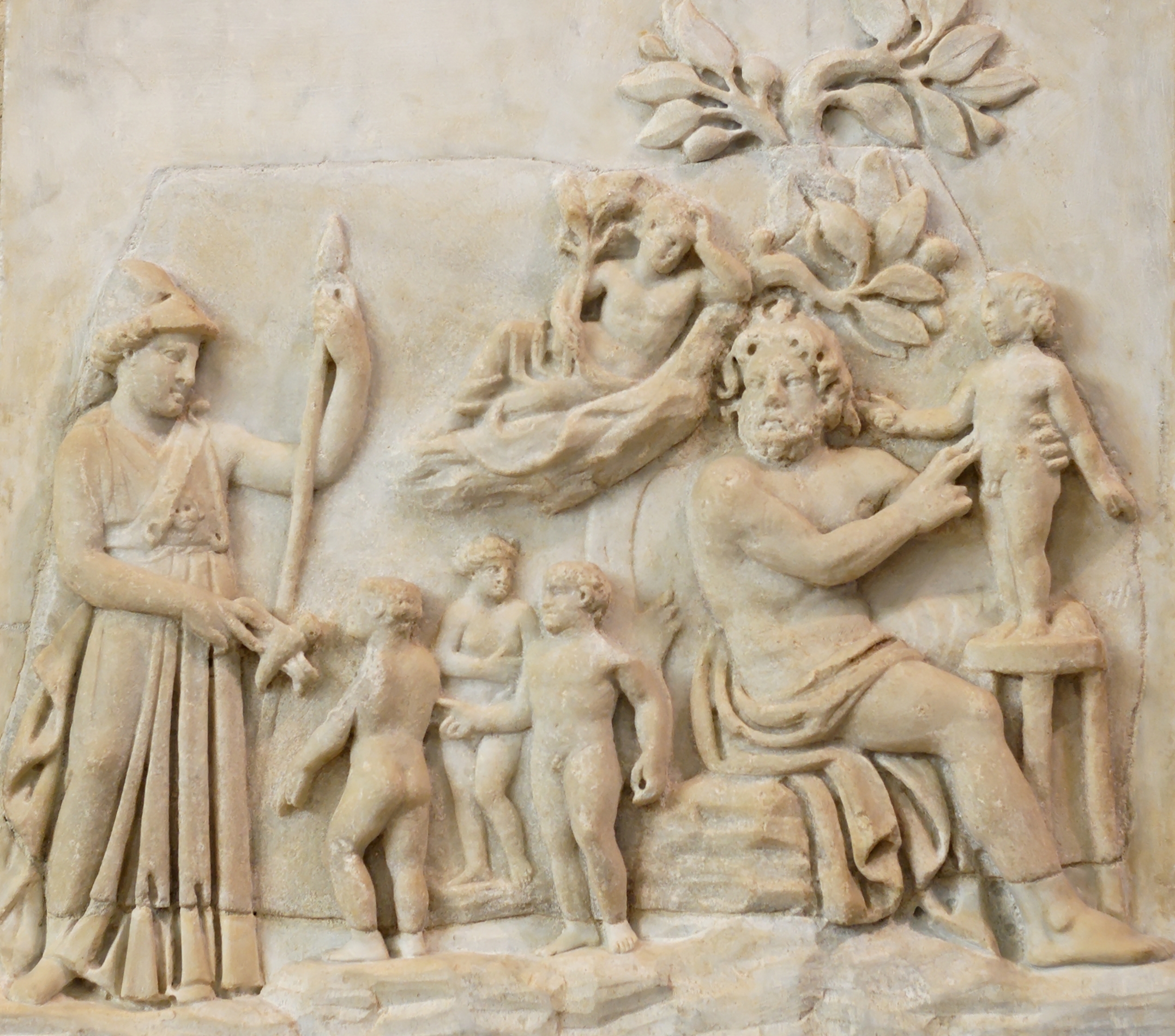
“Prometheus creating Man in the presence of Athena” 1802 Jean-Simon Berthélemy

Free public access to the current edition of NFPA’s parent fire safety document is linked below:

2024 NFPA 1 Fire Code 

We attend to occupancy-specific chapters (listed below) because of their significant presence in education communities.

Chapter 25: Grandstands and Bleachers, Folding and Telescopic Seating, Tents and Membrane Structures (N.B)

Chapter 26: Laboratories Using Chemicals

Chapter 29: Parking Garages

Chapter 32: Motion Picture and Television Production Studio Soundstages and Approved Production Facilities

Chapter 35: Animal Housing Facilities

Chapter 36: Telecommunication Facilities and Information Technology Equipment

Chapter 50: Commercial Cooking

Chapter 52: Energy Storage Systems

Some of the chapters reference other titles such as NFPA 45 Standard of Fire Protection for Laboratories Using Chemicals which support risk management in other occupancies.  It is noteworthy that in the 2021 revision cycle of NFPA 1 there are relatively few new concepts regarding education facilities that have been proposed.   You get a sampling of the ideas in play from the transcript of public input for the 2024 edition.

Public Input Report (525 Pages)

Use search terms such as school, college, university, dormitory(ies), laboratory(ies), classroom, children, day-care, student, et cetera for a sense of the ideas in play.

Results of the 2027 First Draft meetings have not yet been posted as on November 9, 2024.  A preview of the ideas in play can be found in the meeting minutes of the several committees linked below:

Fire Code (FCC-AAC): First Draft Meeting Minutes

First Draft: Fundamentals of the Fire Code (FCC-FUN)

Special Equipment, Processes and Hazardous Materials (FCC-HAZ)

Building Systems and Special Occupancies (FCC-OCP)

Public comment on the First Draft of the 2027 revision will be received until April 24, 2025.

We include NFPA 1 on our periodic fire safety colloquia — identified by the mnemonic Prometheus — and march along peak interests.

Campus fire safety is domain relatively well-covered by other organizations such as the Center for Campus Fire Safety and HigherEd Safety so we place NFPA 1 in the middle of our priority tier.   We are more interested in the harmonization of NFPA 1 with a competitor title International Fire Code; published by the International Code Council; to wit:

International Fire Code:   The purpose of this code is to establish the minimum requirements consistent with nationally recognized good practice for proving a reasonable level of life safety and property protection from the hazards of fire, explosion or dangerous conditions in new and existing buildings, structures or premises and to provide a reasonable level of safety to fire fighters and emergency responders during emergency operations

Fire Code: The scope includes, but is not limited to, the following: (1) Inspection of permanent and temporary buildings, processes, equipment, systems, and other fire and related life safety situations (2) Investigation of fires, explosions, hazardous materials incidents, and other related emergency incidents (3) Review of construction plans, drawings, and specifications for life safety systems, fire protection systems, access, water supplies, processes, hazardous materials, and other fire and life safety issues (4) Fire and life safety education of fire brigades, employees, responsible parties, and the general public (5) Existing occupancies and conditions, the design and construction of new buildings, remodeling of existing buildings, and additions to existing buildings (6) Design, installation, alteration, modification, construction, maintenance, repairs, servicing, and testing of fire protection systems and equipment (7) Installation, use, storage, and handling of medical gas systems (8) Access requirements for fire department operations (9) Hazards from outside fires in vegetation, trash, building debris, and other materials (10) Regulation and control of special events including, but not limited to, assemblage of people, exhibits, trade shows, amusement parks, haunted houses, outdoor events, and other similar special temporary and permanent occupancies (11) Interior finish, decorations, furnishings, and other combustibles that contribute to fire spread, fire load, and smoke production (12) Storage, use, processing, handling, and on-site transportation of flammable and combustible gases, liquids, and solids (13) Storage, use, processing, handling, and on-site transportation of hazardous materials (14) Control of emergency operations and scenes (15) Conditions affecting fire fighter safety (16) Arrangement, design, construction, and alteration of new and existing means of egress

Note that both ICC and NFPA parent fire safety documents are developed on coincident 3-year cycles.


Issue: [18-90]

Category: Fire Safety, Public Safety

Colleagues: Mike Anthony,  Joshua W. Elvove, Joe DeRosier, Casey Grant

Fire Safety

“Creation of humanity by Prometheus as Athena looks on”

Fire safety leadership usually finds itself involved in nearly every dimension of risk on the #WiseCampus; not just the built environment but security of interior spaces with combustibles but along the perimeter and within the footprint of the education community overall.

The Campus Fire Marshal, for example, usually signs the certificate of occupancy for a new building but may be drawn into meetings where decisions about cybersecurity are made.   Fire protection systems coincide with evacuation systems when there is no risk and both may be at risk because of cyber-risk.

The job description of a campus fire safety official is linked below offers some insight into why fire safety technologies reach into every risk dimension:

University of California Santa Cruz Office of Emergency Services

University of Tennessee Emergency Service Training

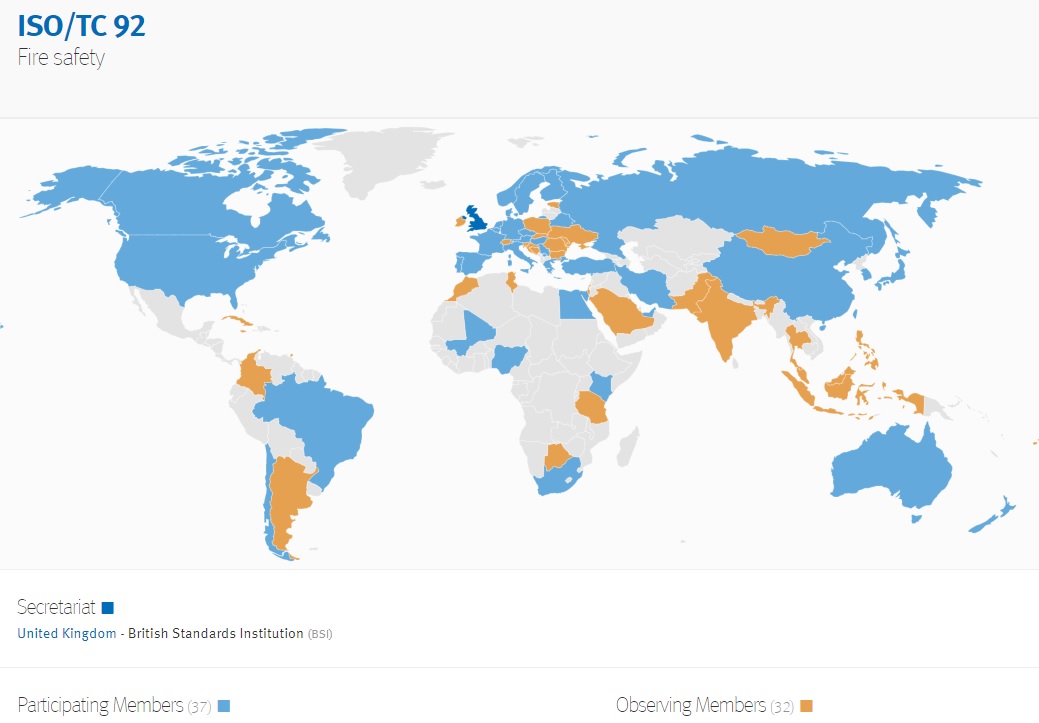
The development of the highest level fire safety consensus product in the world is led by the British Standards Institute, under the administration of the International Standardization Organization, with Committee E05 on Fire Standards of  ASTM International as the US Technical Advisory Group Administrator.  The business plan and the map of global participants is linked below:

BUSINESS PLAN ISO/TC 92 Fire safety EXECUTIVE SUMMARY

The consensus products developed by TC 92 are intended to save lives, reduce fire losses, reduce technical barriers to trade, provide for international harmonization of tests and methods and bring substantial cost savings in design. ISO/TC 92 standards are expected to be of special value to developing countries, which are less likely to have national standards.  As with all ISO standards, the TC 92 consensus product is a performance standard suitable for use in prescriptive regulations and provide for a proven route to increased fire safety.

We do not advocate in this standard at the moment; we only track it.  The International Fire Code and the Fire Code have been our priorities since 2006.  The fire safety space is well populated with knowledgeable facility professionals because conformity budgets in the fire safety world — i.e. the local or state fire marshal — usually has a budget.  When you have a budget you usually have people keeping pace with best practice.

We encourage our colleagues in the United States on either the business or academic side of the education facility industry to communicate directly with ANSI’s ISO Team and/or the ASTM Contact: Tom O’Toole, 100 Barr Harbor Drive, West Conshohocken, PA 19428-2959 Phone: (610) 832-9739, Email: totoole@astm.org

We maintain this title on the agenda of our periodic Global and Prometheus colloquia.  See our CALENDAR for the next online meeting;  open to everyone.

Issue: [19-104]

Category: Fire Safety, Fire Protection, International

Contact: Mike Anthony, Joe DeRosier, Alan Sactor, Joshua Elvove, Casey Grant

More:

The Challenges of Storage and Not Enough Space, Alan Sactor

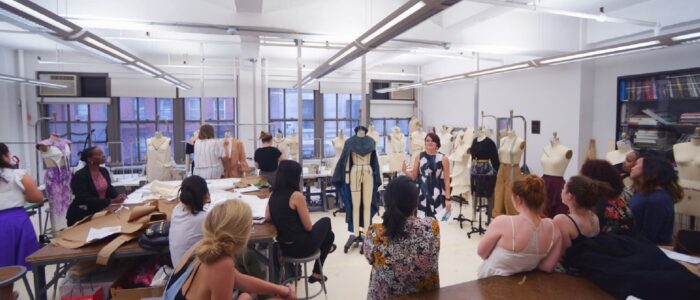
Art, Design & Fashion Studios
Art presents a different way of looking at things than science; 

one which preserves the mystery of things without undoing the mystery.

— Sir Roger Scruton


NFPA 1 Second Draft Meeting (A2026) June 2 – 3, 2025

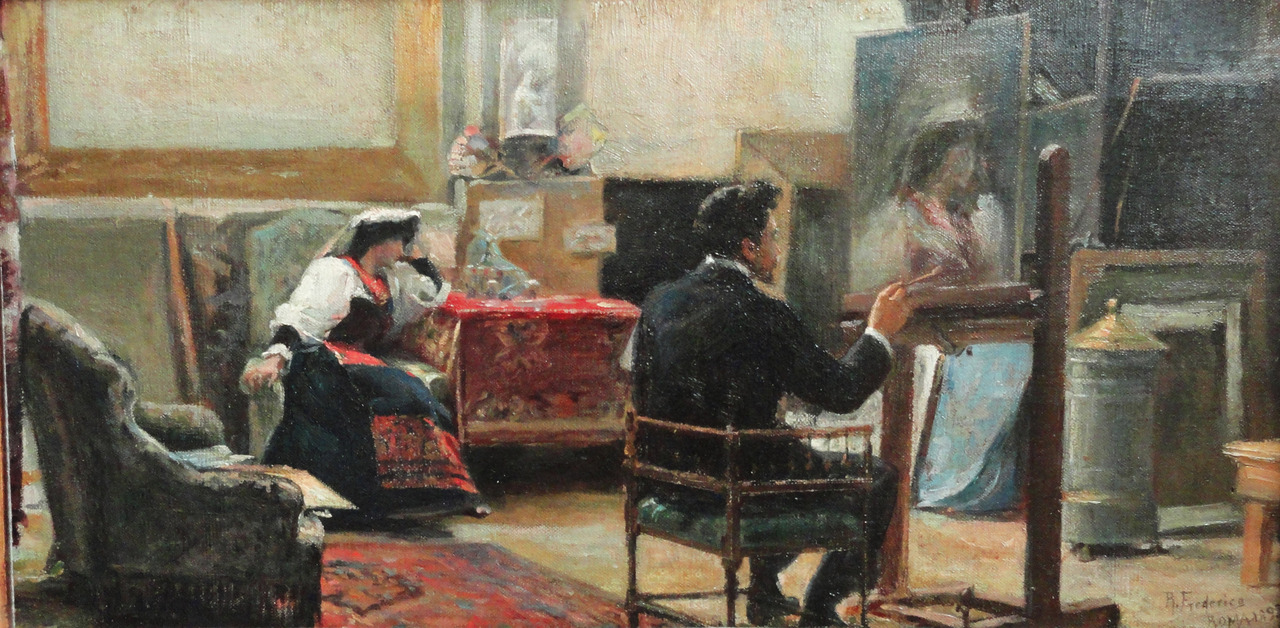
“Interior de Ateliê” 1898 Rafael Frederico

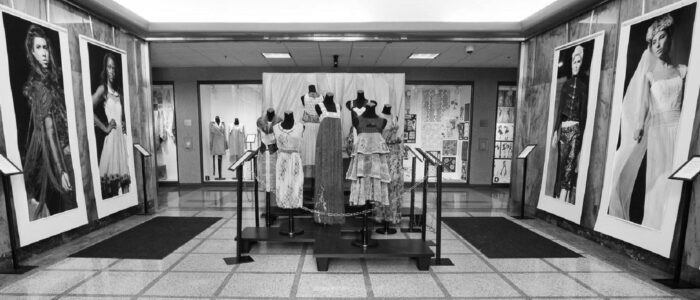
We are guided by four interdependent titles that set the standard of care for safety and sustainability of occupancies supporting the fine arts in education communities.

(1)  Chapter 43: Spraying, Dipping and Coating Using Flammable or Combustible Material of NFPA 1: Fire Code.   As a “code” the public has free access to the current 2021 Edition , and Chapter 43 at the link below:

NFPA 1 Fire Code / Chapter 43 Spraying, Dipping and Coating Using Flammable or Combustible Materials

You get a sense of the back-and-forth among the technical committee members from the transcripts of committee activity linked below:

First Revisions Report (282 pages)

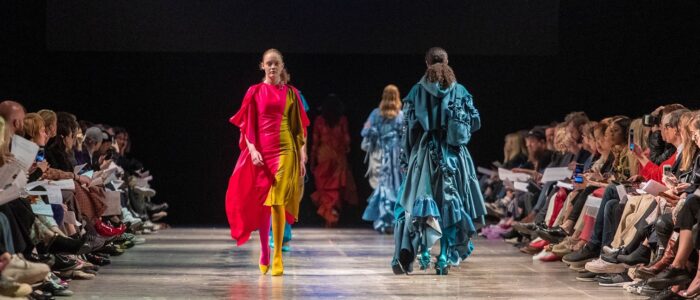
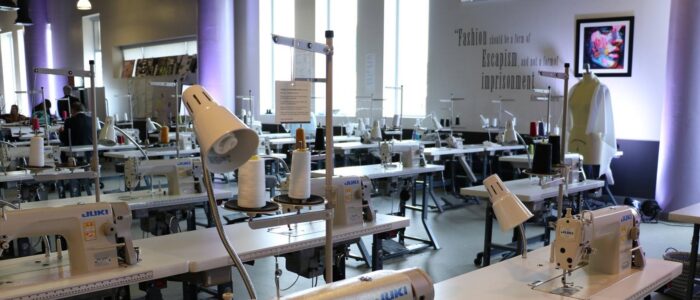
Our interest lies in fire safety provisions for educational occupancies with activity involving paint, chemicals used with paint (art studios) and Class III combustible materials (garment design & prototyping).

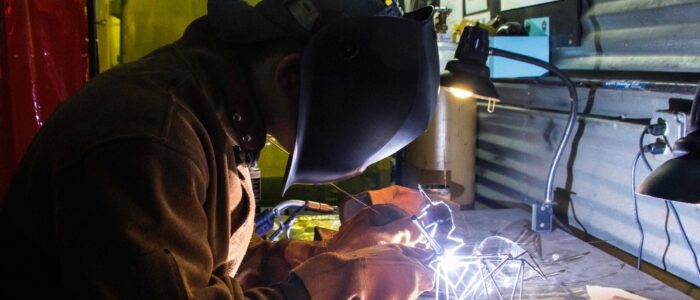
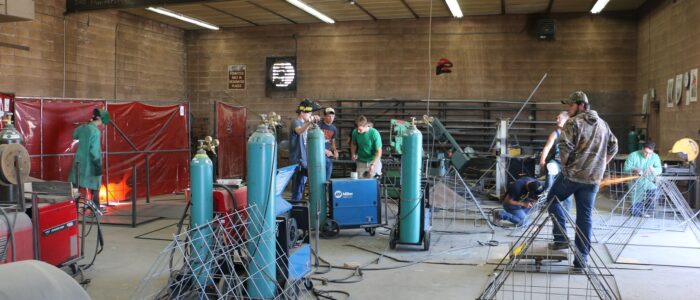
(2) NFPA also has another title — NFPA 33 Standard for Spray Application Using Flammable or Combustible Materials — provides more detail for instructional and facility maintenance operations activity.

(3) NFPA 101 Life Safety Code, much of which is derived from NFPA 1 (See: “How the Fire Code and Life Safety Code Work Together“)

(4) Finally, the International Code Council develops a competitor title — 2021 International Fire Code — which also provides fire safety standards for art, design and fashion studio safety.  The IFC is developed in the Group A tranche of titles:

2021/2022 Code Development Group A

2024/2025/2026 ICC CODE DEVELOPMENT SCHEDULE

We encourage direct participation by education industry user-interests in the ICC and the NFPA code development process.  A user interest in education community would have a job title similar to the following: Principal, Dean, President, Chief of Business Operations, Facility Manager, Trade Shop Foreman.

Harvard University

We maintain all four titles identified in this post on the standing agenda of our Prometheus (fire safety) and Fine Arts colloquia.   See our CALENDAR for the next online meeting; open to everyone.

Issue: [10-31] [16-64]

Category: Fire Safety

Colleagues: Mike Anthony, Josh Evolve, Marcelo Hirschler


More

Northeastern University: Safety Guide for Art Studios

Princeton University: Art Safety

University of Chicago Art Studio Safety Policy


Standard for the Installation of Sprinkler Systems in Low-Rise Residential Occupancies

Free Access 2025 NFPA 13R |  ICC Group R crosswalk

About 20 percent of education settlement real assets lie in student and temporary faculty housing; some of it located in “off-campus fire protection grid” owned by Mom-and-Pop rental housing owners or large corporate student housing aggregators. Both eschew residential sprinkler systems unless mandated by local building codes.

2025 Public Input Transcript

2025 Public Comment Transcript

 Public input on the 2028 Edition will be received until June 4th.

Ivan Franko National University of Lviv

Related:

Center for Campus Fire Safety

Fire Protection Research Foundation: Stakeholder Perceptions of Home Fire Sprinklers

Layout mode
Predefined Skins
Custom Colors
Choose your skin color
Patterns Background
Images Background
Standards Michigan
error: Content is protected !!
Skip to content