Category Archives: District Energy

Loading
loading...

Boiler & Pressure Vessel Code

“Mechanic and Steam Pump” | Lewis W. Hine (1921)


The heating and cooling requirements of K-12 schools, college and university educational, medical research and healthcare delivery campuses are a large market for boiler pressure vessel manufacturers, installers, maintenance personnel and inspectors.  The demand for building new, and upgrading existing boilers — either single building boilers, regional boilers or central district energy boilers — presents a large market for professional engineering firms also.  A large research university, for example, will have dozens, if not well over 100 boilers that heat and cool square footage in all climates throughout the year.  The same boilers provide heating and cooling for data centers, laundry operations, kitchen steam tables in hospitals and dormitories.

The safety rules for these large, complex and frankly, fearsome systems, have been developed by many generations of mechanical engineering professionals in the American Society of Mechanical Engineers (ASME) Boiler and Pressure Vessel Code (BPVC).   From the BPVC scope statement:

“…The International Boiler and Pressure Vessel Code establishes rules of safety — relating only to pressure integrity — governing the design, fabrication, and inspection of boilers and pressure vessels, and nuclear power plant components during construction. The objective of the rules is to provide a margin for deterioration in service. Advancements in design and material and the evidence of experience are constantly being added…”

Many state and local governments incorporate the BPVC by reference into public safety regulations and have established boiler safety agencies.  Boiler explosions are fairly common, as a simple internet search on the term “school boiler explosion” will reveal.  We linked one such incident at the bottom of this page.

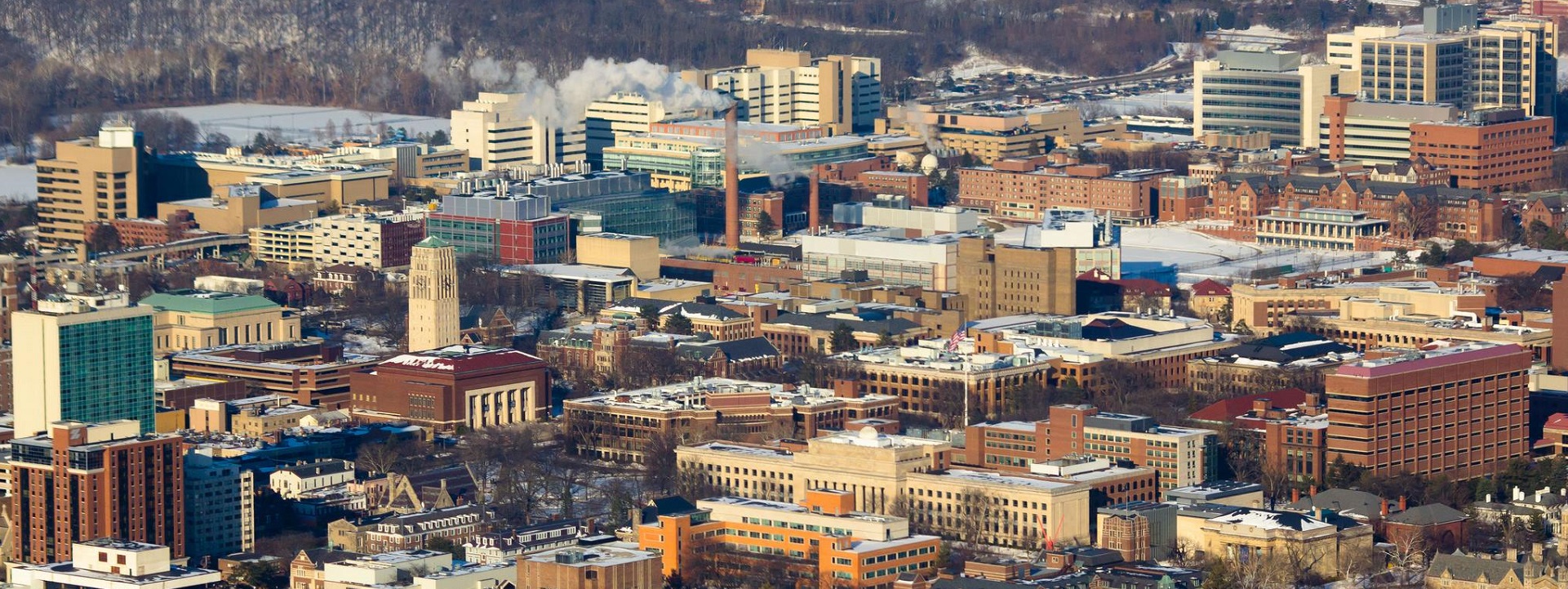
University of Michigan Central Heating Plant

The 2023 Edition of the BPVC is the current edition; though the document is divided into many sections that change quickly.

ASME Codes & Standards Electronic Tools

ASME Proposals Available For Public Review

ASME Section IV: Rules for the Construction of Heating Boilers (2019)

Public consultation on changes to the BPVC standard for power boilers closes February 3rd.   

This is a fairly stable domain at the moment.  We direct you elsewhere to emergent topics:

Ghost kitchens gaining steam on college campuses

College: the Next Big Frontier for Ghost Kitchens

Illinois Admin. Code tit. 77, § 890.1220 – Hot Water Supply and Distribution

Design Considerations for Hot Water Plumbing

FREE ACCESS: 2019 ASME Boiler and Pressure Code (Section VI) 

Plumbing


Two characteristics of the ASME standards development process are noteworthy:

  • Only the proposed changes to the BPVC are published.   The context surrounding a given change may be lost or not seen unless access to previous version is available.  Knowledgeable experts who contribute to the development of the BPVC usually have a previous version, however.  Newcomers to the process may not.
  • The BPVC has several breakout committees; owing to its longer history in the US standards system and the gathering pace of complexity in this technology.

We unpack the ASME bibliography primarily during our Mechanical, Plumbing and Energy colloquia; and also during our coverage of large central laundry and food preparation (Kitchens 100) colloquia.  See our CALENDAR for the next online meeting, open to everyone.

Issue: [12-33] [15-4] [15-161] [16-77] [18-4] [19-157]

Category: District Energy, Energy, Mechanical, Kitchens, Hot Water

Contact: Eric Albert, Richard Robben, Larry Spielvogel

More:

Standards Michigan BPVC Archive

ASME BPVC Resources

Big Ten & Friends Energy Conference 2023

Standards Michigan Workspace (Requires access credentials from bella@standardsmichigan.com).

School Boiler Maintenance Programs: How Safe Are The Children? 

Boiler Explodes at Indiana High School


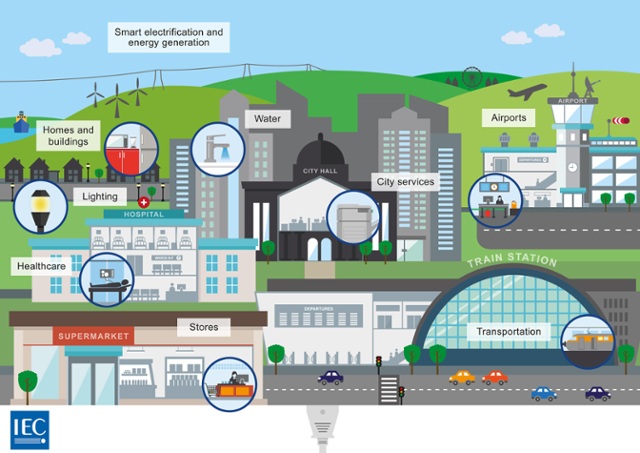
System Aspects of Electrical Energy

IEC technical committees and subcommittees Ω SMB Tabulation

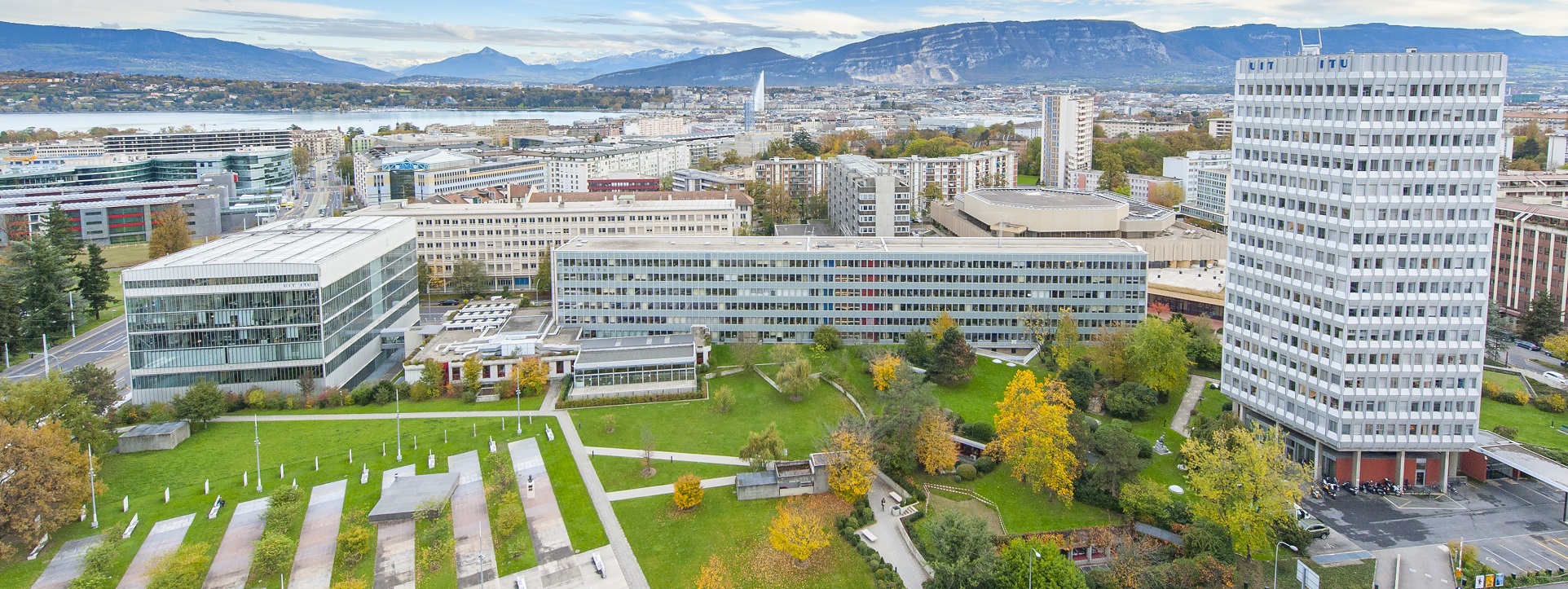
IEC and ITU offices | Geneva

Much economic activity in the global standards system involves products — not interoperability standards. Getting everything to work together — safely, cost effectively and simpler — is our raison d’etre.  

Manufacturers, testing laboratories, conformance authorities (whom we call vertical incumbents) are able to finance the cost of their advocacy — salaries, travel, lobbying, administration — into the cost of the product they sell to the end user (in our cases, estate managers in educational settlements).  To present products — most of which involve direct contact with a consumer — at a point of sale it must have a product certification label.  Not so with systems.  System certification requirements, if any, may originate in local public safety requirements; sometimes reaching into the occupational safety domain.

Our readings of the intent of this technical committee is to discover and promulgate best practice for “systems of products” — i.e. ideally interoperability characteristics throughout the full span of the system life cycle.

To quote Thomas Sowell:

“There are no absolute solutions to human problems, there are only tradeoffs.”  

Many problems have no solutions, only trade-offs in matters of degree.  We explain our lament over wicked problems in our About.


IEC technical committees and subcommittees


LEARN MORE:


If you want to find the secrets of the universe, think in terms of energy, frequency and vibration. - Nikola Tesla


ARCHIVE

The United States National Committee of  the International Electrotechnical Commission (USNA/IEC) seeks participants and an ANSI Technical Advisory Group (US TAG) Administrator for an IEC subcommittee (Multi-Agent System) developing standards for power system network management.   From the project prospectus:

Standardization in the field of network management in interconnected electric power systems with different time horizons including design, planning, market integration, operation and control.  SC 8C covers issues such as resilience, reliability, security, stability in transmission-level networks (generally with voltage 100kV or above) and also the impact of distribution level resources on the interconnected power system, e.g. conventional or aggregated Demand Side Resources (DSR) procured from markets.

SC 8C develops normative deliverables/guidelines/technical reports such as:

– Terms and definitions in area of network management,
– Guidelines for network design, planning, operation, control, and market integration
– Contingency criteria, classification, countermeasures, and controller response, as a basis of technical requirements for reliability, adequacy, security, stability and resilience analysis,
– Functional and technical requirements for network operation management systems, stability control systems, etc.
– Technical profiling of reserve products from DSRs for effective market integration.
– Technical requirements of wide-area operation, such as balancing reserve sharing, emergency power wheeling.

Individuals who are interested in becoming a participant or the TAG Administrator for SC 8C: Network Management are invited to contact Adelana Gladstein at agladstein@ansi.org as soon as possible.

This opportunity, dealing with the system aspects of electrical energy supply (IEC TC 8), should at least interest electrical engineering research faculty and students involved in power security issues.   Participation would not only provide students with a front-row seat in power system integration but faculty can collaborate and compete (for research money) from the platform TC 8 administers.  We will refer it to the IEEE Education & Healthcare Facilities Committee which meets online 4 times monthly in European and American time zones.

Campus Electric Bulk Distribution

Today we will also cut through these transcripts:

2026 Code Panel 6 Public Input Report

2026 Code Panel 6 Public Comment Report

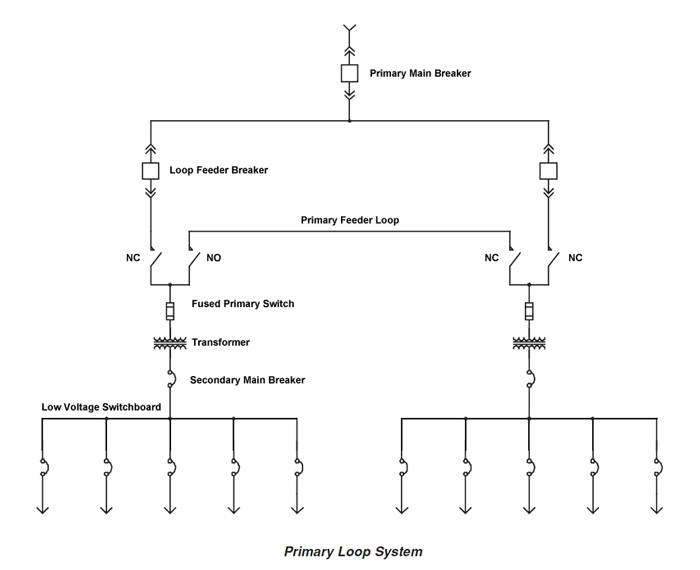
College and university campuses distribute electric energy in tranches of 10 to 250 megawatts; typically at voltages above 1000 VAC and are generally regarded as load-side services (or regulated utility customers). Two fairly stable sections of the National Electrical Code set the standard of care for these systems — Part III of Article 110 and Article 495.

We will examine them during today’s High Voltage Electric Service colloquium.

FREE ACCESS: 2023 National Electrical Code

We collaborate closely with the IEEE Education & Healthcare Facilities Committee which meets online 4 times per month in European and American time zones.  Ahead of the August 2024 public comment deadline we will examine transcripts of technical action on this topic:

National Electrical Code CMP-18

Mechanical 330

Today’s Handout: Radon, et al (For future dedicated session)

During today’s colloquium we audit the literature that sets the standard of care for mechanical engineering design, construction operations and maintenance of campus district energy systems — typically miles (kilometers) of large underground pipes and wires that characterize a district energy system.  Topically, Mechanical 400 deals with energy systems “outside” or “between” buildings; whereas Mechanical 200 deals with energy systems within an individual building envelope.

2024 International Mechanical Code

Mechanical Engineering Courses

A campus district energy system is a centralized heating and cooling network that supplies thermal energy to multiple buildings within a defined area, such as a college or university campus. The system generates steam, hot water, or chilled water at a central plant, which is then distributed through an underground network of pipes to individual buildings for space heating, domestic hot water, and air conditioning. By consolidating energy production and distribution, campus district energy systems can achieve significant energy and cost savings compared to individual building systems, as well as reduce greenhouse gas emissions and improve reliability and resiliency of the energy supply.

"I've always been interested in building systems that can understand and respond to natural language. It's one of the most challenging and fascinating problems in AI" - Stephen Wolfram"The golden rule of elevator safety states 'Its either you're in or out'" - Facilities Management

School Construction News (September 24) | Arizona State University: Helping Higher Ed: Solutions to Advance Sustainability Goals in Campus Mechanical Systems

We track standards setting in the bibliographies of the following organizations:

AHRI | Air Conditioning, Heating & Refrigeration Institute

ASHRAE | American Society of Heating & Refrigeration Engineers

ASHRAE Guideline 14: Measurement of Energy and Demand Savings

ASHRAE Guideline 22: Instrumentation for Monitoring Central Chilled Water Plant Efficiency

Facility Smart Grid Information Model

ASME | American Society of Mechanical Engineers

ASPE | American Association of Plumbing Engineers

ASTM | American Society for Testing & Materials

AWWA | American Water Works Association

AHRI | Air Conditioning, Heating & Refrigeration Institute

IAPMO | International Association of Plumbing and Mechanical Officials

IEC | International Electrotechnical Commission

Institute of Electric and Electronic Engineers

Research on the Implementation Path Analysis of Typical District Energy Internet

Expansion Co-Planning of Integrated Electricity-Heat-Gas Networks in District Energy Systems

Towards a Software Infrastructure for District Energy Management


IMC | International Mechanical Code

IDEA | International District Energy Association

District Energy Best Practices Handbook

District Energy Assessment Tool

IPC | International Plumbing Code

ISEA | International Safety Equipment Association

NFPA | National Fire Protection Association

SMACNA | Sheet Metal Contractors National Association

UL | Underwriters Laboratories

UpTime Institute

(All relevant OSHA Standards)

It is a large domain and virtually none of the organizations listed above deal with district energy systems outside their own (market-making) circle of influence.  As best we can we try to pull together the peak priorities for the real asset managers and engineers who are responsible for these system.

* Building services engineers are responsible for the design, installation, operation and monitoring of the technical services in buildings (including mechanical, electrical and public health systems, also known as MEP or HVAC), in order to ensure the safe, comfortable and environmentally friendly operation. Building services engineers work closely with other construction professionals such as architects, structural engineers and quantity surveyors. Building services engineers influence the architectural design of building, in particular facades, in relation to energy efficiency and indoor environment, and can integrate local energy production (e.g. façade-integrated photovoltaics) or community-scale energy facilities (e.g. district heating). Building services engineers therefore play an important role in the design and operation of energy-efficient buildings (including green buildings, passive houses and zero energybuildings.  uses. With buildings accounting for about a third of all carbon emissions] and over a half of the global electricity demand, building services engineers play an important role in the move to a low-carbon society, hence mitigate global warming.


More:

Practical Essay on the Stength of Cast Iron and Other Metals  Thomas Tredgold (1882)

Dutch Institute for Fundamental Energy Research

Stationary Energy Storage Systems

Should every campus building generate its own power? Sustainability workgroups are vulnerable to speculative hype about net-zero buildings and microgrids. We remind sustainability trendsniffers that the central feature of a distributed energy resource–the eyesore known as the university steam plant–delivers most of the economic benefit of a microgrid. [Comments on Second Draft due April 29th] #StandardsMassachusetts

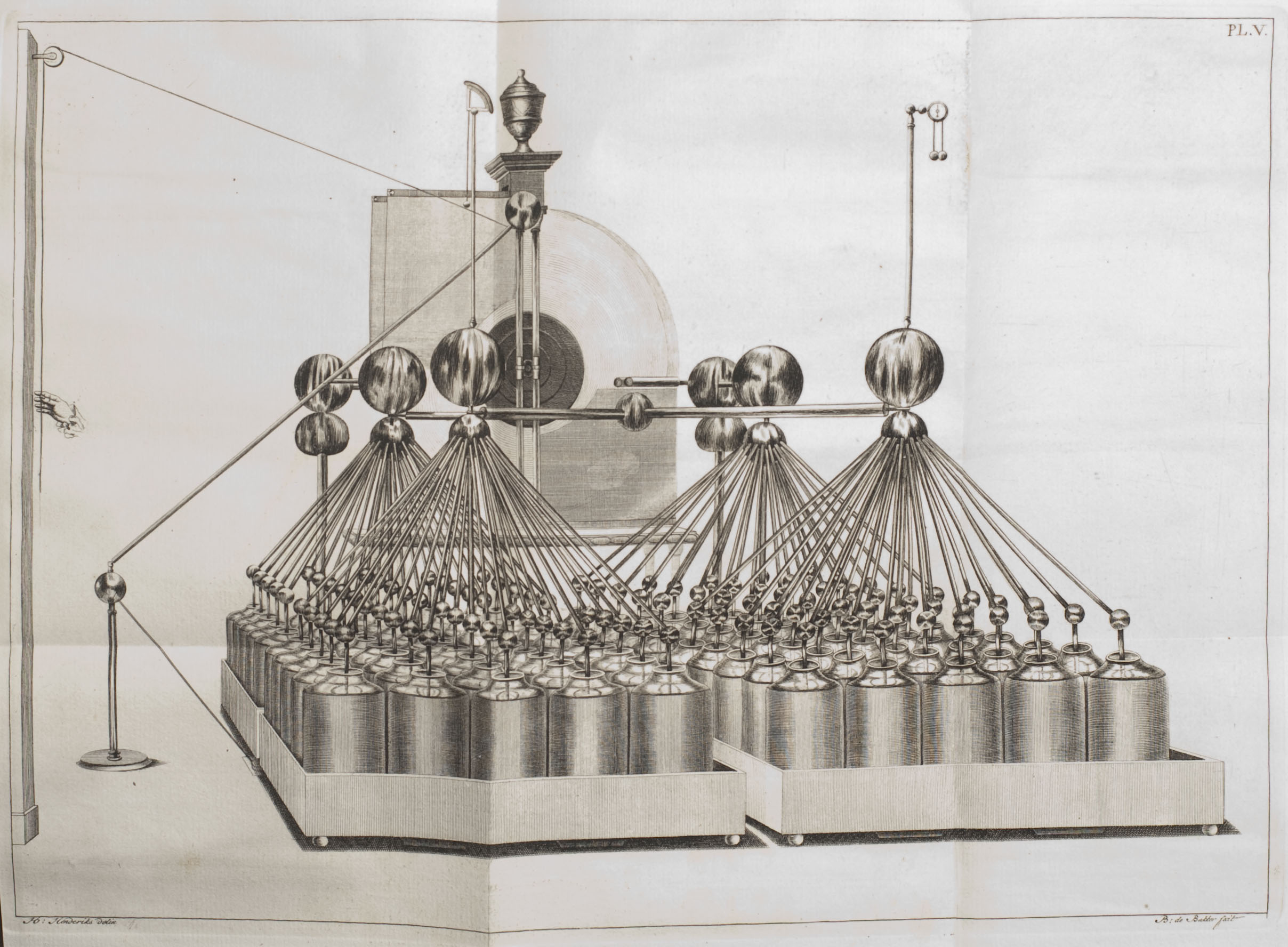
“M. van Marum. Tweede vervolg der proefneemingen gedaan met Teyler’s electrizeer-machine, 1795” | An early energy storage device | Massachusetts Institute of Technology Libraries

We have been following the developmental trajectory of a new NFPA regulatory product — NFPA 855 Standard for the Installation of Stationary Energy Storage Systems — a document with ambitions to formalize the fire safety landscape of the central feature of campus microgrids by setting criteria for minimizing the hazards associated with energy storage systems.

The fire safety of electric vehicles and the companion storage units for solar and wind power systems has been elevated in recent years with incidents with high public visibility.  The education industry needs to contribute ideas and data to what we call the emergent #SmartCampus;an electrotechnical transformation — both as a provider of new knowledge and as a user of the new knowledge.

Transcripts of technical deliberation are linked below:

2026 Public Input Report (705 pages) § 2026 Second Draft Meeting Agenda (912 pages)

Comment on the 2026 revision received by March 27, 2025 will be heard at the NFPA June 2025 Expo through NFPA’s NITMAM process.

University of Michigan | Average daily electrical load across all Ann Arbor campuses is on the order of 100 megawatts

A fair question to ask: “How is NFPA 855 going to establish the standard of care any better than the standard of care discovered and promulgated in the NFPA 70-series and the often-paired documents NFPA 110 and NFPA 111?”  (As you read the transcript of the proceedings you can see the committee tip-toeing around prospective overlaps and conflicts; never a first choice).

Suffice to say, the NFPA Standards Council has due process requirements for new committee projects and, obviously, that criteria has been met.   Market demand presents an opportunity to assemble a new committee with fresh, with new voices funded by a fresh set of stakeholders who, because they are more accustomed to advocacy in open-source and consortia standards development platforms, might have not been involved in the  more rigorous standards development processes of ANSI accredited standards developing organizations — specifically the NFPA, whose members are usually found at the top of organization charts in state and local jurisdictions.  For example we find UBER — the ride sharing company — on the technical committee.  We find another voice from Tesla Motors.  These companies are centered in an industry that does not have the tradition of leading practice discovery and promulgation that the building industry has had for the better part of two hundred years.

Our interest in this standard lies on both sides of the education industry — i.e. the academic research side and the business side.  For all practical purposes, the most credible, multi-dimensional and effective voice for lowering #TotalCostofOwnership for the emergent smart campus is found in the tenure of Standards Michigan and its collaboration with IEEE Education & Healthcare Facilities Committee (E&H).  You may join us sorting through the technical, economic and legal particulars and day at 11 AM Eastern time.   The IEEE E&H Committee meets online every other Tuesday in European and American time zones; the next meeting on March 26th.  All meetings are open to the public.

University of California San Diego Microgrid

You are encouraged to communicate directly with Brian O’Connor, the NFPA Staff Liaison for specific questions.  We have some of the answers but Brian is likely to have all of them.   CLICK HERE for the NFPA Directory.  Additionally, NFPA will be hosting its Annual Conference & Expo, June 17-20 in San Antonio, Texas; usually an auspicious time for meeting NFPA staff working on this, and other projects.

The prospect of installing of energy storage technologies at every campus building — or groups of buildings, or in regions — is clearly transformational if the education facilities industry somehow manages to find a way to drive the cost of operating and maintaining many energy storage technologies lower than the cost of operating and maintaining a single campus distributed energy resource.  The education facility industry will have to train a new cadre of microgrid technology specialists who must be comfortable working at ampere and voltage ranges on both sides of the decimal point that separates power engineers from control engineers.  And, of course, dynamic utility pricing (set by state regulatory agencies) will continue to be the most significant independent control variable.

Finding a way to make all this hang together is the legitimate work of the academic research side of the university.   We find that sustainability workgroups (and elected governing bodies) in the education industry are vulnerable to out-sized claims about microgrids and distributed energy resources; both trendy terms of art for the electrotechnical transformation we call the emergent #SmartCampus.

We remind sustainability trendsniffers that the central feature of a distributed energy resource — the eyesore known as the university steam plant — bears most of the characteristics of a microgrid.   In the videoclip linked below a respected voice from Ohio State University provides enlightenment on this point; even as he contributes to the discovery stream with a study unit.

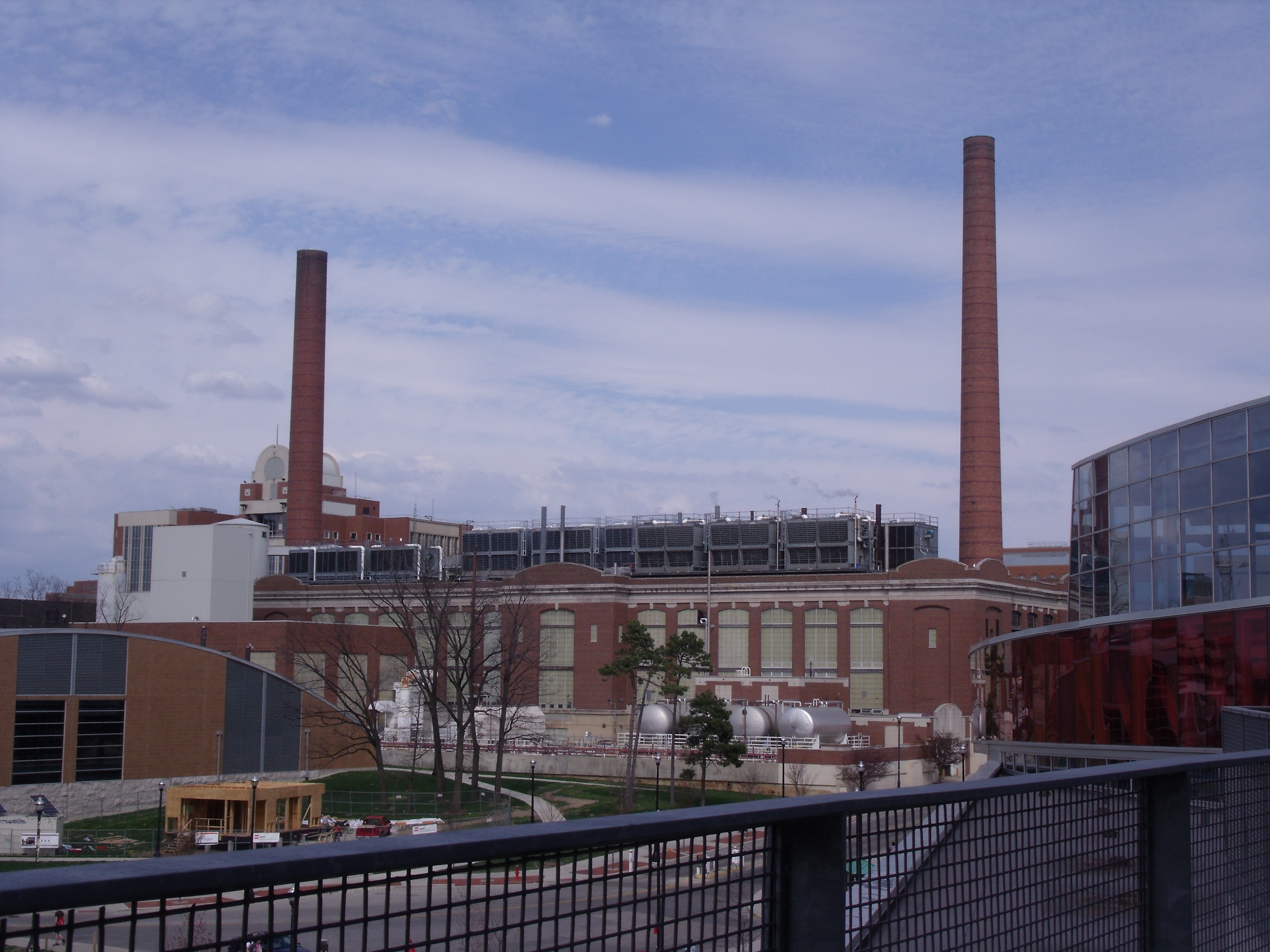
Ohio State University McCracken Power Plant

Issue: [16-131]

Category:  District Energy, Electrical, Energy, Facility Asset Management, Fire Safety, Risk Management, #SmartCampus, US Department of Energy

Colleagues: Mike Anthony, Bill Cantor (wcantor@ieee.org). Mahesh Illindala

Standards Massachusetts, Standards Texas, Standards Ohio

*It is noteworthy that (NFPA 70) National Electrical Code-Making Panel 1 has appropriated vehicle-to-grid installations into its scope.


Princeton University Power Plant | Click on image

LEARN MORE:

Related Post: Electrical Safety Research Advisory Committee

Bibiography: Campus Microgrids

Higher Education Facilities Conference: The Rise of University Microgrids


Mahesh Illindala enlightens understanding of what microgrid is, and is not:


Dutch Institute for Fundamental Energy Research

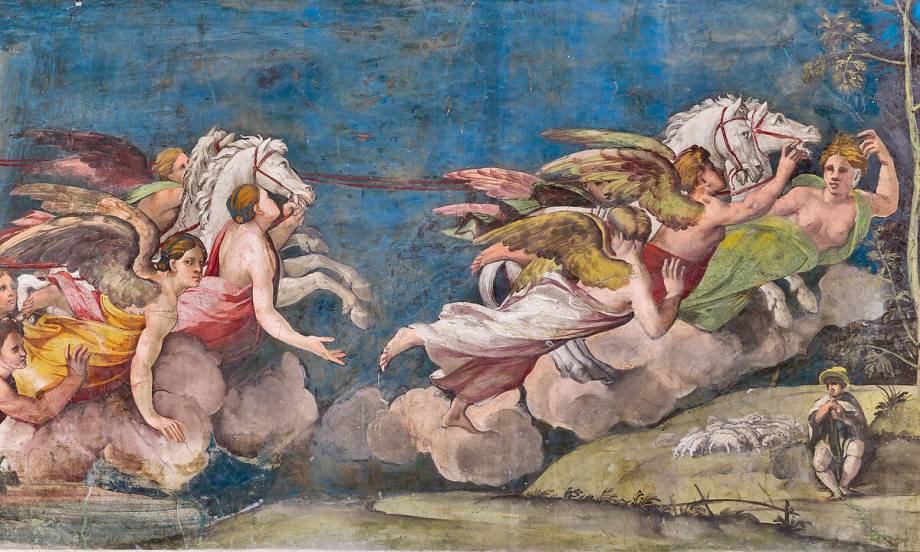
Apollo – Helios Driving The Chariot Of The Sun, 1517-18

“DIFFER” is a research institute domiciled at TU/e that is focused on advancing the development of sustainable energy technologies, such as fusion energy and solar fuels. It conducts fundamental research on plasma physics and materials science to understand the behavior of matter at extremely high temperatures and under extreme conditions.

DIFFER also collaborates with universities, research institutions, and industry partners to translate their research into practical applications. The institute’s ultimate goal is to develop new and innovative solutions to meet the world’s growing demand for energy while reducing greenhouse gas emissions and environmental impact.  

Among its findings and recommendations: “Electrochemical Production of Ammonia from Renewable Energy: A Thermodynamic Analysis” published in the Journal of The Electrochemical Society in 2018, which evaluated the thermodynamic feasibility of using renewable energy to produce ammonia, an important fertilizer, through electrochemical processes.

N.B. Ammonia can be deployed for energy conservation purposes in various ways, such as:

  1. Energy storage: Ammonia can be used as a means of storing energy from renewable sources, such as wind and solar power, in the form of chemical energy. This stored energy can be released by converting ammonia back into electricity through fuel cells or by burning it in a combustion engine.
  2. Power generation: Ammonia can be used directly as a fuel in combustion engines or turbines to generate electricity, without emitting greenhouse gases or other harmful pollutants.
  3. Heating and cooling: Ammonia can be used as a refrigerant or heat transfer fluid in industrial processes, air conditioning systems, or district heating networks, reducing the energy required for cooling and heating.
  4. Fuel for transportation: Ammonia can be used as a fuel for ships, trains, or other heavy-duty vehicles, reducing emissions of greenhouse gases and other pollutants.

However, it is worth noting that the deployment of ammonia for energy conservation purposes requires the development of suitable technologies for its production, transportation, and storage, as well as the necessary infrastructure to support its use.

Nederland

Energy 400

Climate Psychosis | Other Ways of Knowing Climate Change

“The Conquest of Energy” / José Chávez Morado / Universidad Nacional Autónoma de México

We began last year breaking down our coverage of education settlement energy codes and standards into the tranches listed below:

Energy 200: Codes and standards for building premise energy systems.  (Electrical, heating and cooling of the building envelope)

Energy 300: Codes and standards that support the energy systems required for information and communication technology

21 March 2024

Energy 400: Codes and standards for energy systems between campus buildings.  (District energy systems including interdependence with electrical and water supply)

ASHRAE Proposal for a District Cooling Standard

A different “flavor of money” runs through each of these domains and this condition is reflected in best practice discovery and promulgation.  Energy 200 is less informed by tax-free (bonded) money than Energy 400 titles.

Some titles cover safety and sustainability in both interior and exterior energy domains so we simply list them below:

ASME A13.1 – 20XX, Scheme for the Identification of Piping Systems | Consultation closes 6/20/2023

ASME Boiler Pressure Vessel Code

ASME BPVC Codes & Standards Errata and Notices

ASHRAE International 90.1 — Energy Standard for Buildings Except Low-Rise Residential Buildings

Data Center Operations & Maintenance

2018 International Green Construction Code® Powered by Standard 189.1-2017

NFPA 90 Building Energy Code

NFPA 855 Standard for the Installation of Stationary Energy Storage Systems

IEEE Electrical energy technical literature

ASTM Energy & Utilities Overview

Underwriters Laboratories Energy and Utilities

There are other ad hoc and open-source consortia that occupy at least a niche in this domain.  All of the fifty United States and the Washington DC-based US Federal Government throw off public consultations routinely and, of course, a great deal of faculty interest lies in research funding.

Please join our daily colloquia using the login credentials at the upper right of our home page.

References: Energy 400

More

United States Department of Energy

International Energy Agency World Energy Outlook 2022

International Standardization Organization

ISO/TC 192 Gas Turbines

Energy and heat transfer engineering in general

Economics of Energy, Volume: 4.9 Article: 48 , James L. Sweeney, Stanford University

Global Warming: Scam, Fraud, or Hoax?, Douglas Allchin, The American Biology Teacher (2015) 77 (4): 309–313.

Helmholtz and the Conservation of Energy, By Kenneth L. Caneva, MIT Press

International District Energy Association Campus Energy 2023 Conference: February 29-March 2 (Grapevine Texas)

NRG Provides Strategic Update and Announces New Capital Allocation Framework at 2023 Investor Day

Evaluation of European District Heating Systems for Application to Army Installations in the United States

Gallery: Other Ways of Knowing Climate Change

Allston District Energy

Campus Electric Bulk Distribution

Interdependent Water & Electricity Networks

Interoperability of Inverter-Based Resources

Gallery: Campus Steam Tunnels

Electrical Resource Adequacy


From our video archive:


Layout mode
Predefined Skins
Custom Colors
Choose your skin color
Patterns Background
Images Background
Standards Michigan
error: Content is protected !!
Skip to content