Category Archives: @ASMEdotorg

Loading
loading...

Elevator Safety Code

Today, special attention to managing elevator passengers trapped in elevators during power outages.  Incident management involves the following:

  1. Automatic battery-lowering systems (standard in modern elevators) gently descend the car to the nearest floor and open the doors within minutes.
  2. Backup generators or UPS units keep lights, intercoms, and ventilation running.
  3. Mandatory two-way communication and remote monitoring allow instant contact with 24/7 response teams.
  4. Fire-service phase II keys and firefighter overrides ensure rapid rescue.
  5. Clear emergency instructions and regular maintenance of brakes and overspeed governors prevent falls.

These redundancies, required by ASME A17.1 codes in most jurisdictions, have made prolonged entrapments extremely rare and almost never dangerous.

2026 National Electrical Code Article 620: Elevators, Dumbwaiters, Escalators, Moving Walks, Platform Lifts, and Stairway Chairlifts.

CMP-12 Public Input Transcript | CMP-12 Public Comment Transcript

American School & University: Modernizing Elevator Emergency Communications on School and University Campuses

Elevator,  escalator  and moving walk systems are among the most complicated systems in any urban environment, no less so than on the  #WiseCampus in which many large research universities have 100 to 1000 elevators to safely and economically operate, service and continuously commission.  These systems are regulated heavily at state and local levels of government and have oversight from volunteers that are passionate about their work.

These “movement systems” are absorbed into the Internet of Things transformation.  Lately we have tried to keep pace with the expansion of requirements to include software integration professionals to coordinate the interoperability of elevators, lifts and escalators with building automation systems for fire safety, indoor air quality and disaster management.  Much of work requires understanding of the local adaptations of national building codes.

Some university elevator O&M units use a combination of in-house, manufacturer and standing order contractors to accomplish their safety and sustainability objectives.

In the United States the American Society of Mechanical Engineers is the dominant standards developer of elevator and escalator system best practice titles;  its breakdown of technical committees listed in the link below:

A17 ELEVATORS AND ESCALATORS

STDMi: Elevator Backup Power

C&S Connect: ASME Proposals Available for Public Review

Public consultation on a new standard for electrical inspector qualifications closes May 27th.

ASME A17.7/CSA B44.7 – 20XX, Performance-based code for elevators and escalators (280 pages)

Safety Code for Existing Elevators and Escalators

Guide for Inspection of Elevators, Escalators, and Moving Walks

Guide for Elevator Seismic Design

As always, we encourage facility managers, elevator shop personnel to participate directly in the ASME Codes & Standards development process.   For example, it would be relatively easy for our colleagues in the Phoenix, Arizona region to attend one or more of the technical committee meetings; ideally with operating data and a solid proposal for improving the A17 suite.
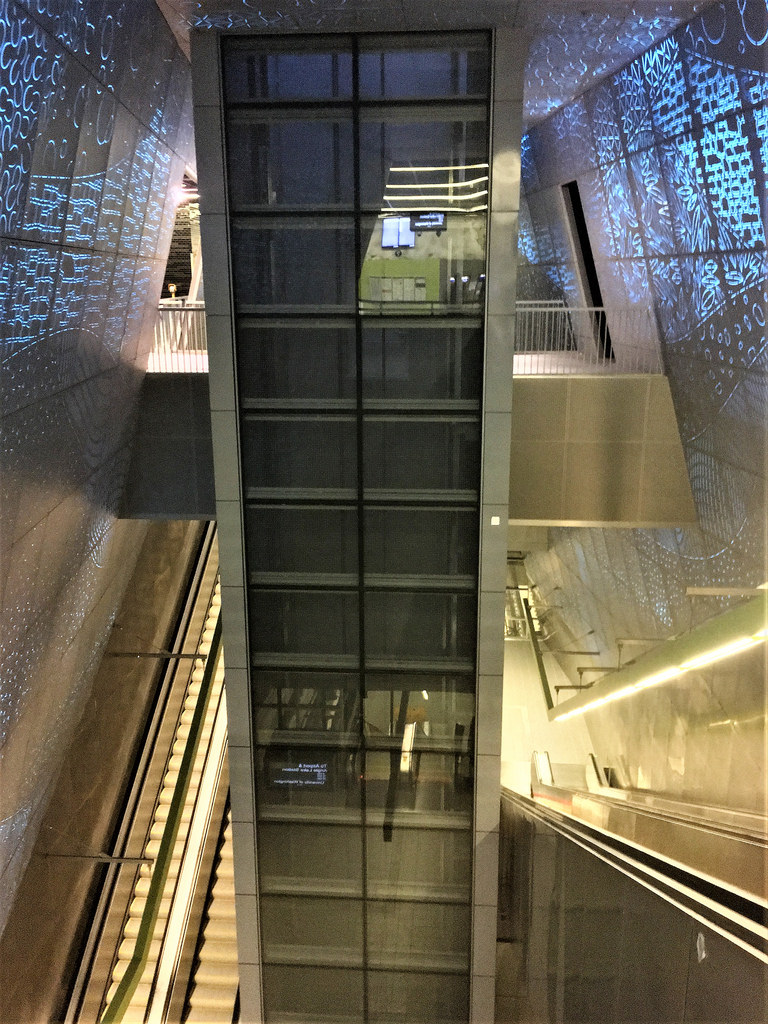
University of Wisconsin Stadium Elevator


All ASME standards are on the agenda of our Mechanical, Pathway and Elevator & Lift colloquia.  See our CALENDAR for the next online teleconferences; open to everyone.  Use the login credentials at the upper right of our home page.


Issue: [11-50]

Category: Electrical, Elevators, #WiseCampus

Colleagues: Mike Anthony, Jim Harvey, Richard Robben, Larry Spielvogel


More:

Bibliography: Elevators, Lifts and Moving Walks

ISO/TC 178 Lifts, escalators and moving walks

Human Factors Using Elevators in Emergency Evacuation

Archive / Elevator Safety Code


Boiler & Pressure Vessel Code

“Mechanic and Steam Pump” | Lewis W. Hine (1921)


The heating and cooling requirements of K-12 schools, college and university educational, medical research and healthcare delivery campuses are a large market for boiler pressure vessel manufacturers, installers, maintenance personnel and inspectors.  The demand for building new, and upgrading existing boilers — either single building boilers, regional boilers or central district energy boilers — presents a large market for professional engineering firms also.  A large research university, for example, will have dozens, if not well over 100 boilers that heat and cool square footage in all climates throughout the year.  The same boilers provide heating and cooling for data centers, laundry operations, kitchen steam tables in hospitals and dormitories.

The safety rules for these large, complex and frankly, fearsome systems, have been developed by many generations of mechanical engineering professionals in the American Society of Mechanical Engineers (ASME) Boiler and Pressure Vessel Code (BPVC).   From the BPVC scope statement:

“…The International Boiler and Pressure Vessel Code establishes rules of safety — relating only to pressure integrity — governing the design, fabrication, and inspection of boilers and pressure vessels, and nuclear power plant components during construction. The objective of the rules is to provide a margin for deterioration in service. Advancements in design and material and the evidence of experience are constantly being added…”

Many state and local governments incorporate the BPVC by reference into public safety regulations and have established boiler safety agencies.  Boiler explosions are fairly common, as a simple internet search on the term “school boiler explosion” will reveal.  We linked one such incident at the bottom of this page.

University of Michigan Central Heating Plant

The 2023 Edition of the BPVC is the current edition; though the document is divided into many sections that change quickly.

ASME Codes & Standards Electronic Tools

ASME Proposals Available For Public Review

ASME Section IV: Rules for the Construction of Heating Boilers (2019)

Public consultation on changes to the BPVC standard for power boilers closes February 3rd.   

This is a fairly stable domain at the moment.  We direct you elsewhere to emergent topics:

Ghost kitchens gaining steam on college campuses

College: the Next Big Frontier for Ghost Kitchens

Illinois Admin. Code tit. 77, § 890.1220 – Hot Water Supply and Distribution

Design Considerations for Hot Water Plumbing

FREE ACCESS: 2019 ASME Boiler and Pressure Code (Section VI) 

Plumbing


Two characteristics of the ASME standards development process are noteworthy:

  • Only the proposed changes to the BPVC are published.   The context surrounding a given change may be lost or not seen unless access to previous version is available.  Knowledgeable experts who contribute to the development of the BPVC usually have a previous version, however.  Newcomers to the process may not.
  • The BPVC has several breakout committees; owing to its longer history in the US standards system and the gathering pace of complexity in this technology.

We unpack the ASME bibliography primarily during our Mechanical, Plumbing and Energy colloquia; and also during our coverage of large central laundry and food preparation (Kitchens 100) colloquia.  See our CALENDAR for the next online meeting, open to everyone.

Issue: [12-33] [15-4] [15-161] [16-77] [18-4] [19-157]

Category: District Energy, Energy, Mechanical, Kitchens, Hot Water

Contact: Eric Albert, Richard Robben, Larry Spielvogel

More:

Standards Michigan BPVC Archive

ASME BPVC Resources

Big Ten & Friends Energy Conference 2023

Standards Michigan Workspace (Requires access credentials from bella@standardsmichigan.com).

School Boiler Maintenance Programs: How Safe Are The Children? 

Boiler Explodes at Indiana High School


Steam and Hot Water Circulation

This content is accessible to paid subscribers. To view it please enter your password below or send mike@standardsmichigan.com a request for subscription details.

Performance Monitoring for Power Plants

“A View of Murton Colliery near Seaham, County Durham” (1843) / John Wilson Carmichael

The American Society of Mechanical Engineers (ASME) has registered a Project Initiation Notification with ANSI to launch a revision to its consensus product ASME PM-202x, Performance Monitoring for Power Plants.  This product should interest stakeholders in involved in college and universities with district energy plants — facility management staffs, consulting engineers, operations and maintenance staff.

From the project prospectus:

These Guidelines cover fossil-fueled power plants, gas-turbine power plants operating in combined cycle, and a balance-of-plant portion including interface with the steam supply system of nuclear power plants.  They include performance monitoring concepts, a description of various methods available, and means for evaluating particular applications.

Since the original publication of these Guidelines in 1993—then limited to steam power plants—the field of performance monitoring (PM) has gained considerable importance.  The lifetime of plant equipment has been improved, while economic demands have increased to extend it even further by careful monitoring.  The PM techniques themselves have also been transformed, largely by the emergence of electronic data acquisition as the dominant method of obtaining the necessary information.

These Guidelines present:

• “Fundamental Considerations”—of PM essentials prior to the actual application, so you enter fully appraised of all the requirements, potential benefits and likelihood of tradeoffs of the PM program. 

• “Program Implementation”—where the concepts of PM implementation, diagnostics and cycle interrelationships have been brought into closer conjunction, bringing you up-to-date with contemporary practice.

• “Case Studies / Diagnostic Examples”—from the large amount of experience and historical data that has been accumulated since 1993.

Intended for employees of power plants and engineers involved with all aspects of power production.

From ANSI’s PINS registry:

Project Need: This document is being developed in order to address performance monitoring and optimization techniques for different power generating facilities. The latest trends and initiatives in performance monitoring as well as practical case studies and examples will be incorporated.

Stakeholders: Designers, producers/manufacturers, owners, operators, consultants, users, general interest, laboratories, regulatory/government, and distributors.

This document will cover power generation facilities including steam generators, steam turbines, and steam turbine cycles (including balance of plant of nuclear facilities), gas turbines, and combined cycles. The guidelines include performance monitoring concepts, a description of various methods available, and means for evaluating particular applications.

No drafts open for public consultation at this time.   The PINS announcement was placed on October 11th*.   The PINS registry is a stakeholder mapping platform that identifies the beginning of a formal process that may interest other accredited, competitor standards developers.   Many ASME consensus products may be indirectly referenced in design guidelines and construction contracts with the statement “Conform to all applicable codes”

The landing page for the ASME standards development enterprise is linked below:

ASME C&S Connect

Note that you will need to set up a (free) account to access this and other ASME best practice titles.

We maintain all ASME consensus products on the standing agenda of our periodic Mechanical and Energy teleconferences.   See our CALENDAR for the next online meeting; open to everyone.

University of Michigan

Issue: [19-148]

Category: District Energy, Energy, Mechanical

Colleagues: Richard Robben, Larry Spielvogel


LEARN MORE:

* ANSI Standards Action

Boiler & Pressure Vessel Code

How Engineers are Strengthening the Electrical Power Grid


How does the electrical grid respond to a crisis?

If the power goes out after a thunderstorm, utility crews are on the job within hours to restore service and get the lights back on. Most electric utilities in the U.S. have a reputation for reliability and recovery from situations like this. It has been noticed as planners began thinking about increased natural disasters brought on by population migration patterns, manmade interference due to malicious cyber-attacks, and the instability brought about by adding large quantities of renewable energy.

At North Carolina State University, The Future Renewable Electric Energy Delivery and Management (FREEDOM) Systems Engineering Research Center was created through funding from the National Science Foundation in 2008 to modernize the electrical grid to accommodate sustainable energy, such as wind and solar power. The Freedom Center has been involved in developing online tools for assessing vulnerabilities to address cyber-physical security called distributed grid intelligence. The hope is that smart microgrids with sensors embedded throughout the system might be more resilient to failure and easier to bring back online and large multi-state electric grids. But the emerging smart grid, together with distributed renewable energy such as rooftop solar, presents a new set of challenges to resilience. The Smart Grid involves more distributed energy down to the home level. That kind of penetration adds a level of vulnerability to a cyber threat. Engineers will certainly have to pay attention to that as the grid gets smarter.

Mechanical 100

ANSI Standards Action: January 26, 2024

“Maison tournante aérienne” 1883 Albert Robida

During today’s colloquium we audit the literature that sets the standard of care for mechanical engineering design, construction operations and maintenance. Mechanical systems — which includes building service engineering* — runs upwards of 35 percent of new building construction.   After architectural disciplines that produce the building envelope, the mechanical disciplines dominate technical considerations for building and maintaining education community physical spaces.  The requirements that affect cost change on a near-daily basis and now given heightened scrutiny of building air flow patterns with the circumstances of the pandemic.

For the moment, we co-locate plumbing and mechanical system consensus products in the same group.

"I've always been interested in building systems that can understand and respond to natural language. It's one of the most challenging and fascinating problems in AI" - Stephen Wolfram"The golden rule of elevator safety states 'Its either you're in or out'" - Facilities Management

We track standards setting in the bibliographies of the following organizations:

AHRI | Air Conditioning, Heating & Refrigeration Institute

AIHA | American Industrial Hygiene Association

ASHRAE | American Society of Heating & Refrigeration Engineers

ASME | American Society of Mechanical Engineers

ASPE | American Association of Plumbing Engineers

ASTM | American Society for Testing & Materials

AWS | American Welding Society

AWWA | American Water Works Association

AHRI | Air Conditioning, Heating & Refrigeration Institute

IAPMO | International Association of Plumbing and Mechanical Officials

ICC | International Code Council

IEC | International Electrotechnical Commission

IMC | International Mechanical Code

IPC | International Plumbing Code

ISEA | International Safety Equipment Association

ISO | International Organization for Standardization

NFPA | National Fire Protection Association

SEFA | Scientific Equipment & Furniture Association

SMACNA | Sheet Metal Contractors National Association

UL | Underwriters Laboratories

(All relevant OSHA Standards)

It is a large domain.  Through 2024 we will break down our inquiries thus:

Mechanical 200: Case studies

Mechanical 330: District energy

Mechanical 400: Commissioning

* Building services engineers are responsible for the design, installation, operation and monitoring of the technical services in buildings (including mechanical, electrical and public health systems, also known as MEP or HVAC), in order to ensure the safe, comfortable and environmentally friendly operation. Building services engineers work closely with other construction professionals such as architects, structural engineers and quantity surveyors. Building services engineers influence the architectural design of building, in particular facades, in relation to energy efficiency and indoor environment, and can integrate local energy production (e.g. façade-integrated photovoltaics) or community-scale energy facilities (e.g. district heating). Building services engineers therefore play an important role in the design and operation of energy-efficient buildings (including green buildings, passive houses and zero energybuildings.  uses. With buildings accounting for about a third of all carbon emissions] and over a half of the global electricity demand, building services engineers play an important role in the move to a low-carbon society, hence mitigate global warming.


LEARN MORE:

Mechanical Engineering / DRAFT AGENDA

Determining Strength of Corroded Pipelines

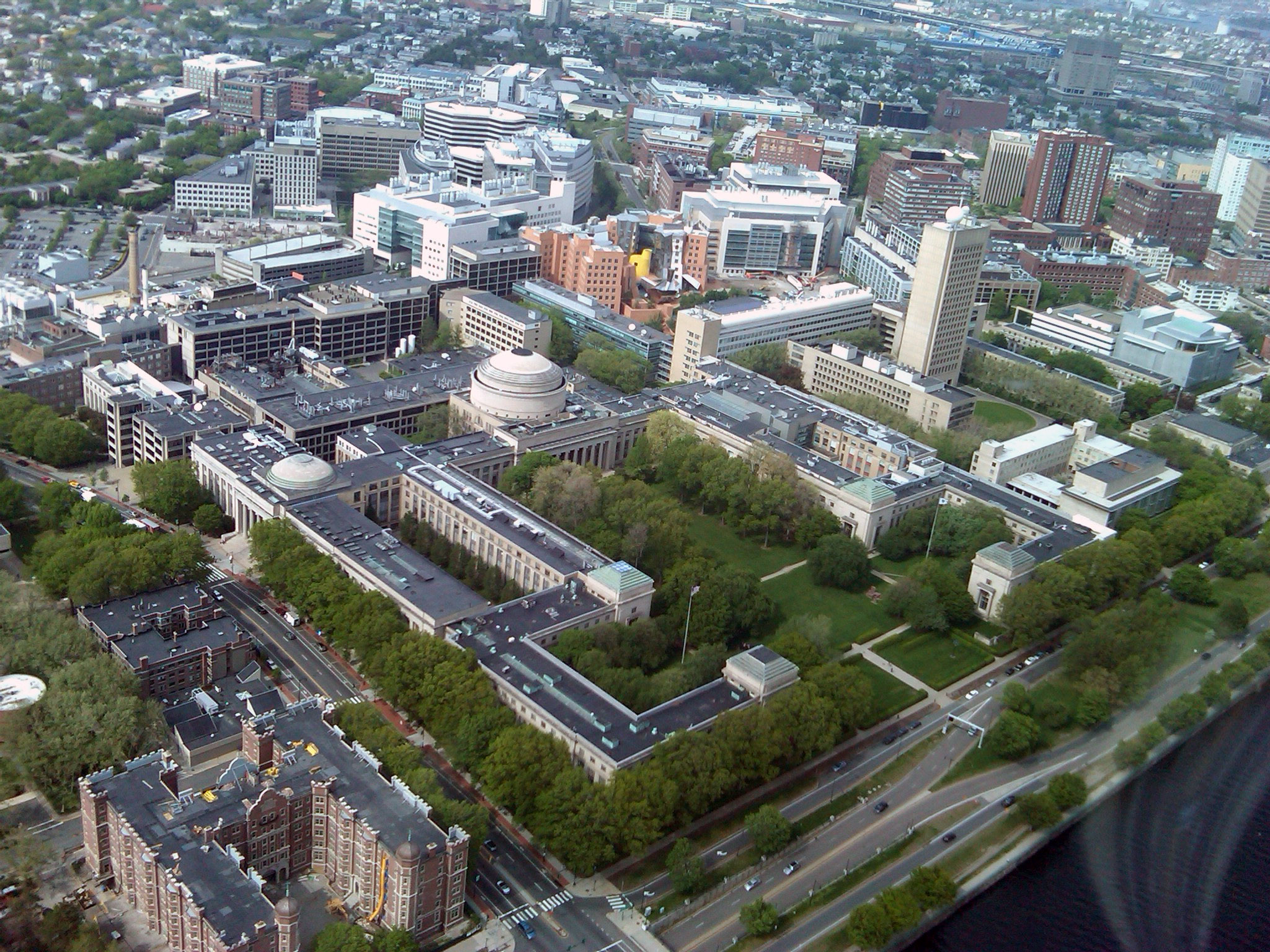
Massachusetts Institute of Technology

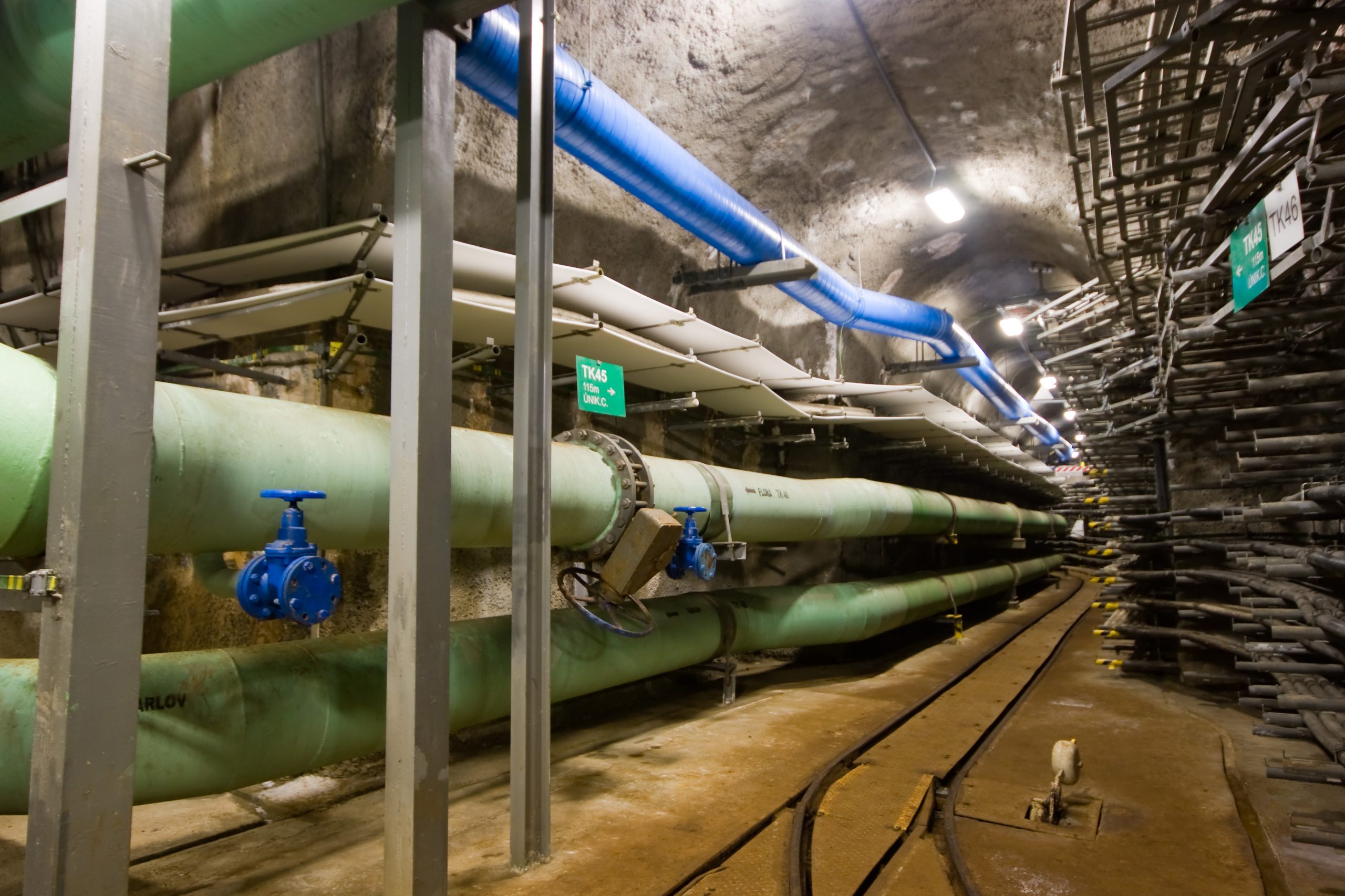
As cities-within-cities many colleges and universities own and maintain at least 10 miles —  and possibly up to 1000 miles —  of underground piping for water, steam and natural gas; much of it under pressure within buildings or in outside, underground tunnels.  The American Society of Mechanical Engineers develops a suite of standards for these, and many other piping systems:

ASME B31 Piping System Standards

Fluids running under pressure are a significant infrastructure hazard in educational and all communities

ASME has released a redline of  B31 Manual for Determining the Remaining Strength of Corroded Pipelines for public comment:

ANSI Standards Action Pages 137 – 139

ASME often posts its redlines in ANSI Standards Action as well as on its standard development platform:

https://cstools.asme.org/

This document is intended solely for the purpose of providing guidance in the evaluation of metal loss in pressurized pipelines and piping systems.

Comments are due July 26th.

You may send comments (with optional copy to psa@ansi.org) to: Ray Rahaman, rahamanr@asme.org

The ASME consensus product line is on the standing agenda of our periodic Mechanical, Energy and Nota Bene teleconferences.  See our CALENDAR for the next online meeting; open to everyone.

Issue: [19-148]

Category: District Energy, Energy, Mechanical

Colleagues: Richard Robben, Larry Spielvogel


Water closets & Hygiene devices

Preview | Table of Contents


Proposed changes are (typical) administrative changes but also seating details, fittings, vacuum breakers and backflow prevention — all technologies present in abundance in education communities that depend upon the wastewater systems of the host community and technologies that appear more frequently with an international student population.

The redline is accessible in the link below, along with instructions about how to submit comments.

ASME Proposals Available For Public Review

We cover the ASME catalog periodically during our Mechanical colloquia.   See our CALENDAR for the next online meetings

Scheme for the Identification of Piping Systems

This content is accessible to paid subscribers. To view it please enter your password below or send mike@standardsmichigan.com a request for subscription details.

Workspace / ASME

This content is accessible to paid subscribers. To view it please enter your password below or send mike@standardsmichigan.com a request for subscription details.

Layout mode
Predefined Skins
Custom Colors
Choose your skin color
Patterns Background
Images Background
Standards Michigan
error: Content is protected !!
Skip to content